SCULPTURE
ASSEMBLAGE: EMBODIMENT OF BOTH
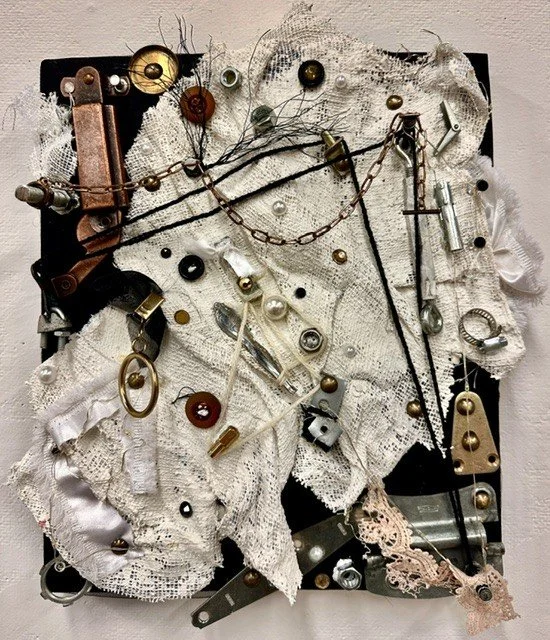
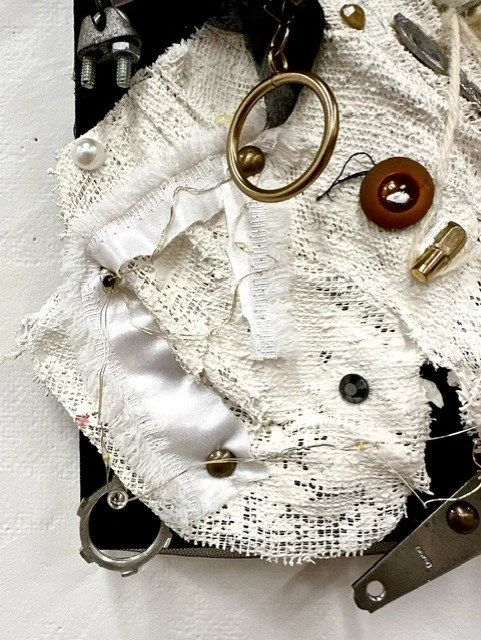
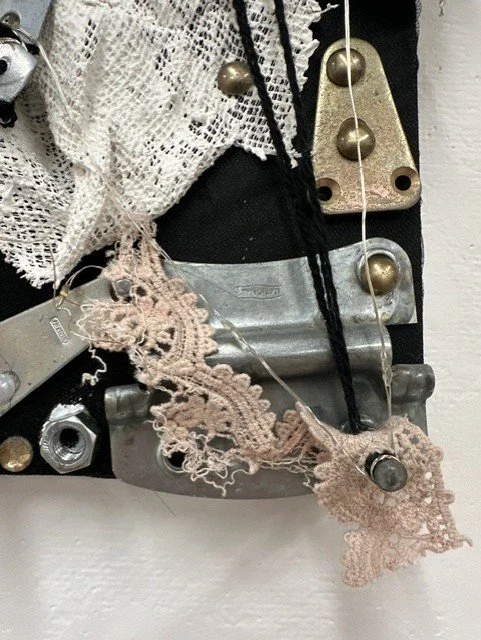
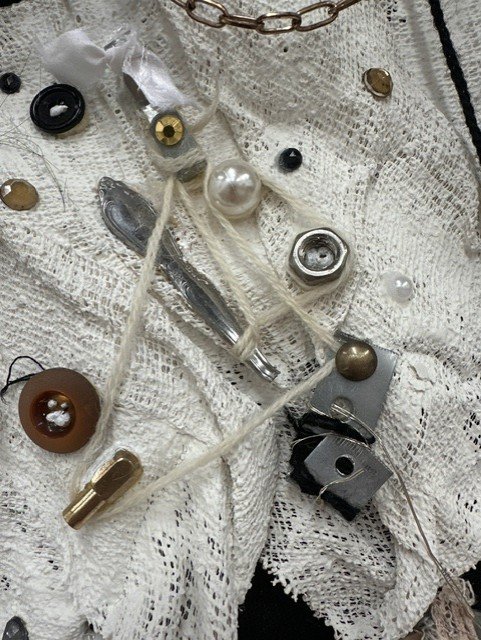
Assemblage: Embodiment of Both: This work is representative of the translation of gender into materiality. For process initially fabric was dipped in a drywall mud mix with glue and placed over a figurative form to bring humanness into the work. This process takes a more fluid and softer material that associates with femininity and transforms it into something constructive and solid relating to masculinity and embodying it in a figurative form. This form was then cut into shapes and installed onto a mount to resemble a plaque, which takes this idea beyond the individual but to how gender is societally constructed. Then found objects and materials were installed and assembled to show the combination of both aspects working together unified. Embellished pearls, lace, and fabric entangle and overlap metallic screws, bolts, and hinges. Soft strings stretch and connect through the form creating geometric angularities and anchor at end points. The plaque acts as acknowledgement and acceptance of obtaining both of these characteristics.
MATERIALS: Wood, Mesh Fabric, Plaster/Drywall Mud, Found Hardware, Nails, Screws, Pins, Wood Glue, String Lights, String, Lace, Buttons, Chain, Bolts, Metal, Pearls, Beads, Silk.
YEAR: 2025
DIMENSIONs (Approx): 10”x14”
PROCESS: Initially, the wooden frame was constructed, and fabric was stretched over and stapled into the back of the board. Then the drywall mud coated mesh fabric was pinned to the front making a stark contrasting composition. Once that foundation was established, found materials, hardware, and details were inlayed and assembled filling in the space making it textural and maximalist.
FOUNDRY: BRONZE CASTED DEER SKULL
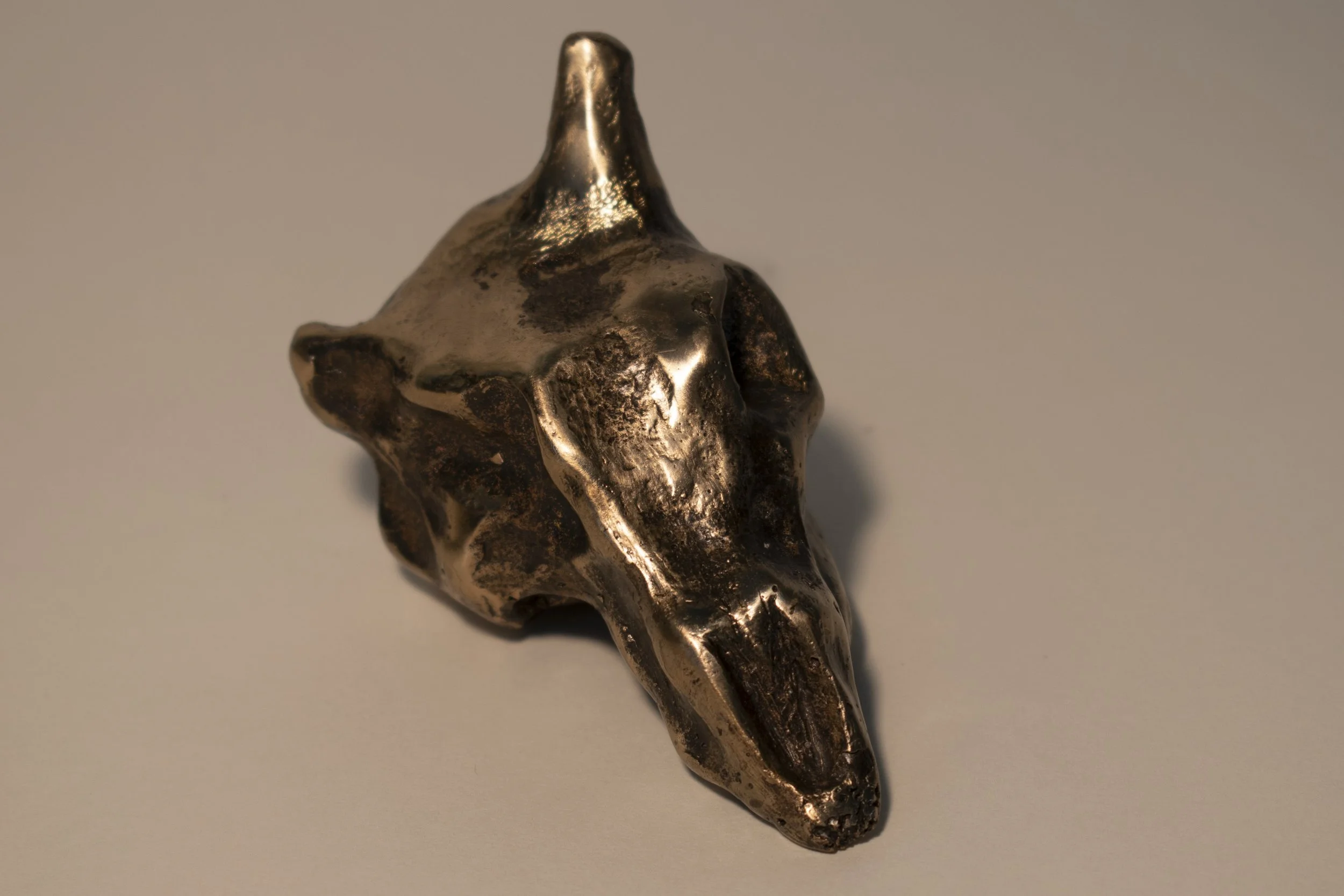
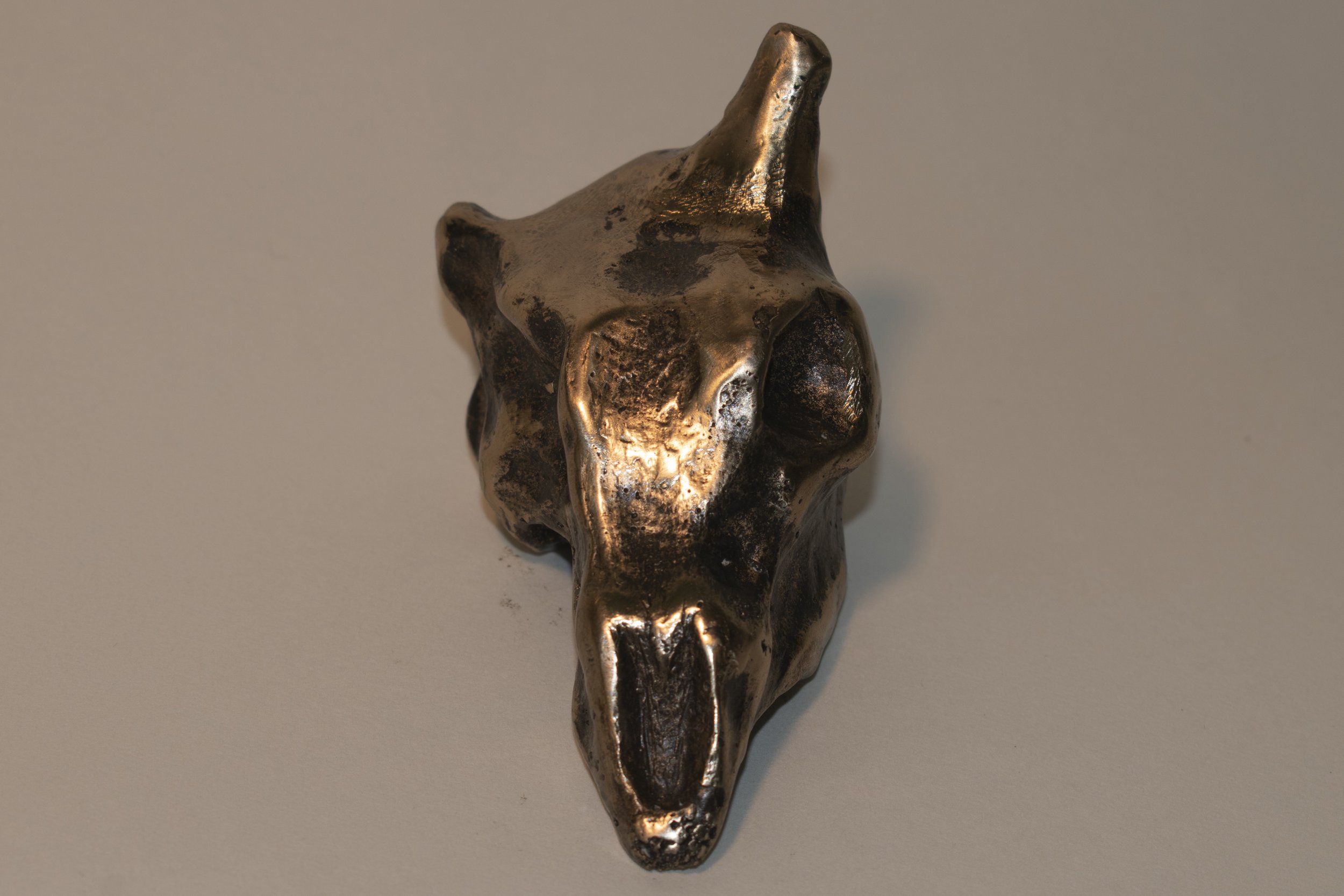
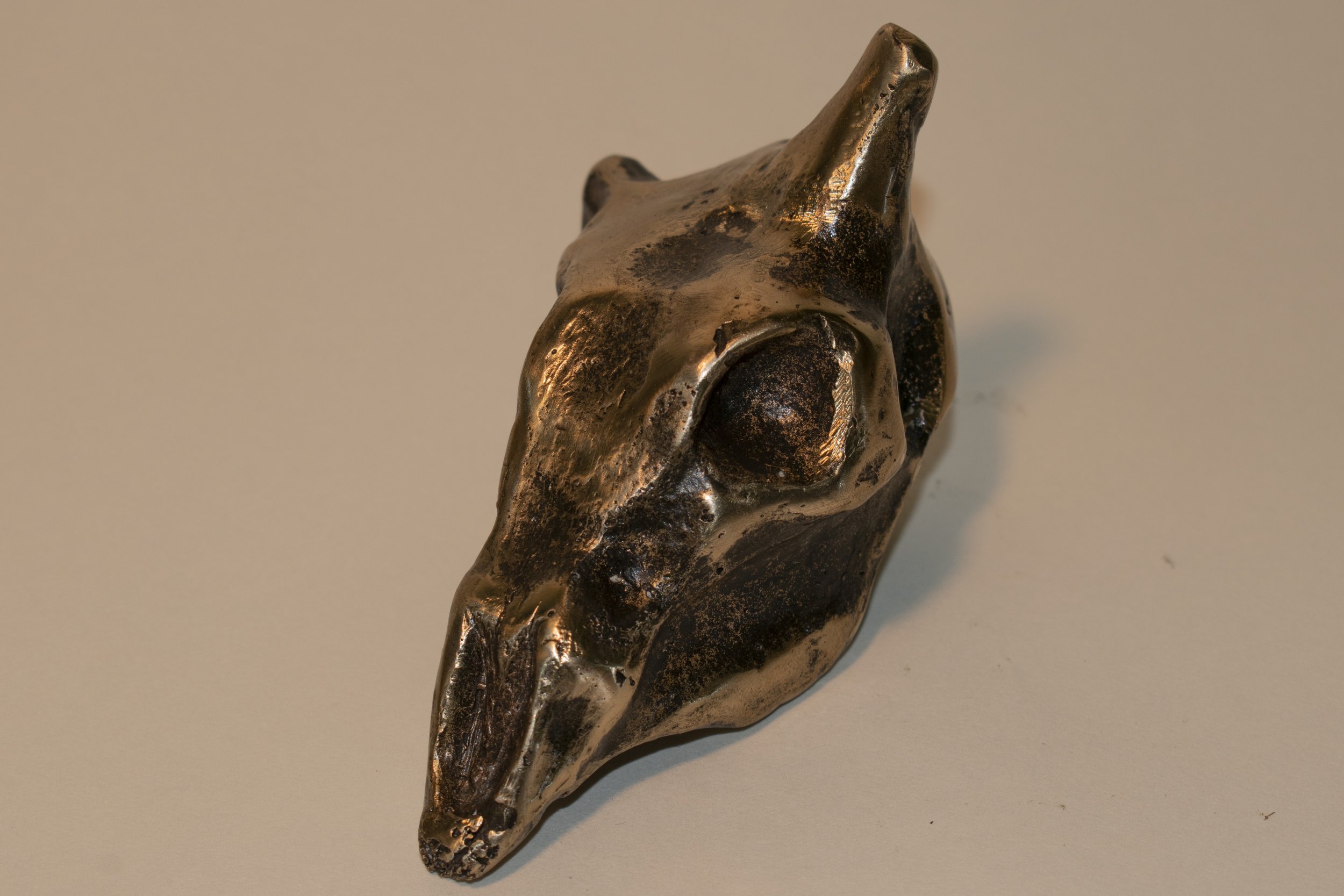
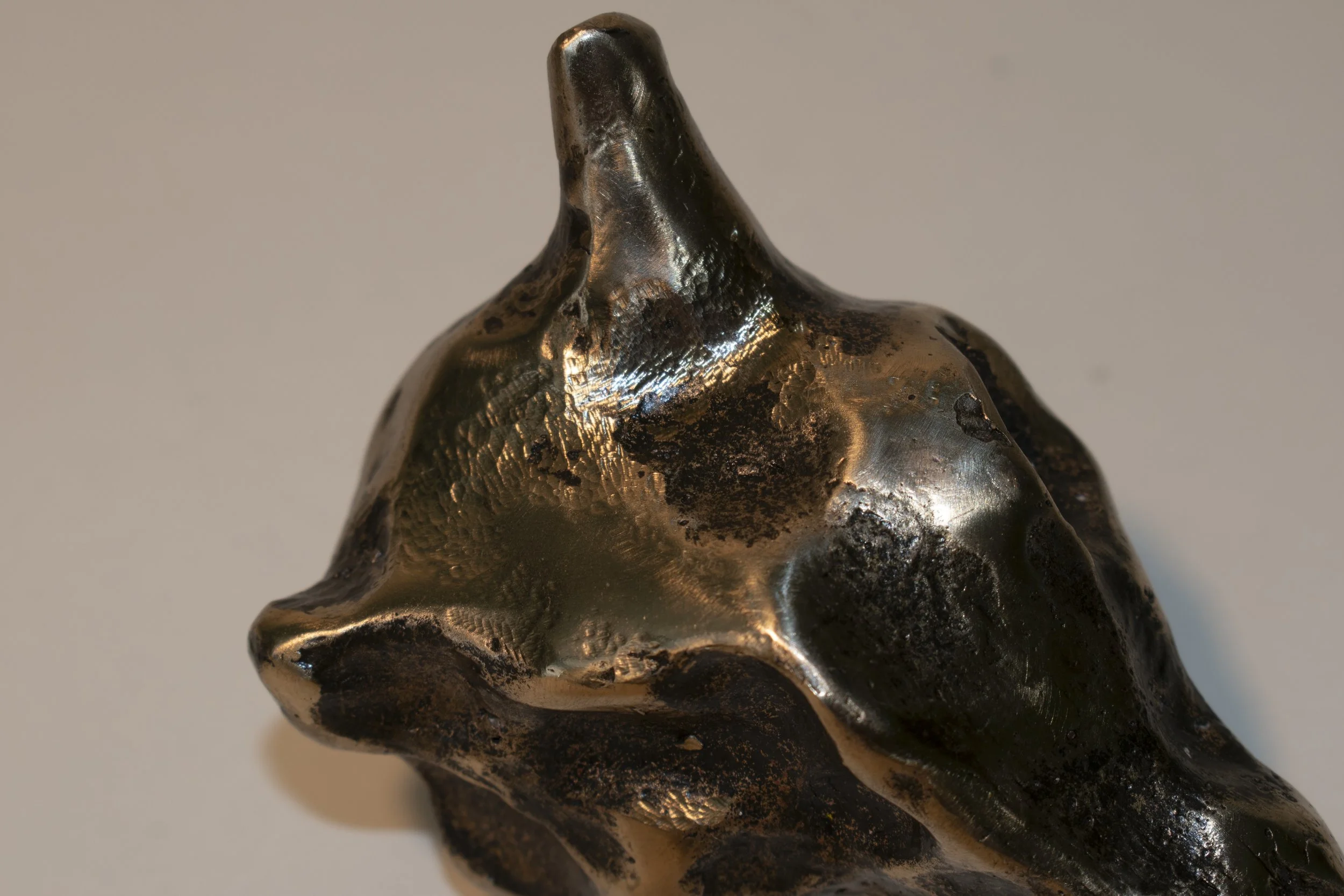
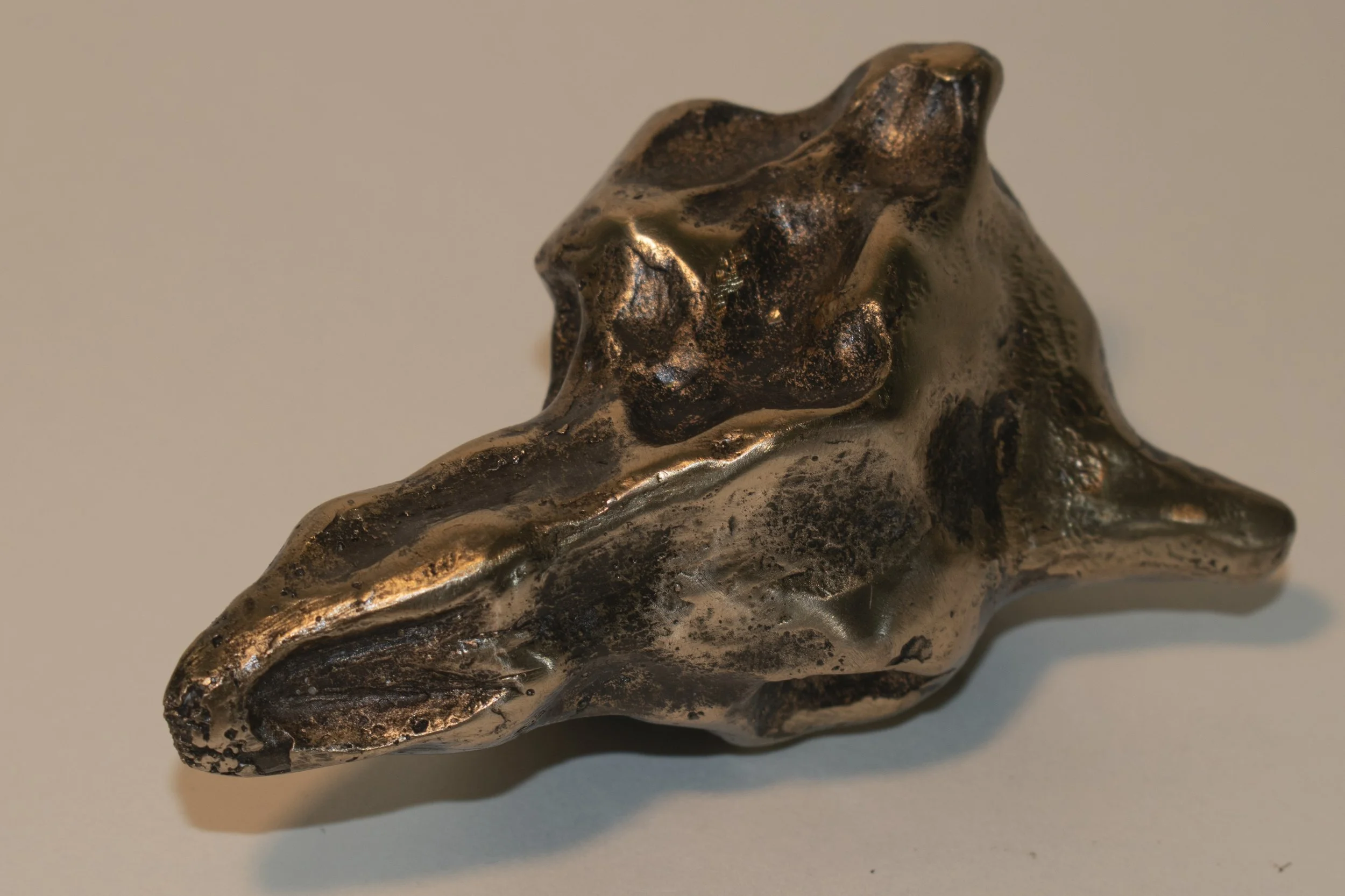
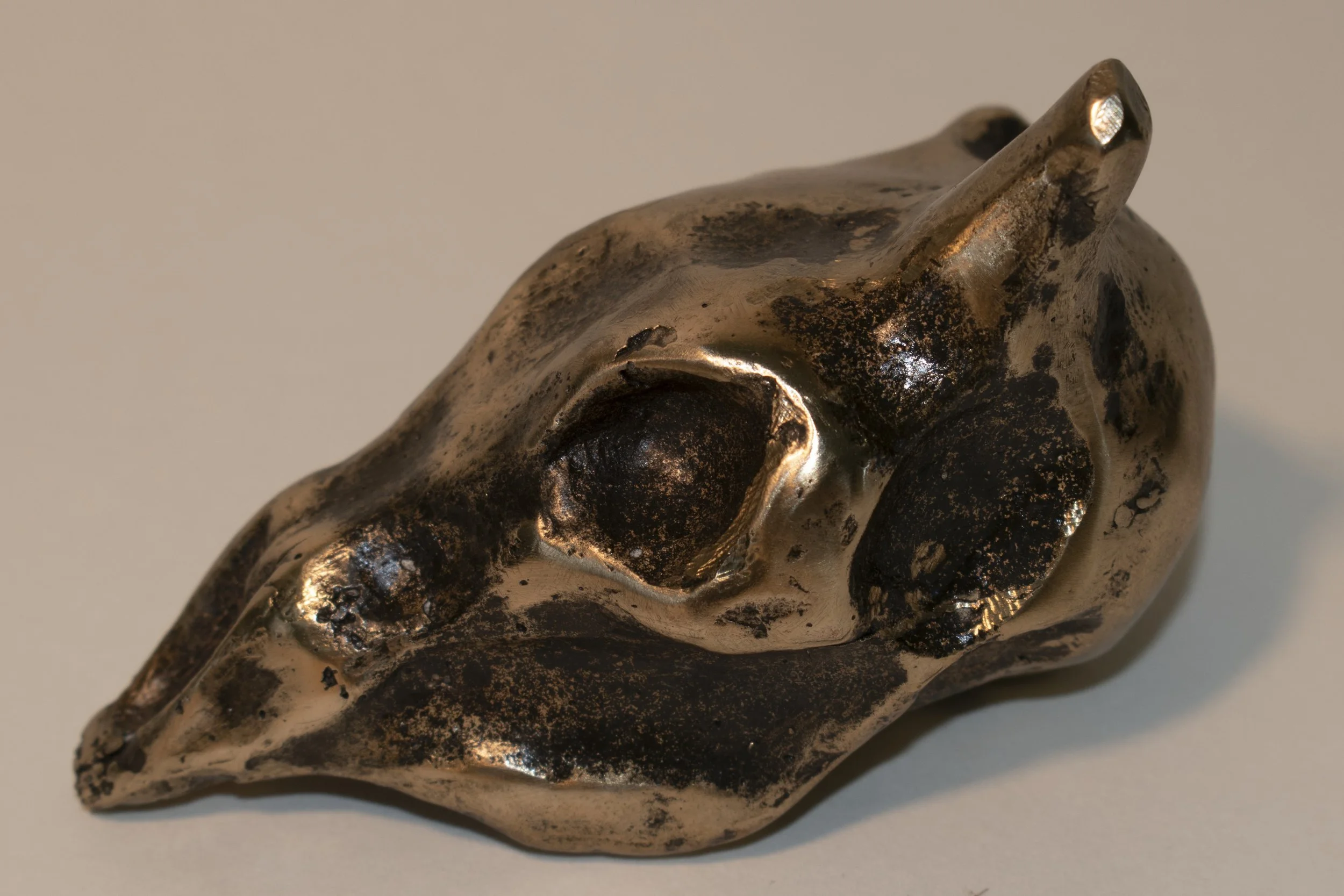
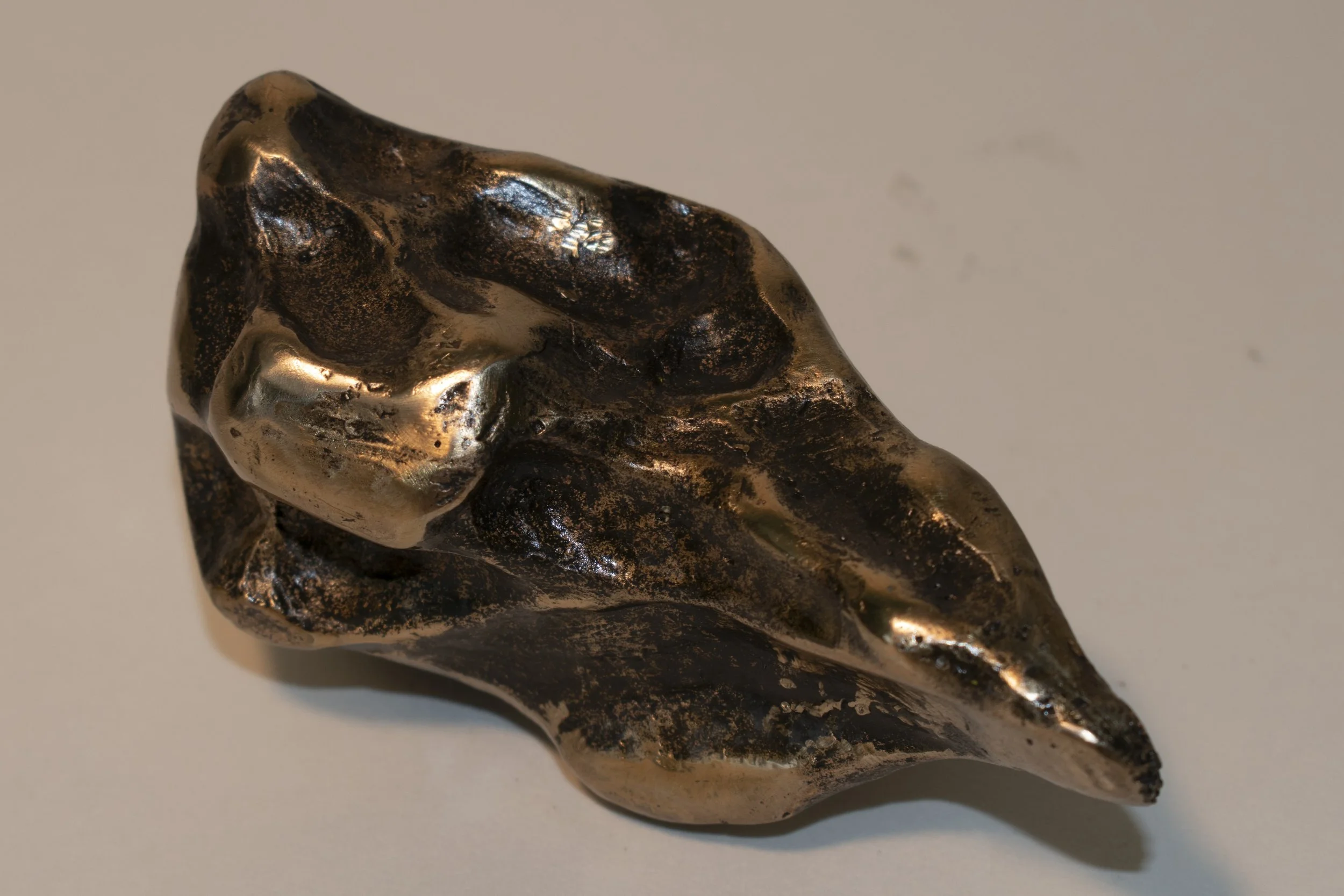
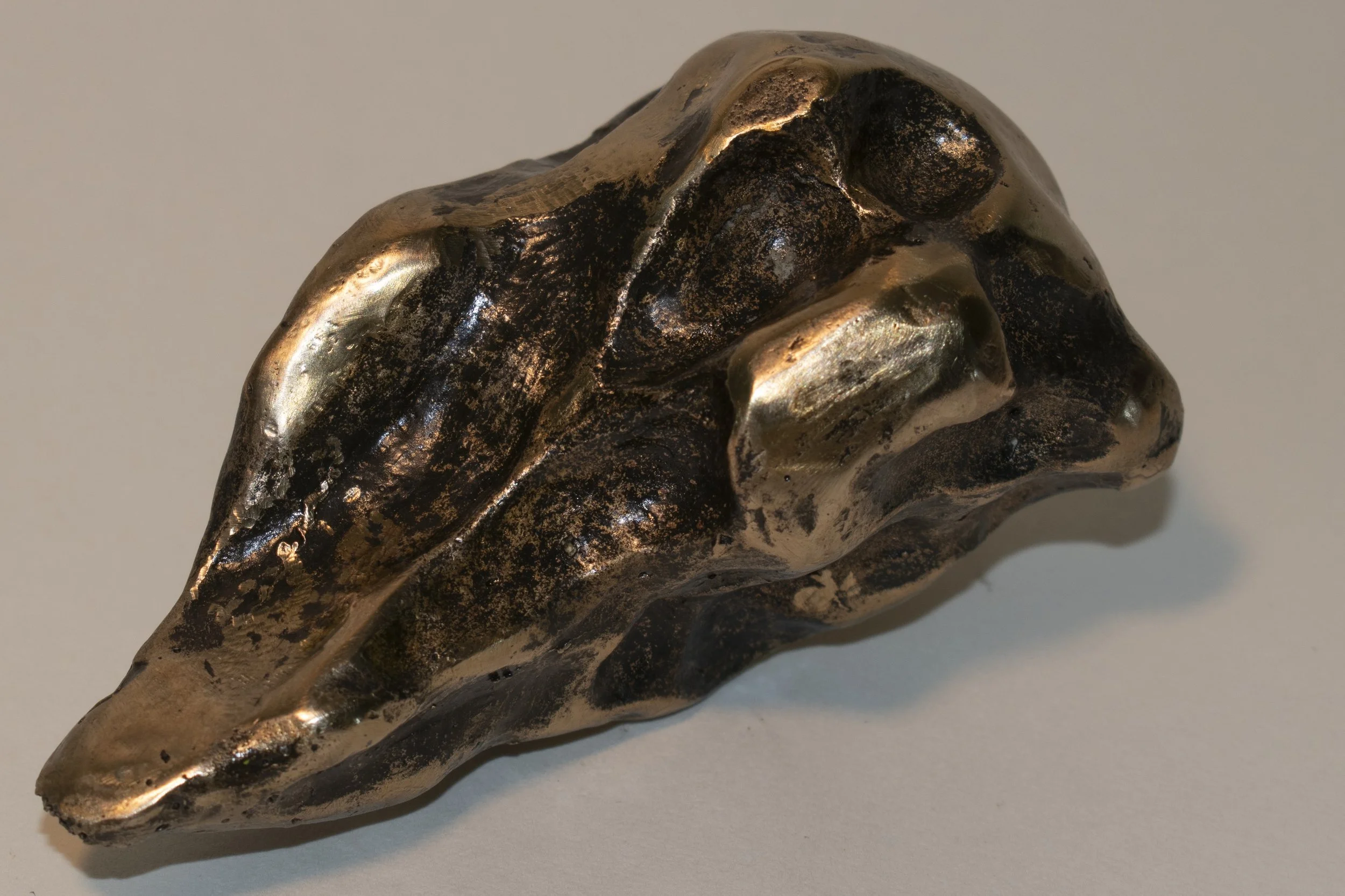
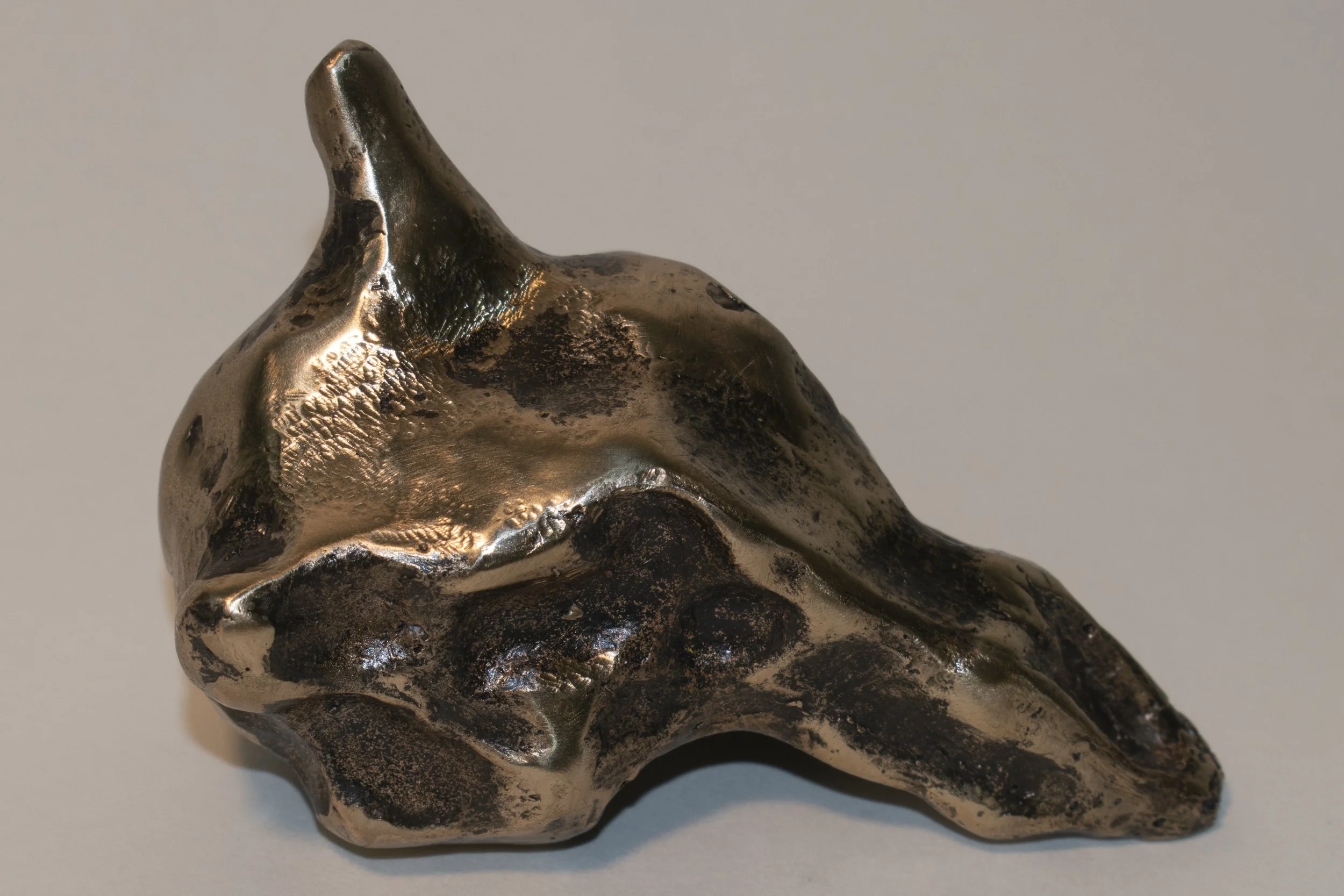
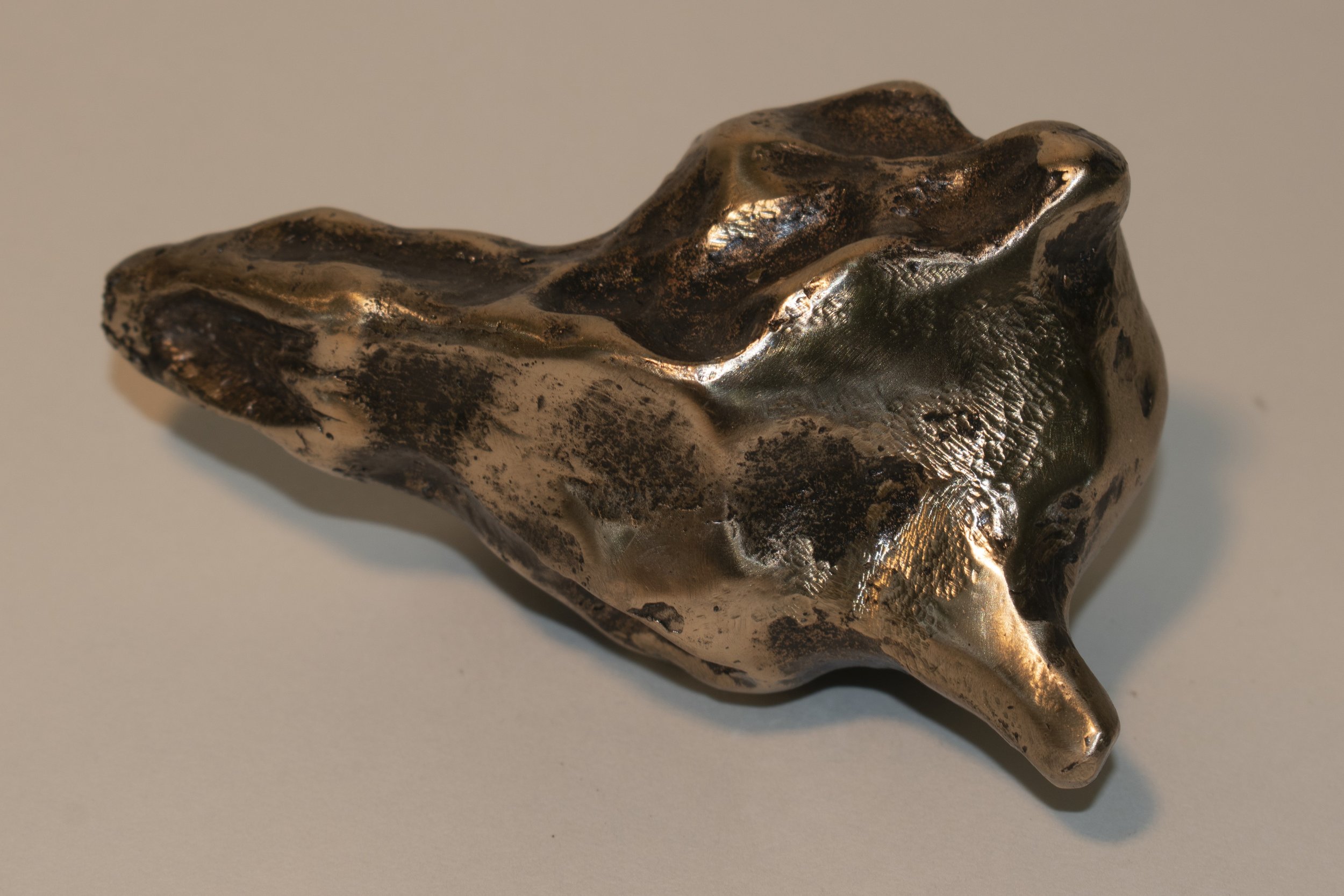
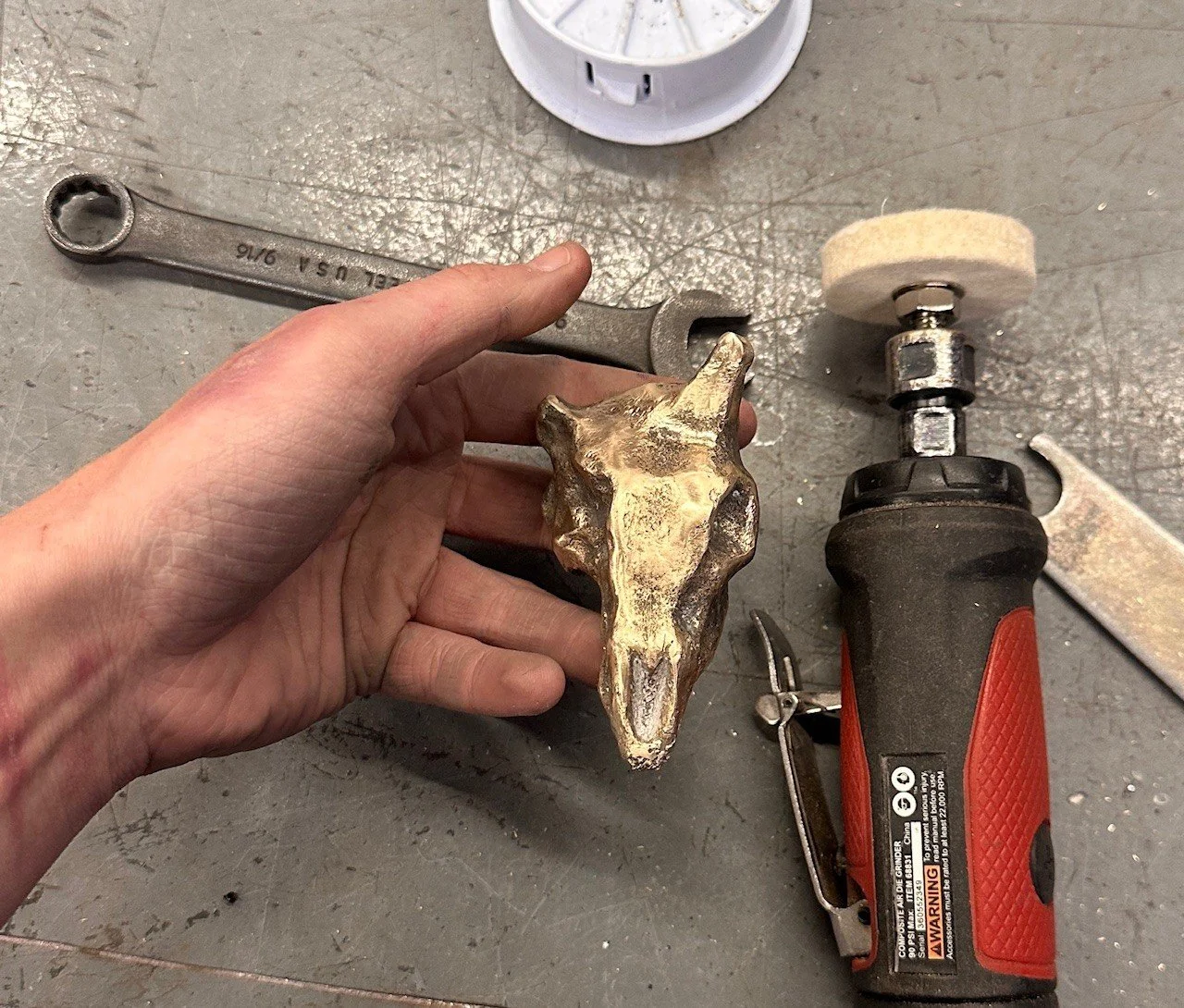
Polishing process picture 1
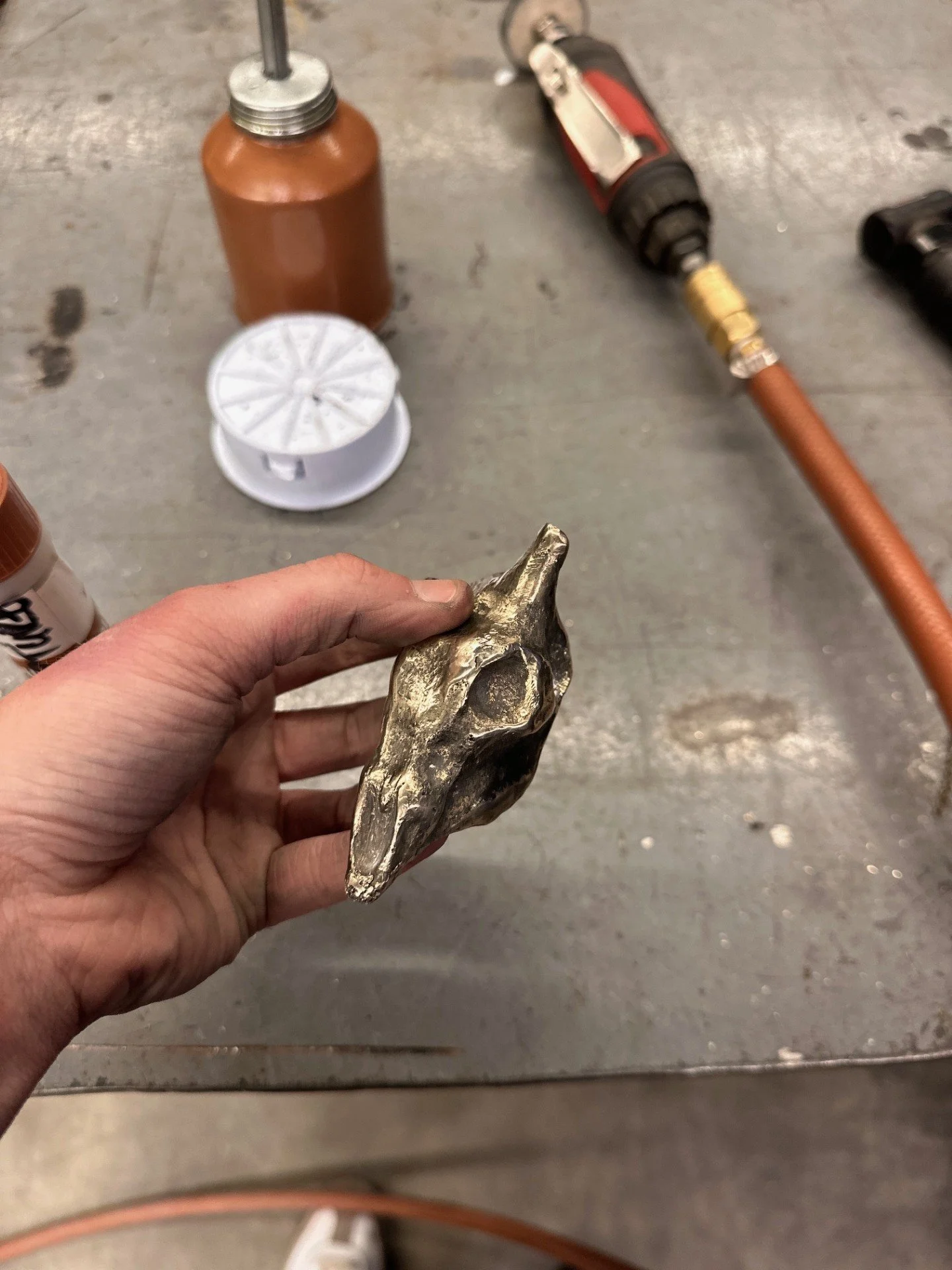
Polishing process picture 2
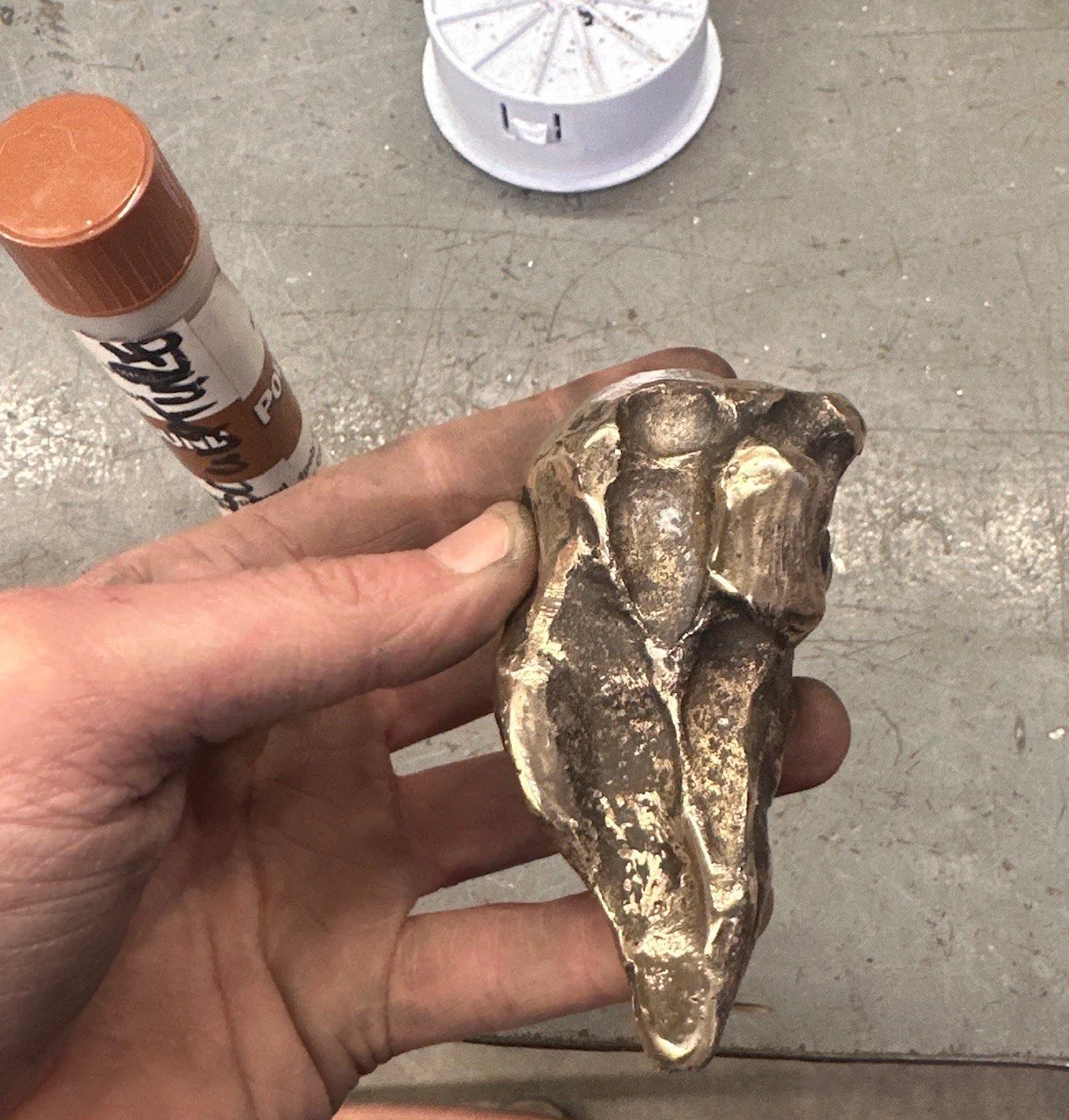
Polishing process picture 3
MATERIALS: Bronze
YEAR: 2025
FOUNDRY: ALUMINUM CASTED BEAR
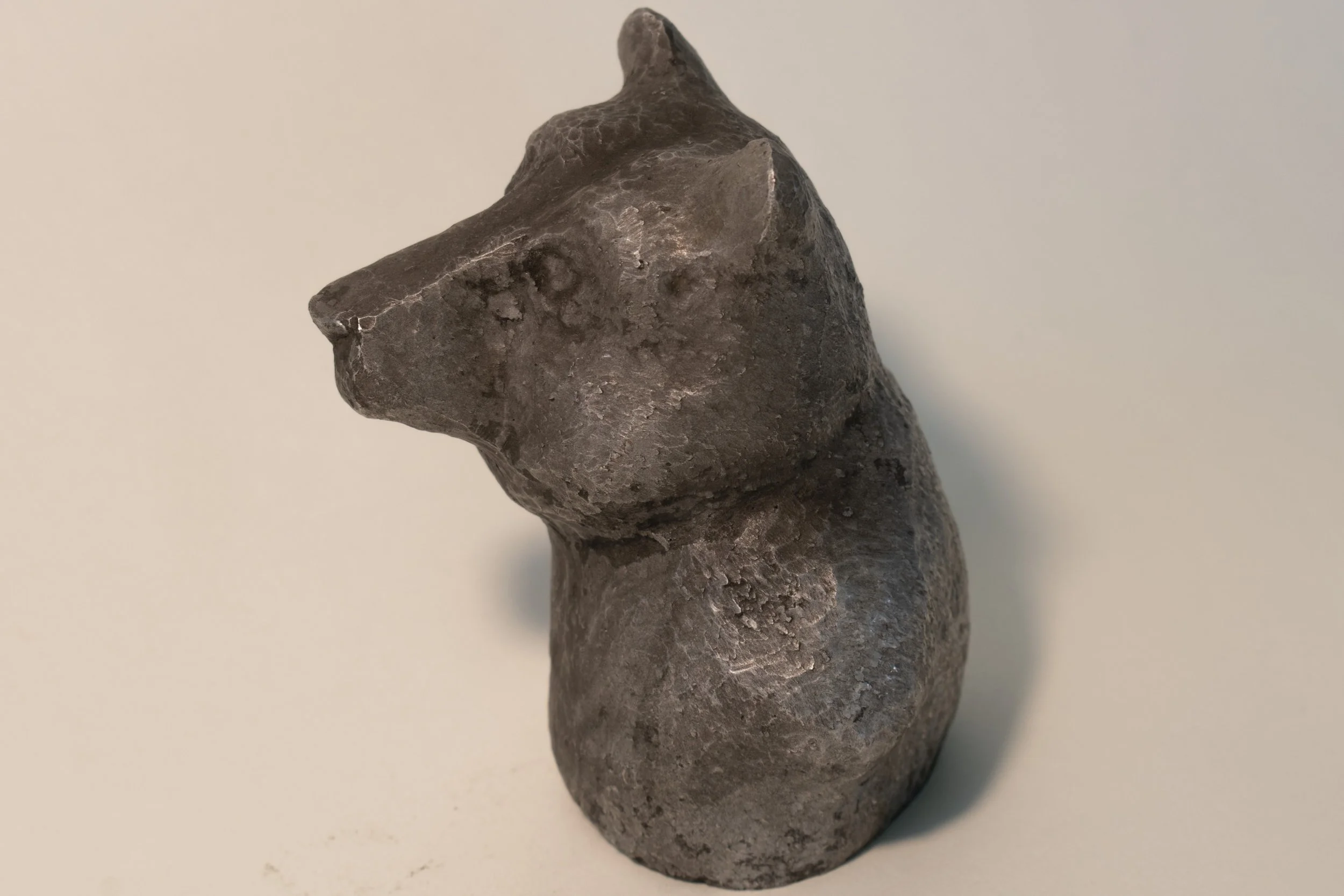
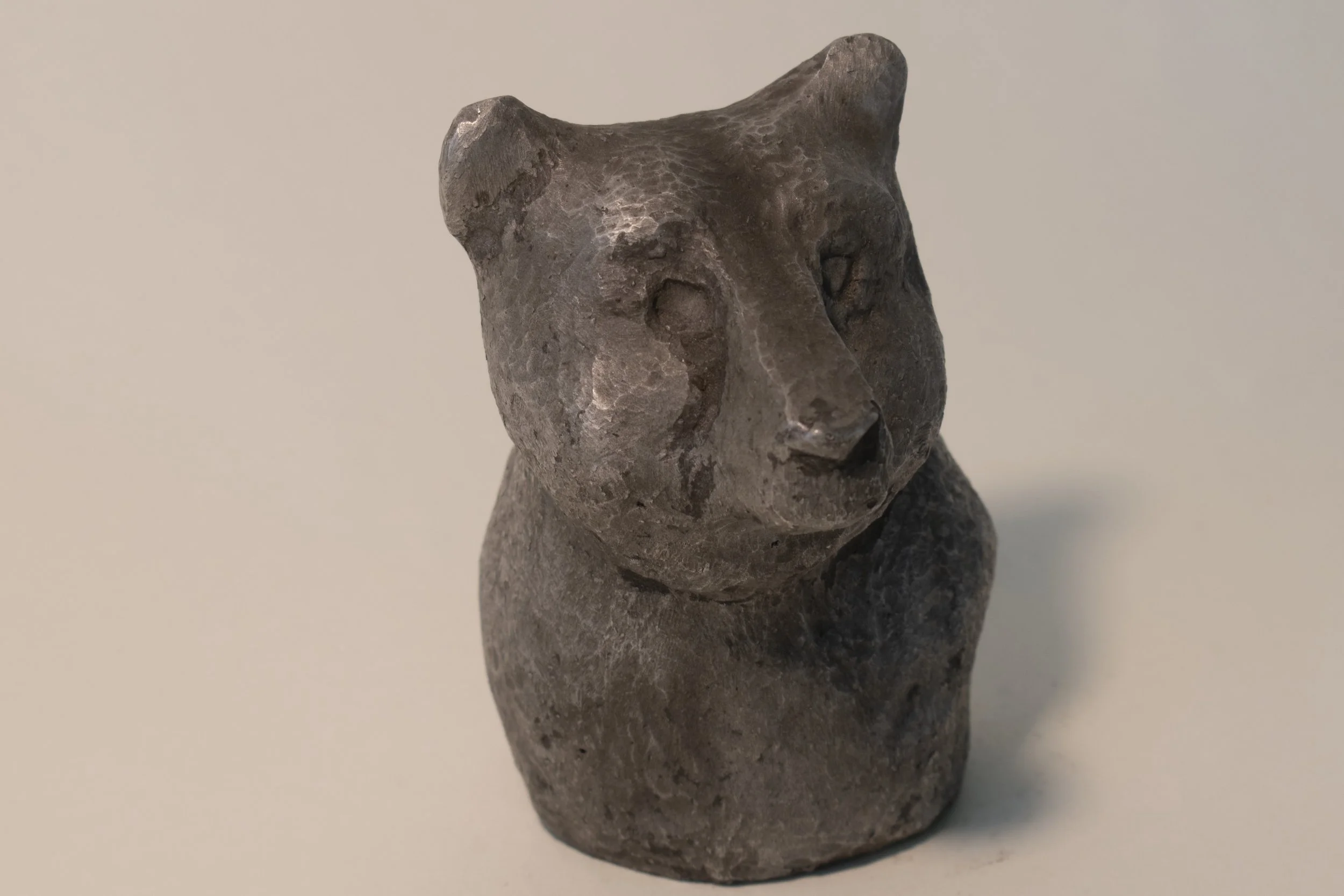
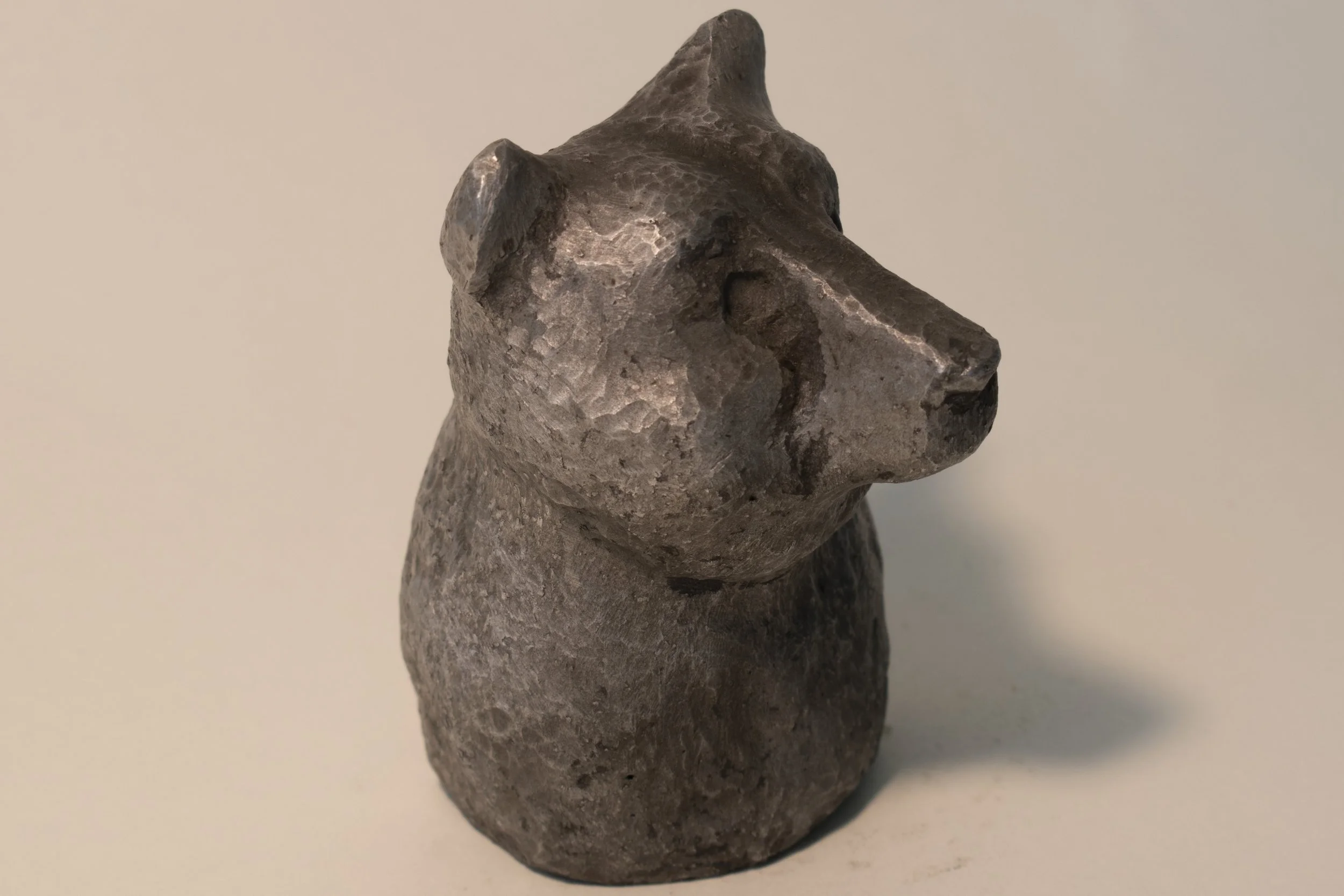
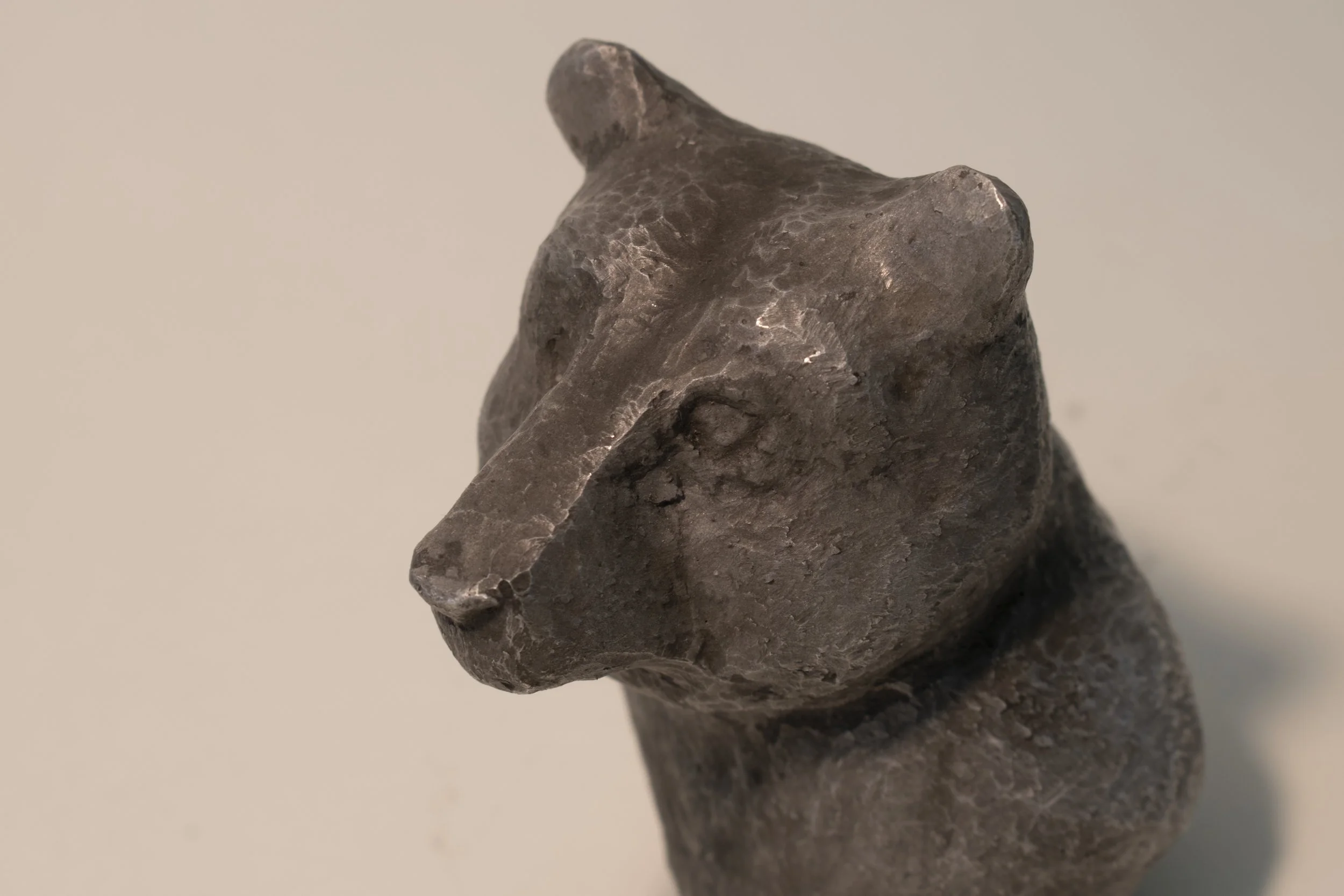
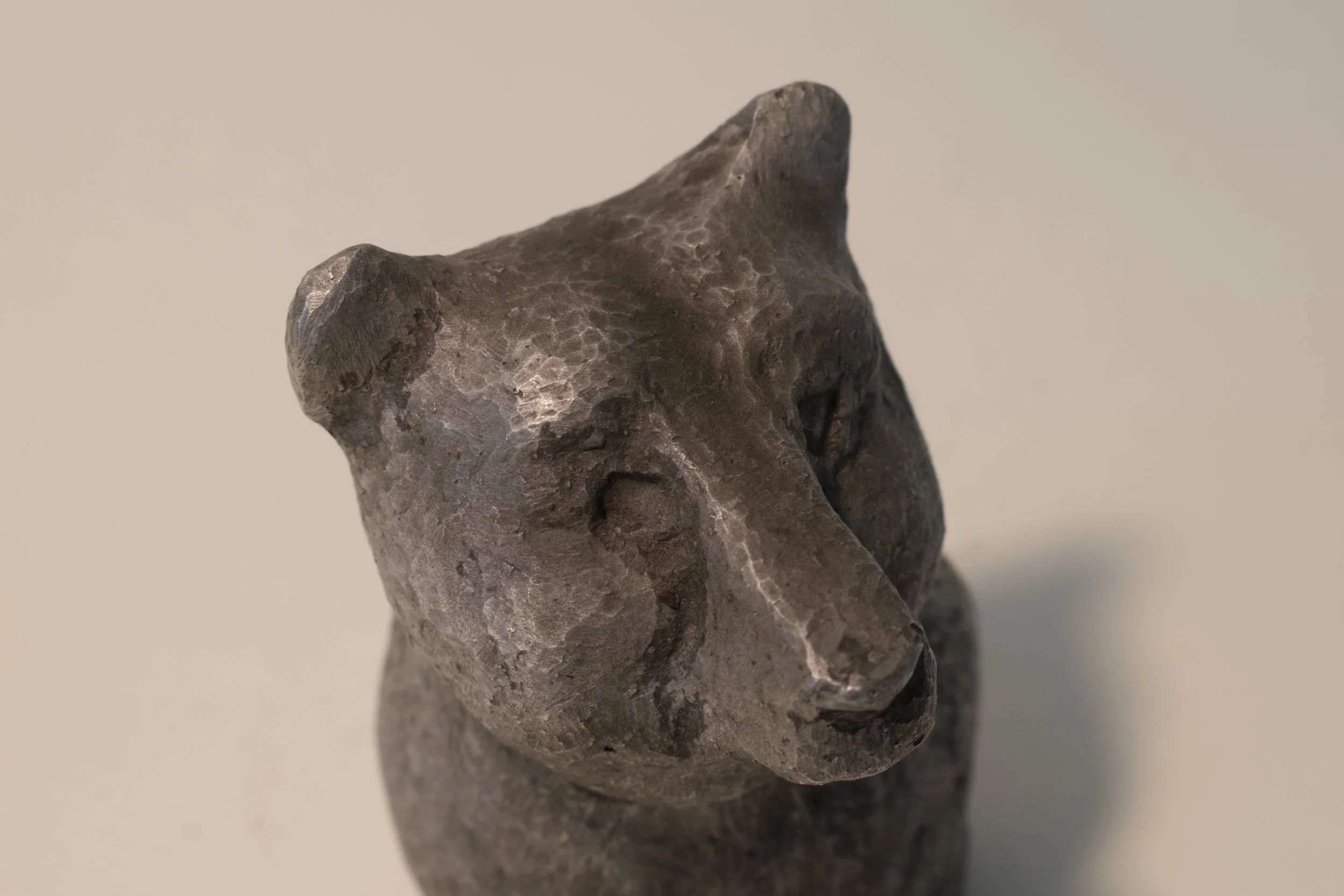
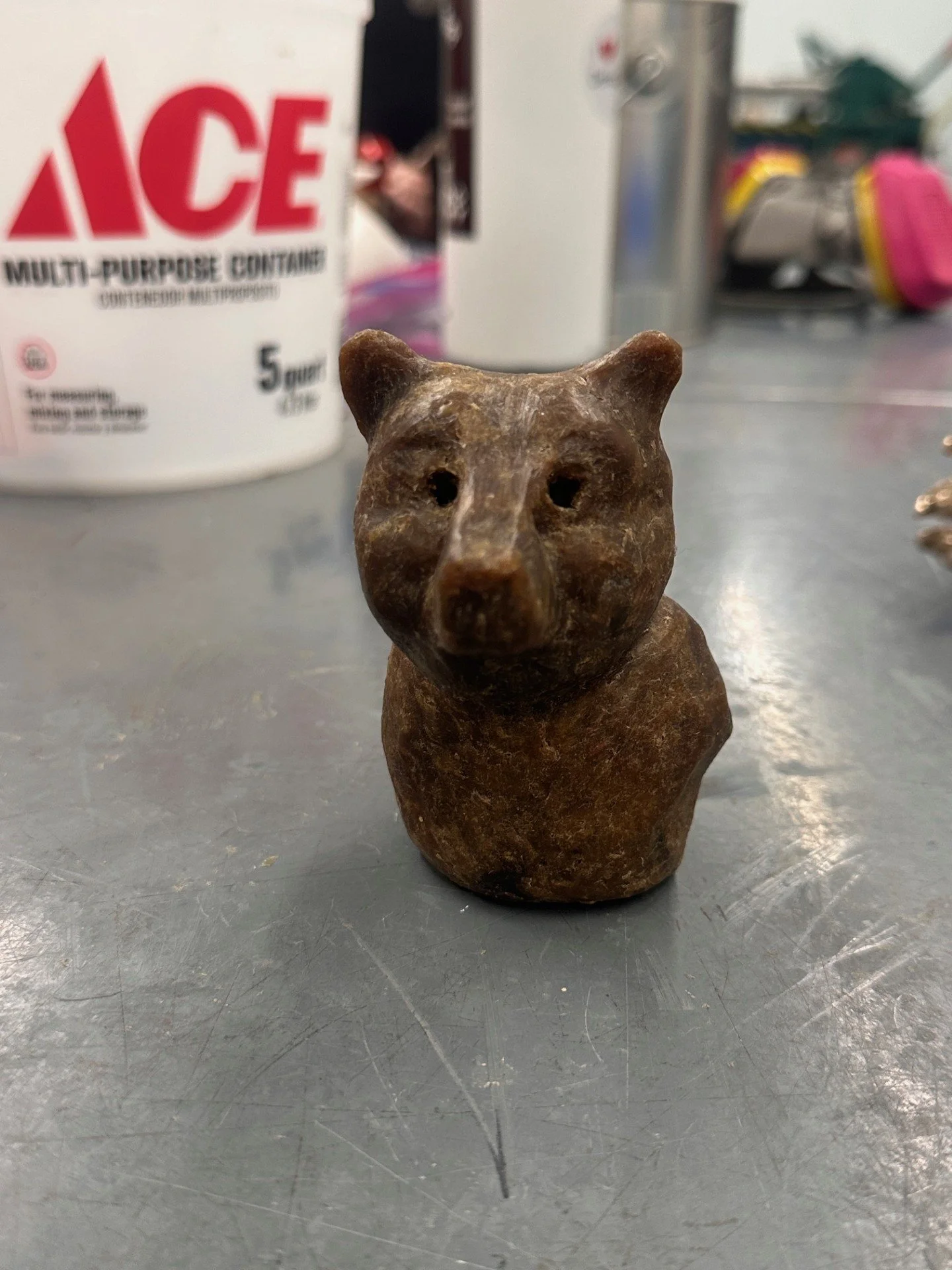
Wax of form 1
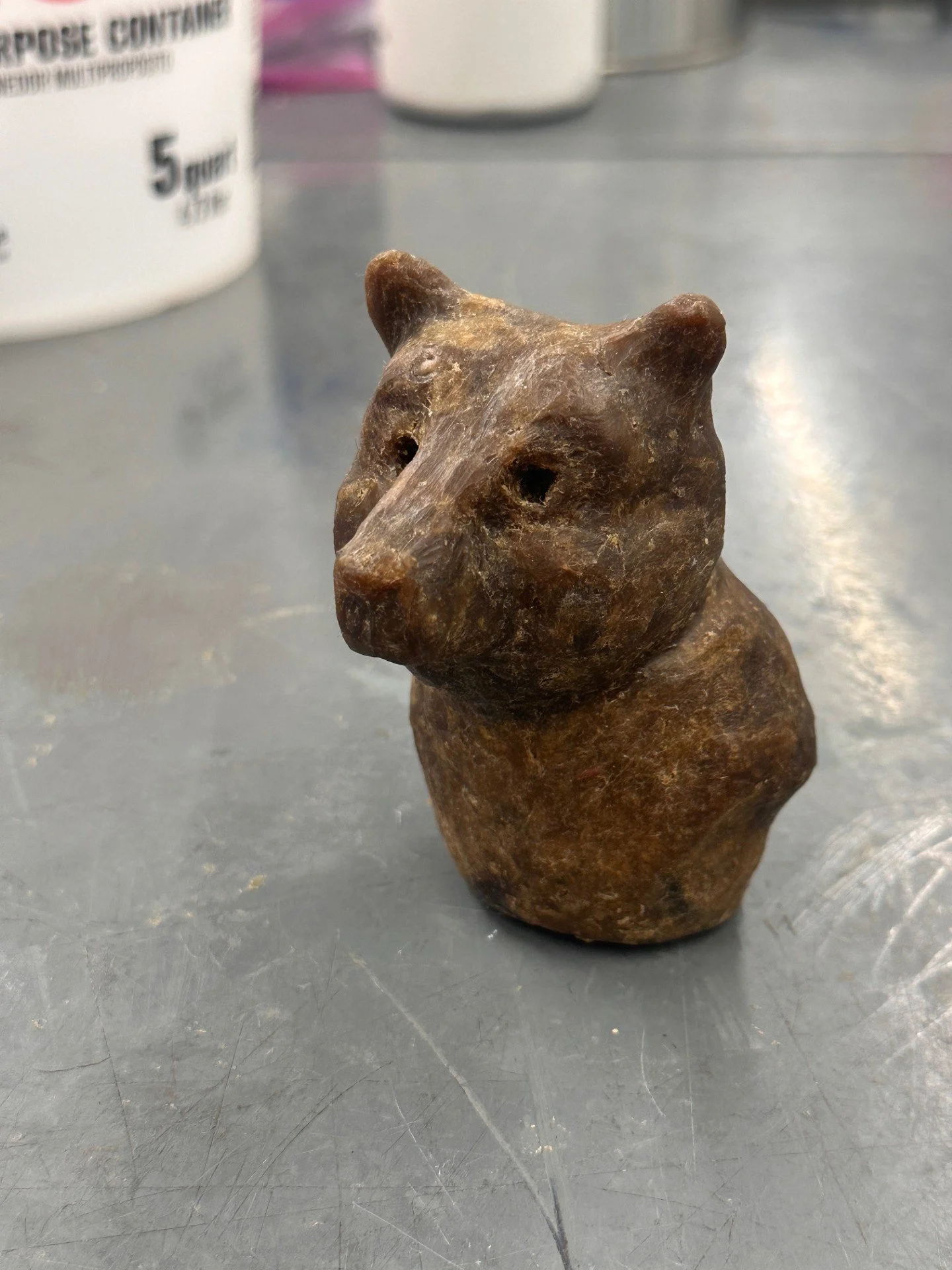
Wax of form 2
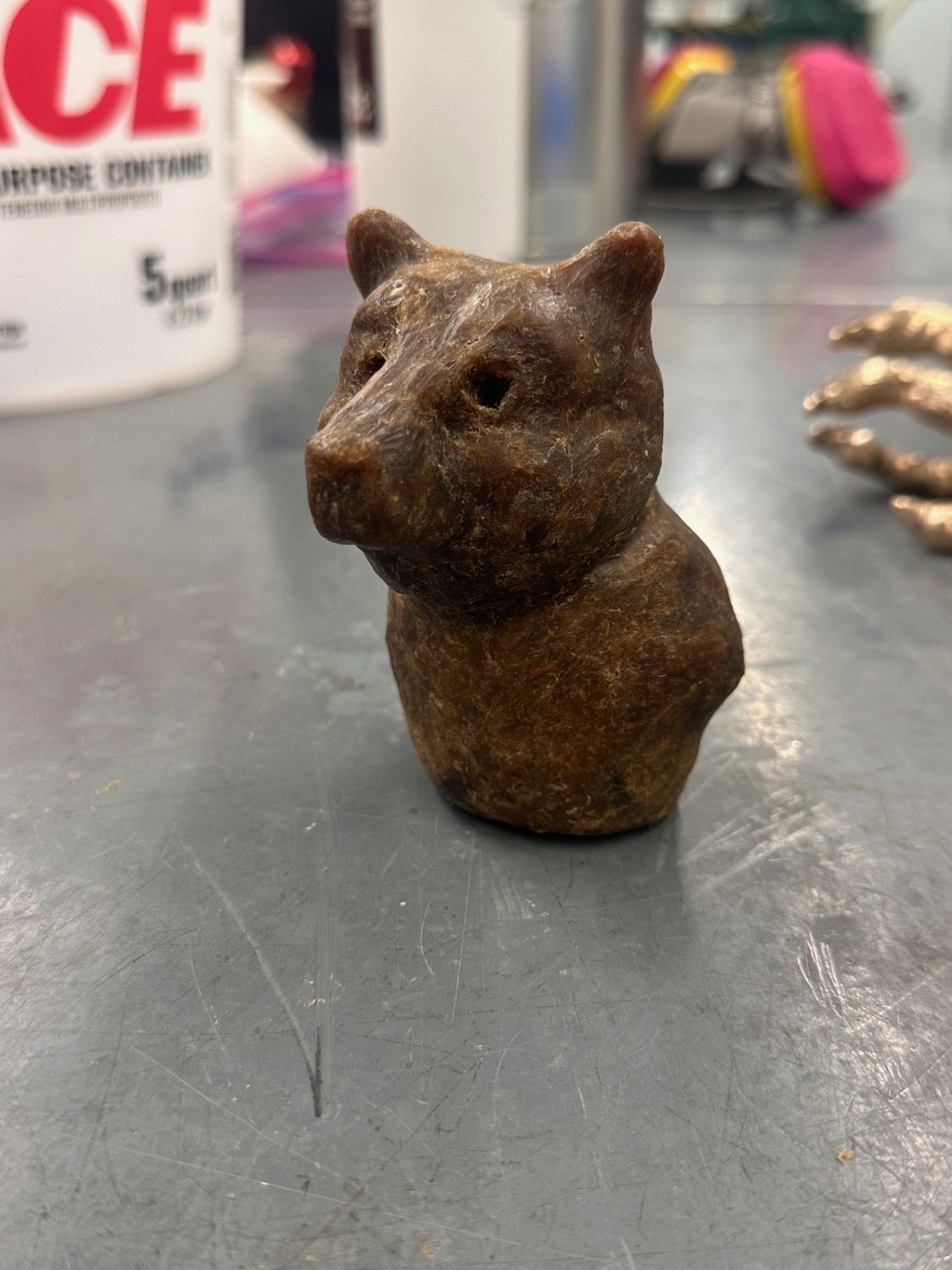
Wax of form 3
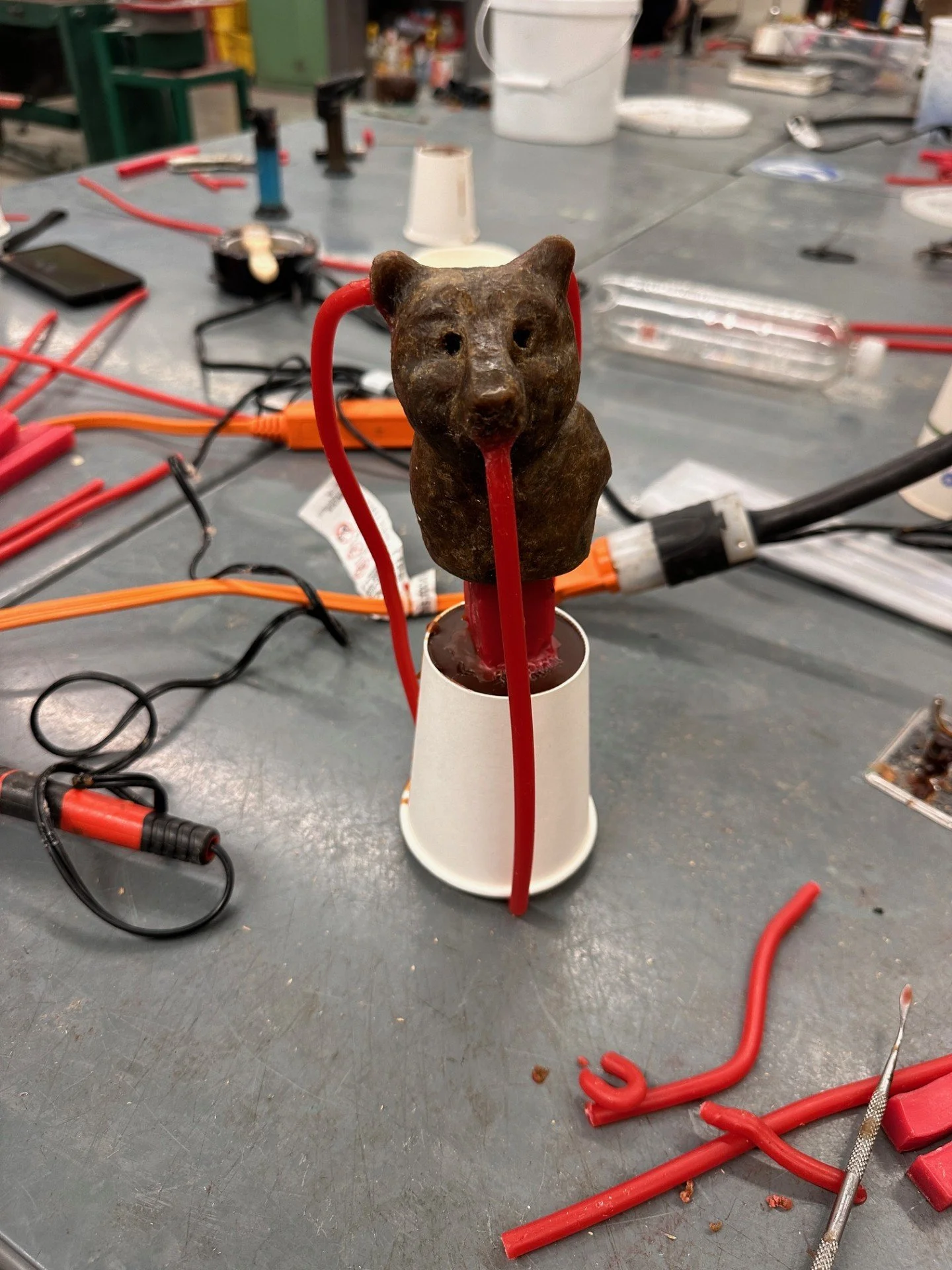
Gated form 1
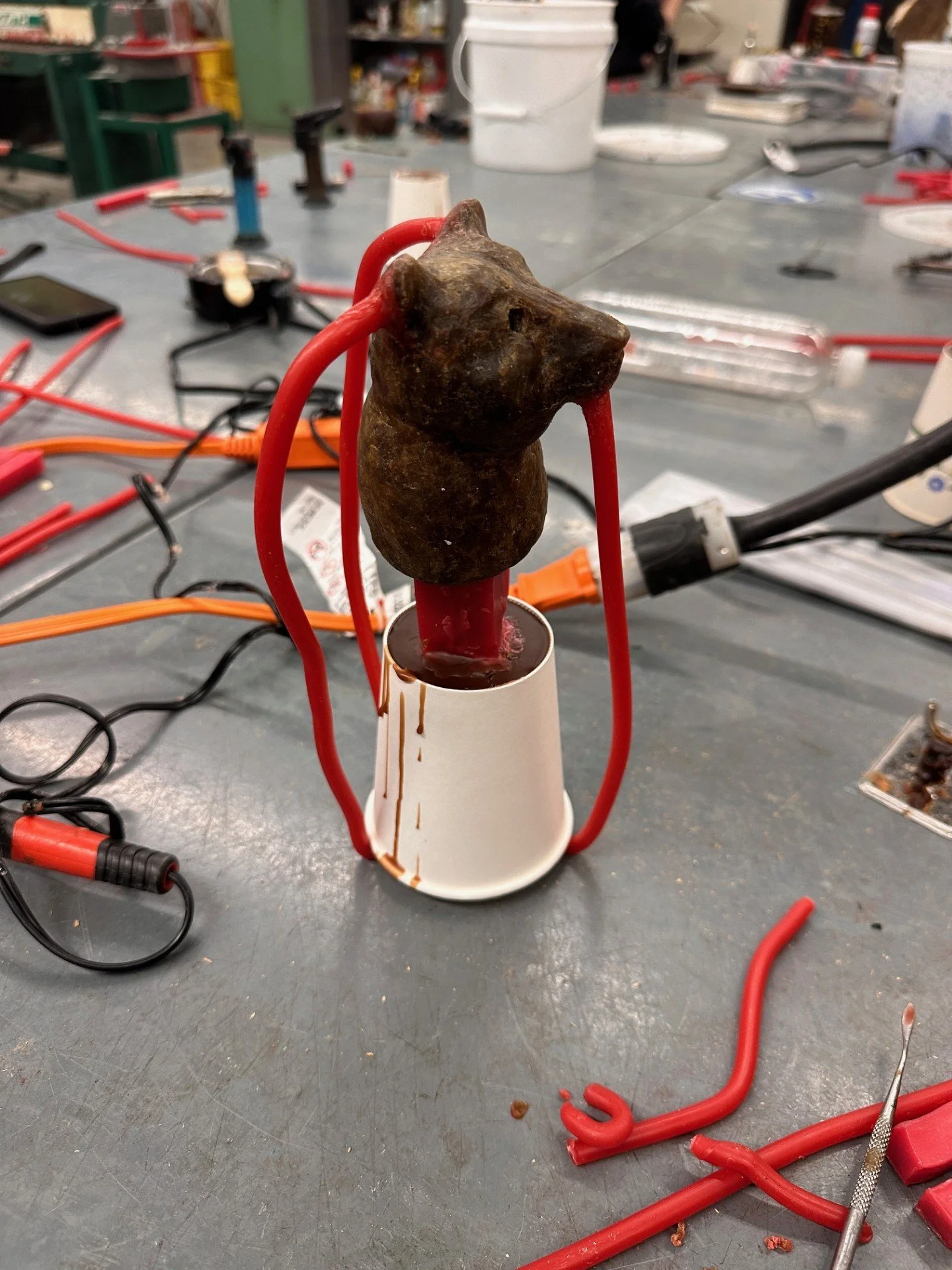
Gated form 2
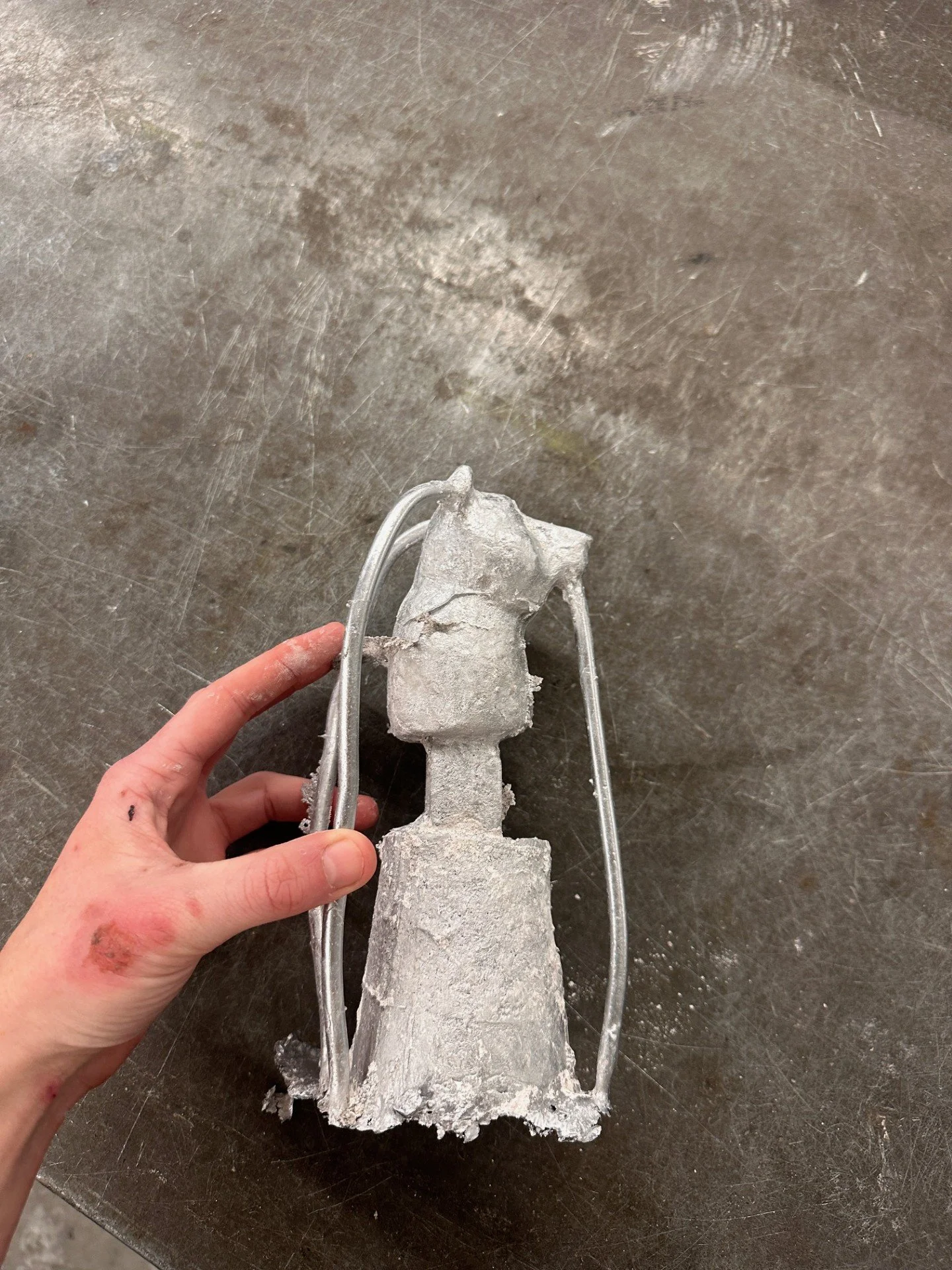
Casted form removed from mold 1
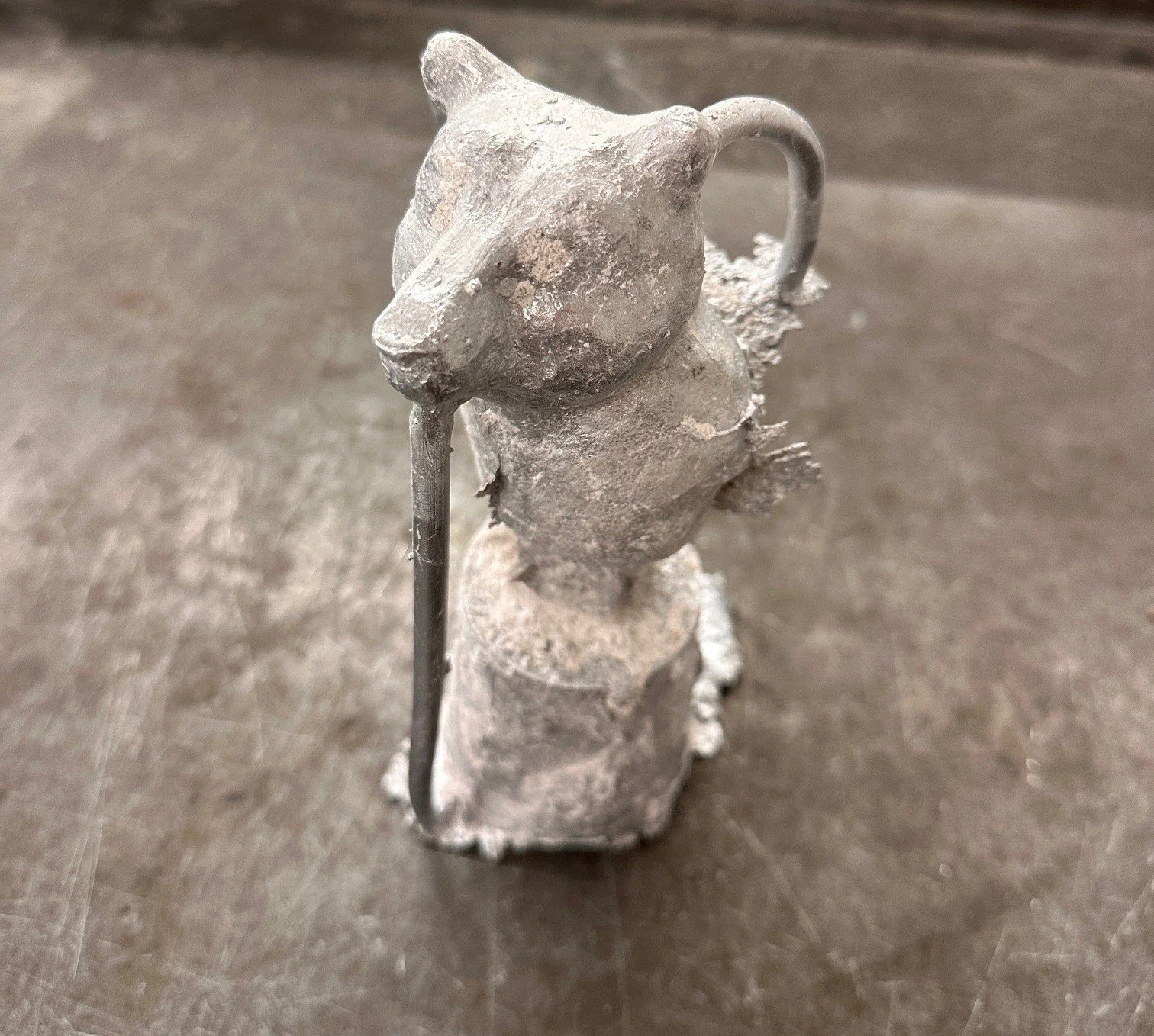
Casted form removed from mold 2
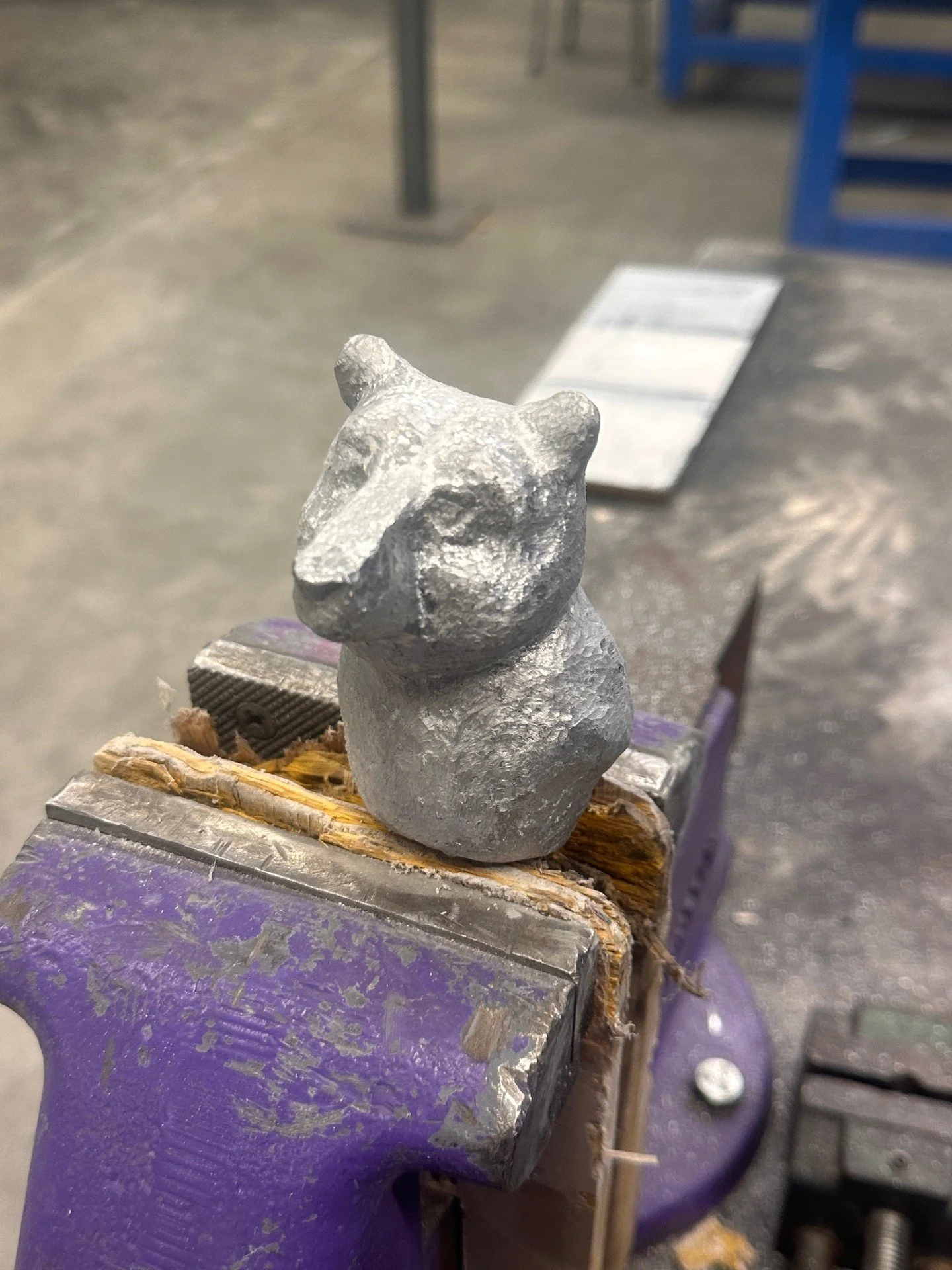
Refining process picture
MATERIALS: Aluminum
YEAR: 2025
FOUNDRY: BRONZE CASTED HAWK TALON
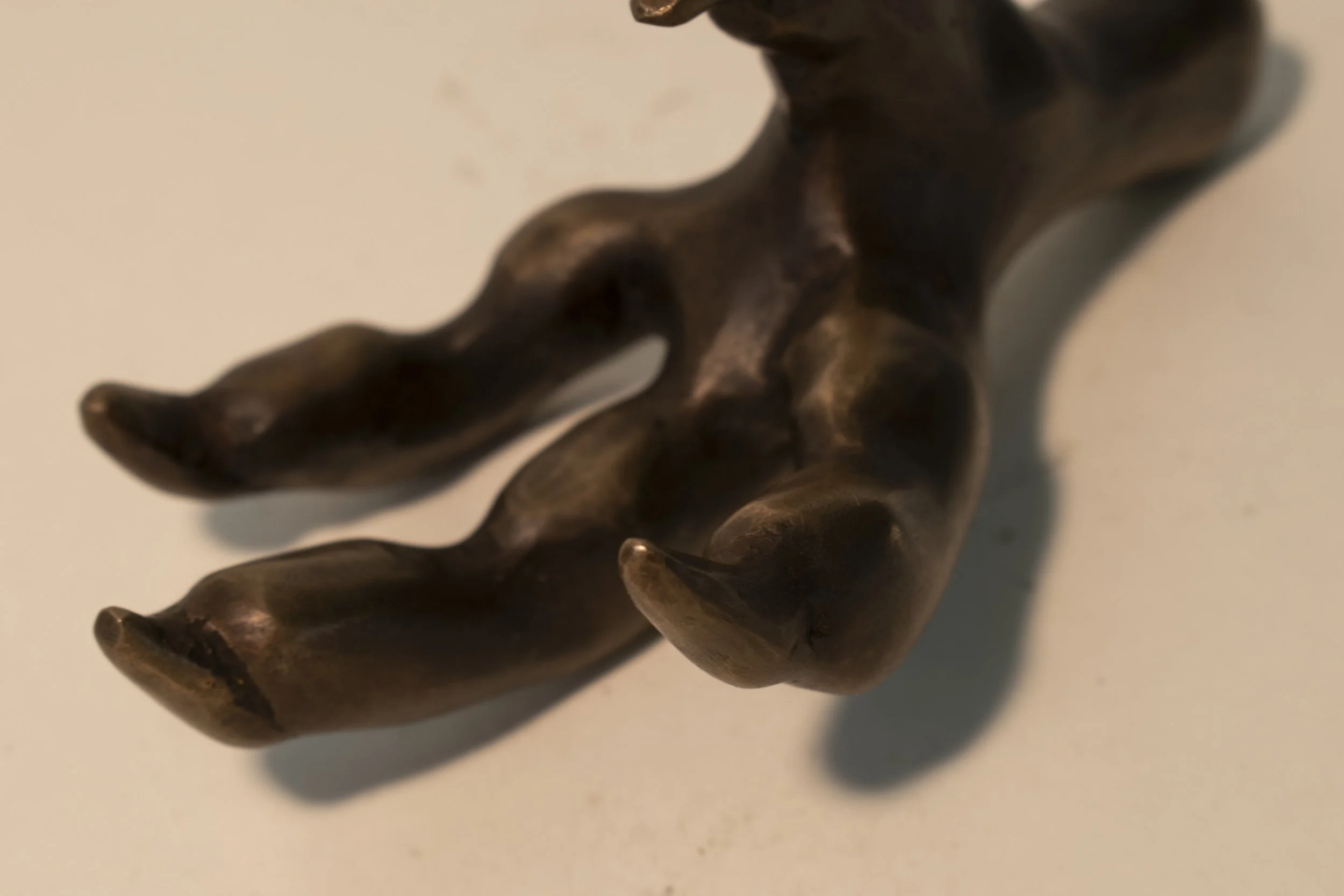
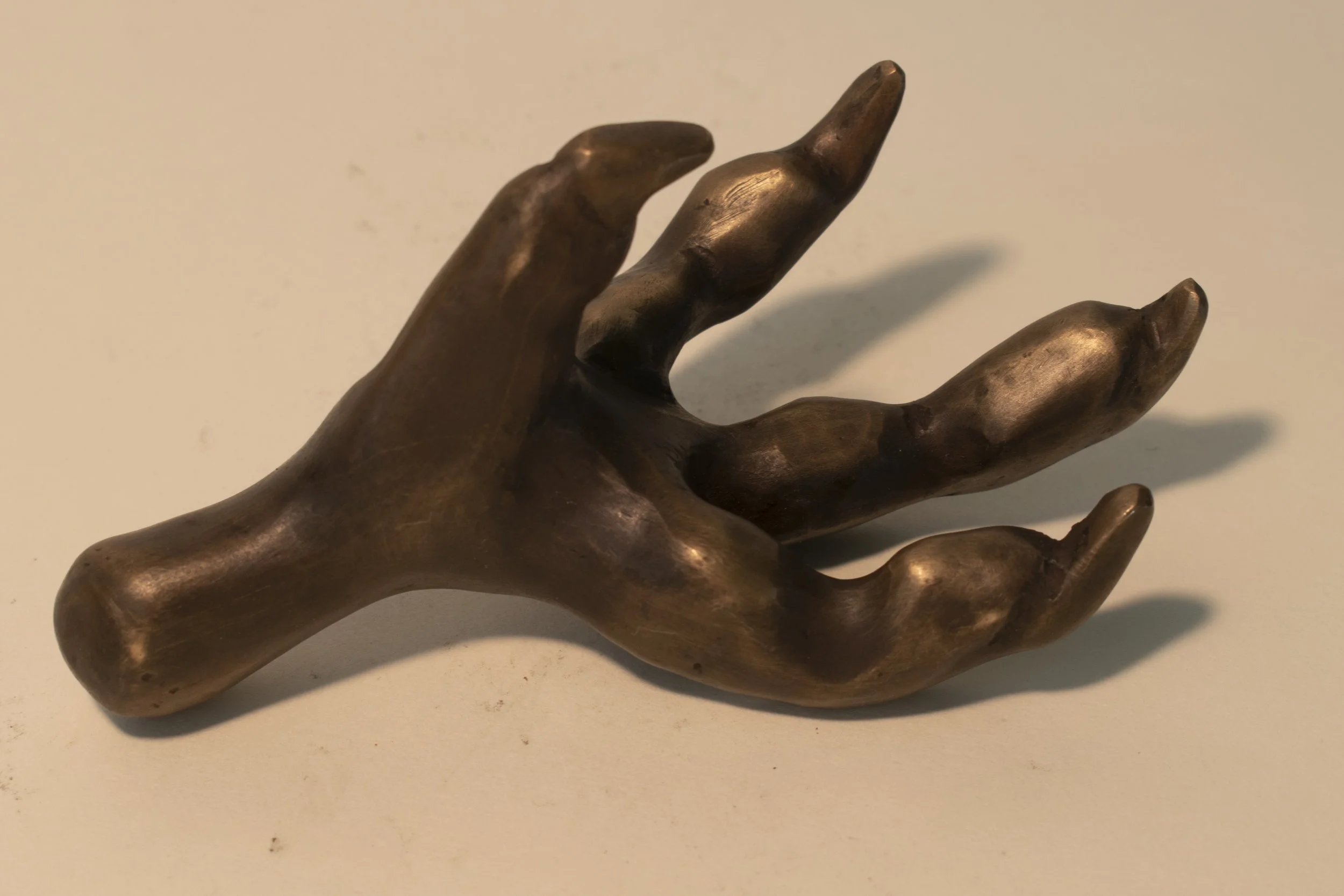
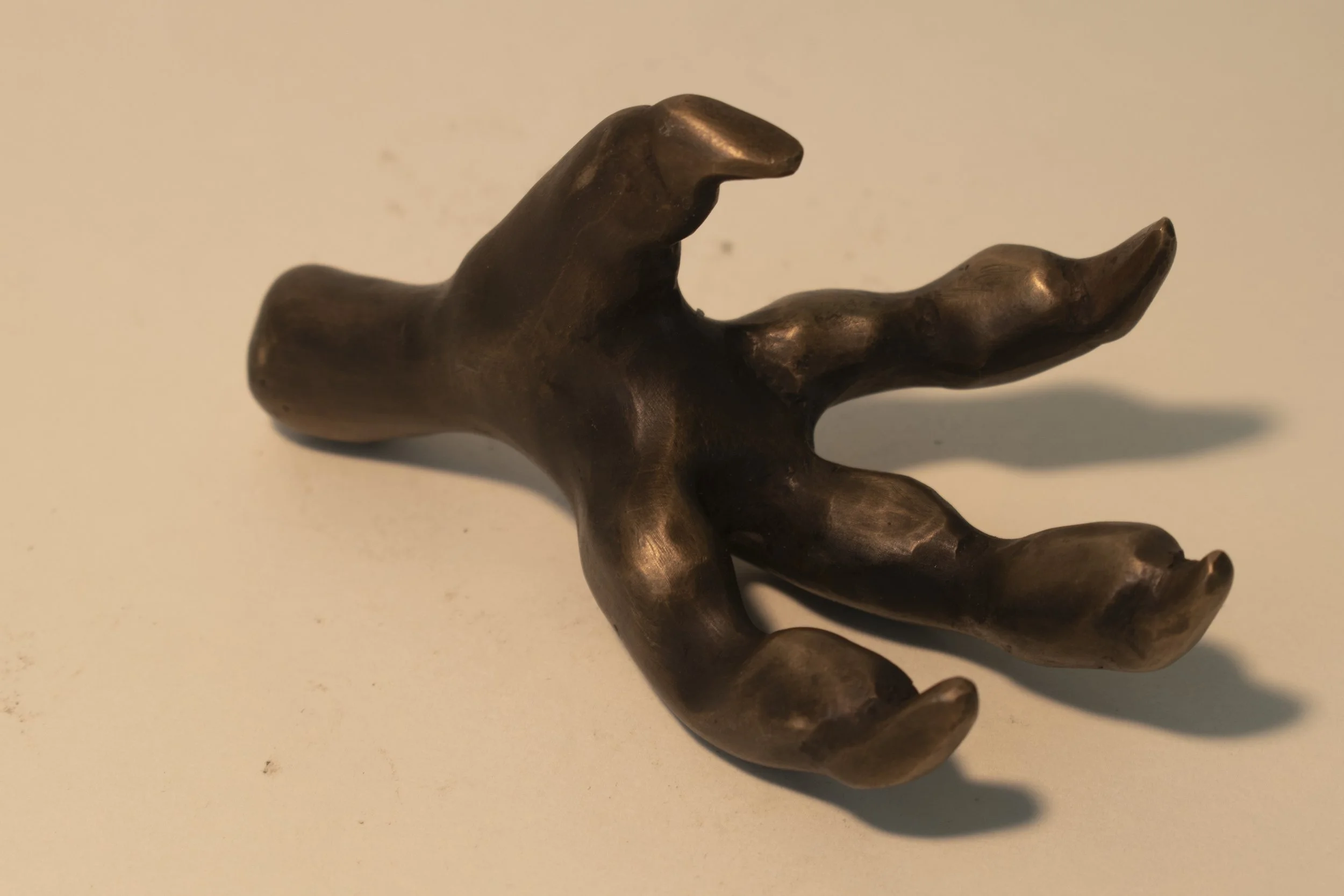
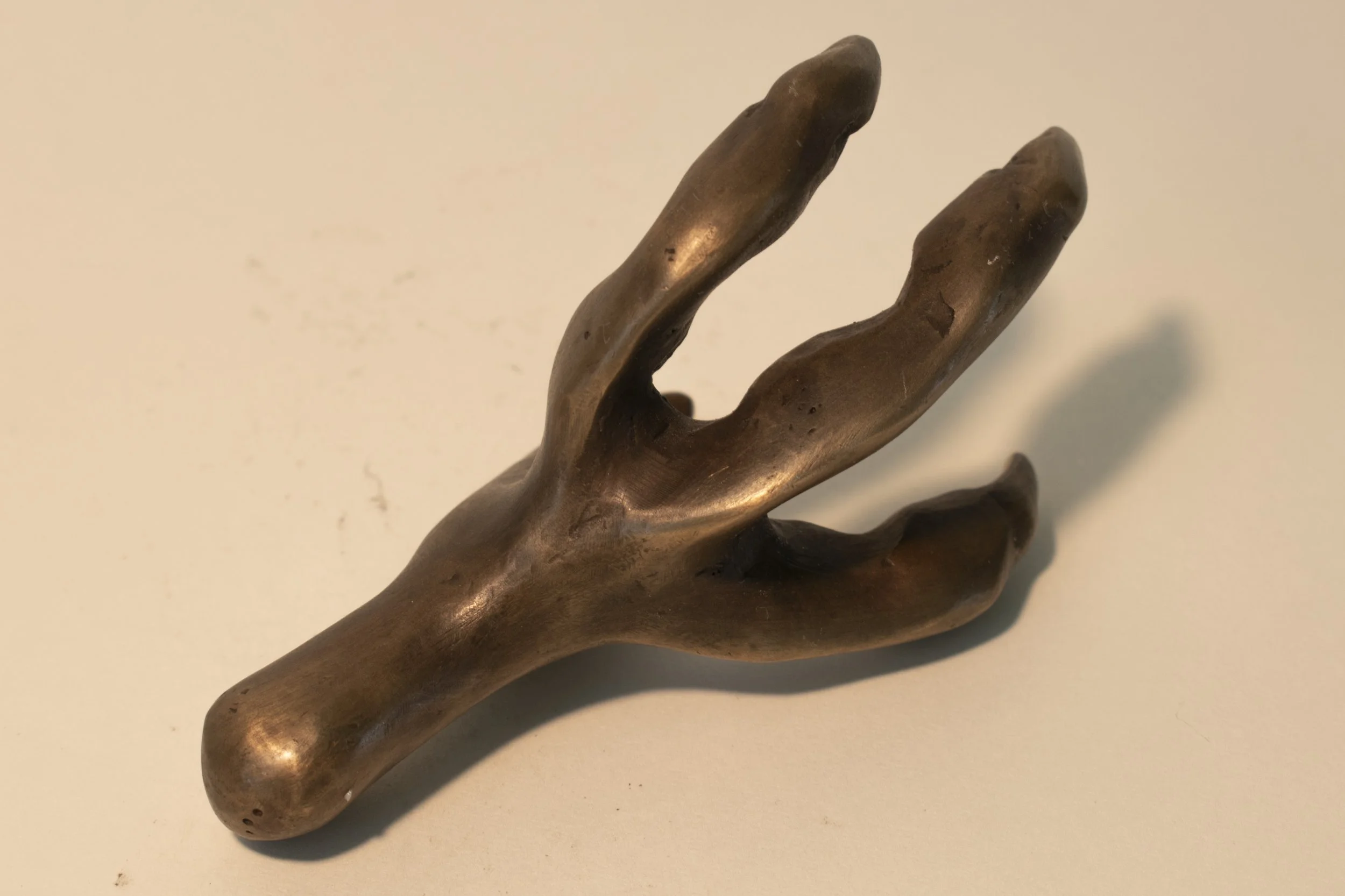
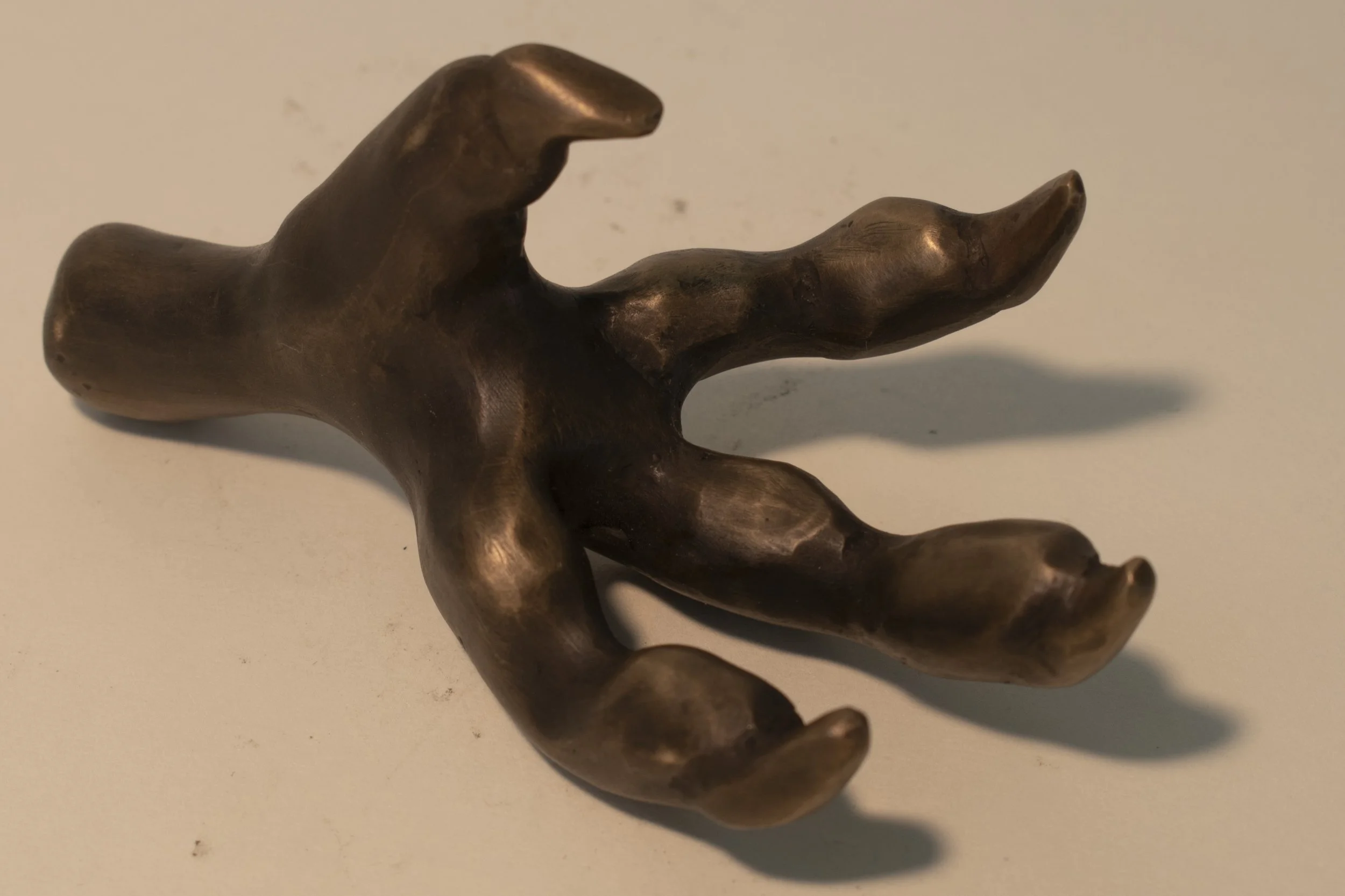
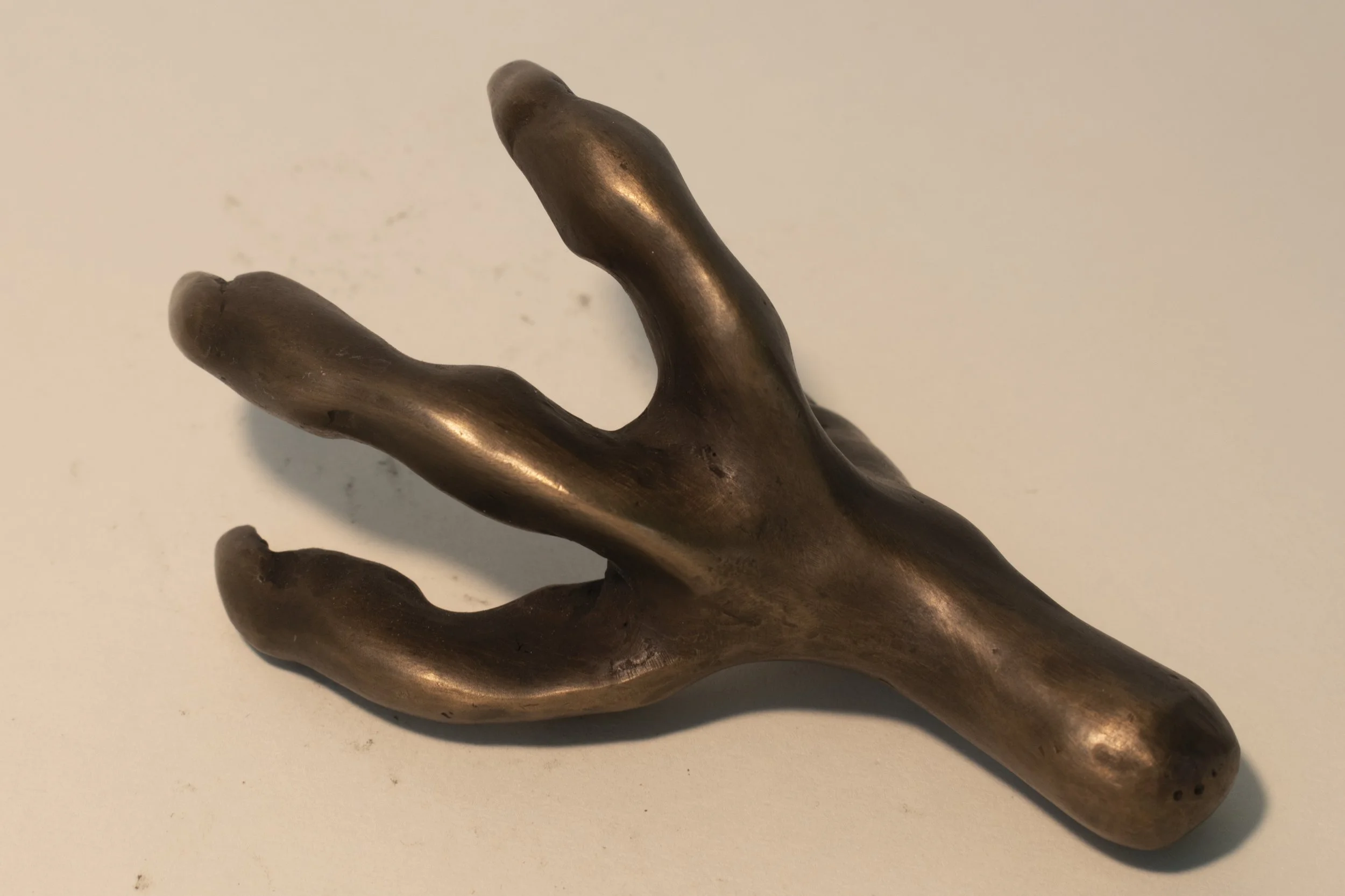
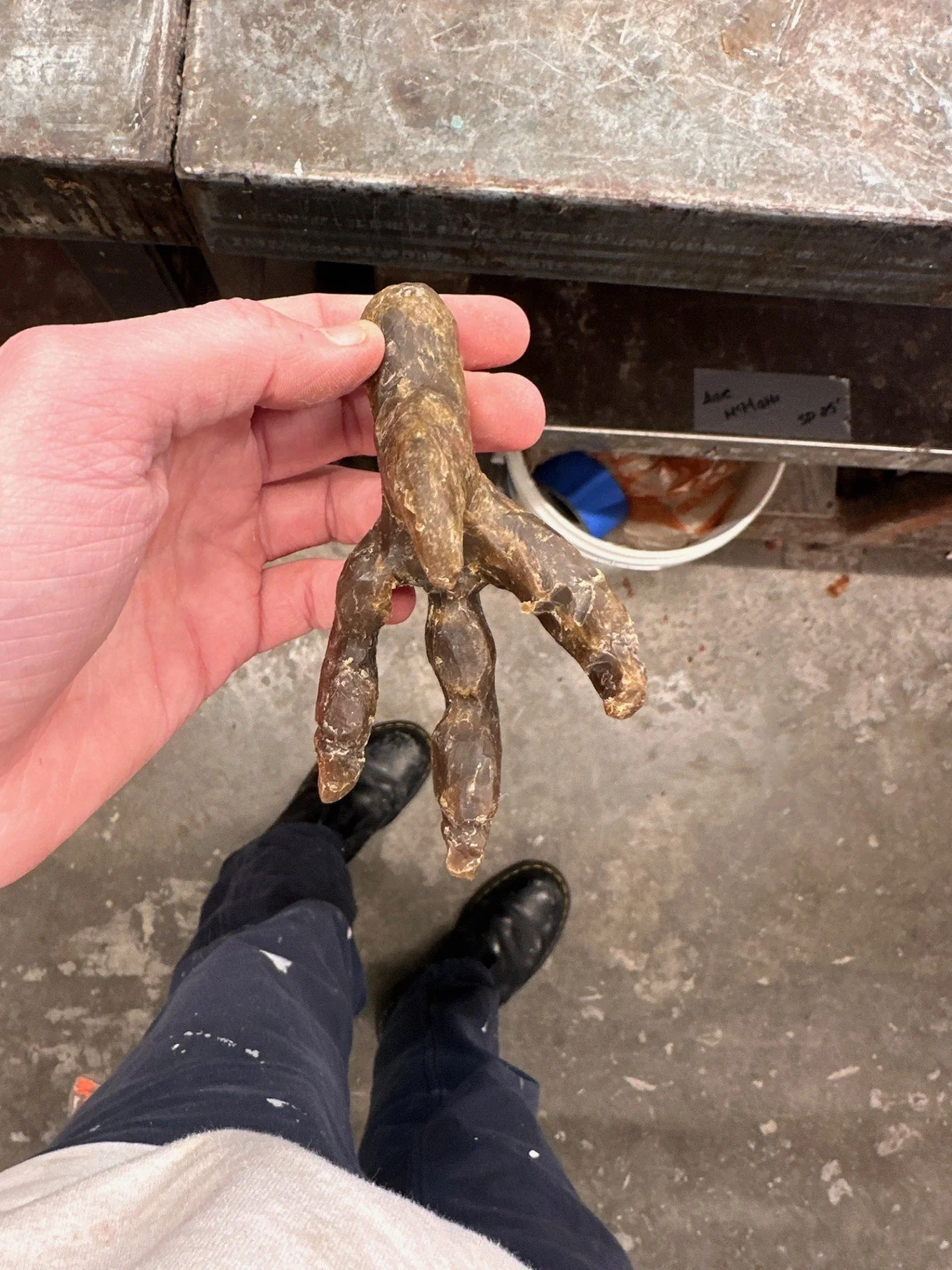
Process of wax form 1
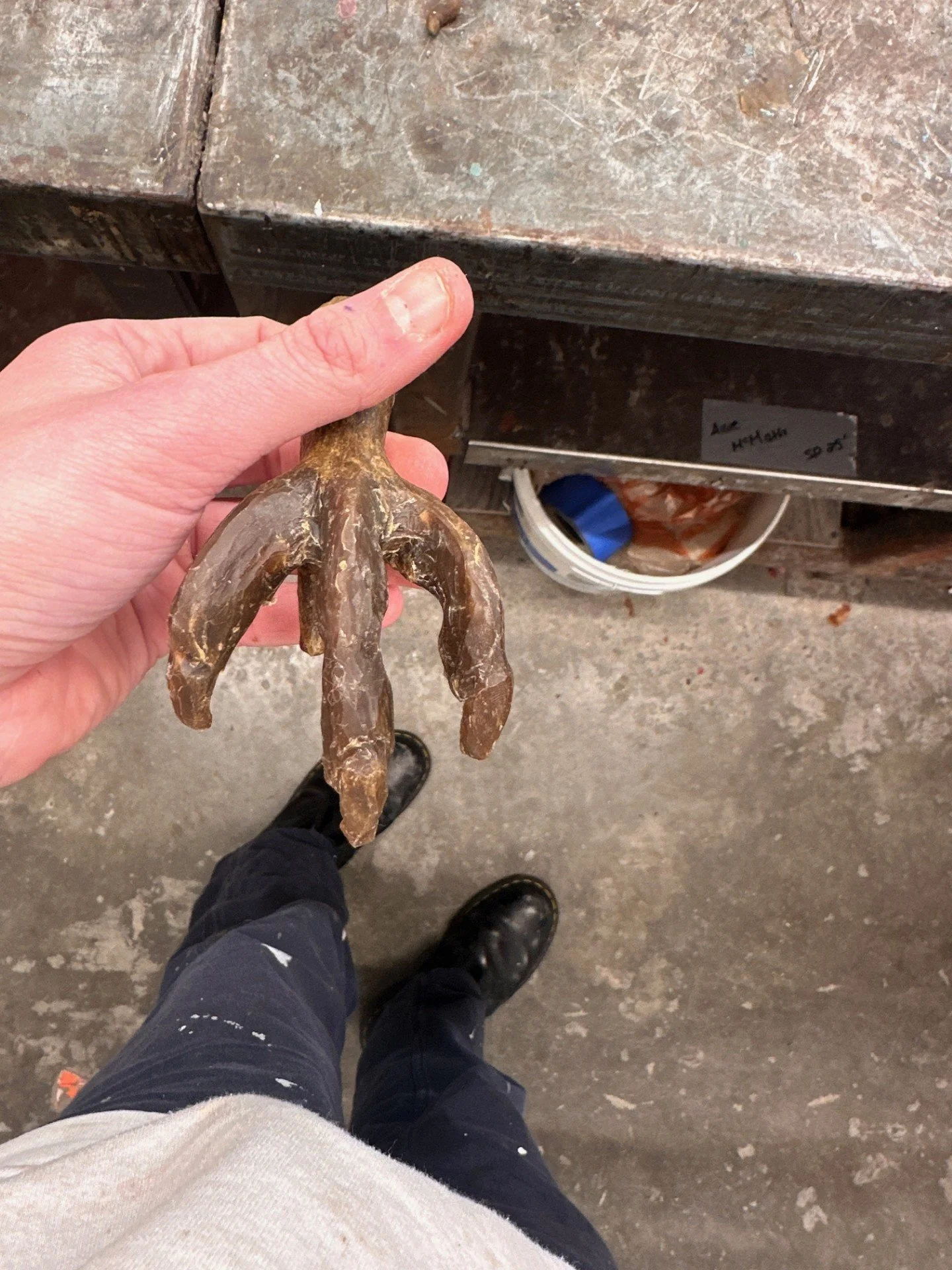
Process of wax form 2
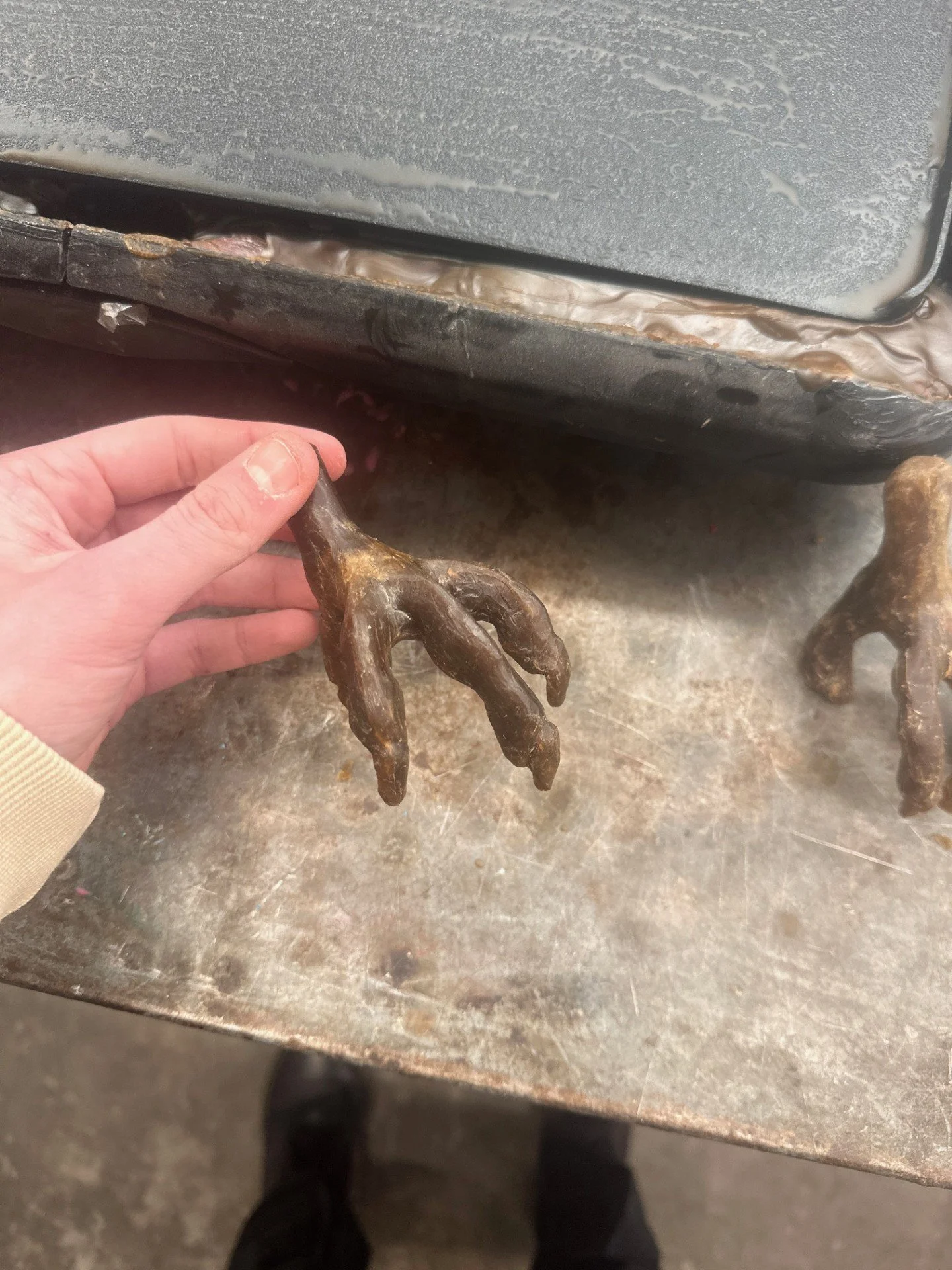
Process of wax form 3
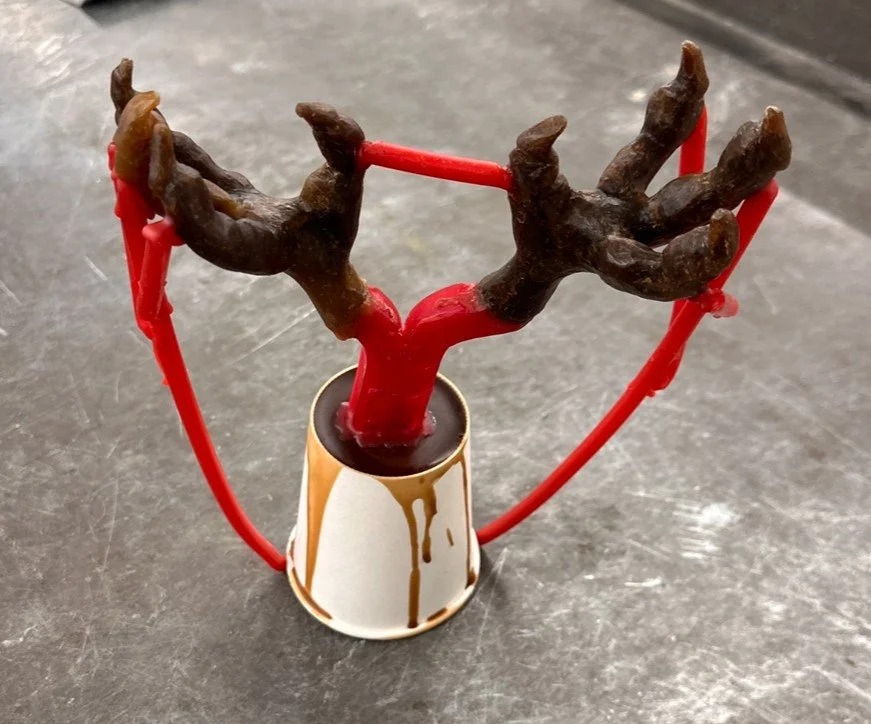
Gated forms
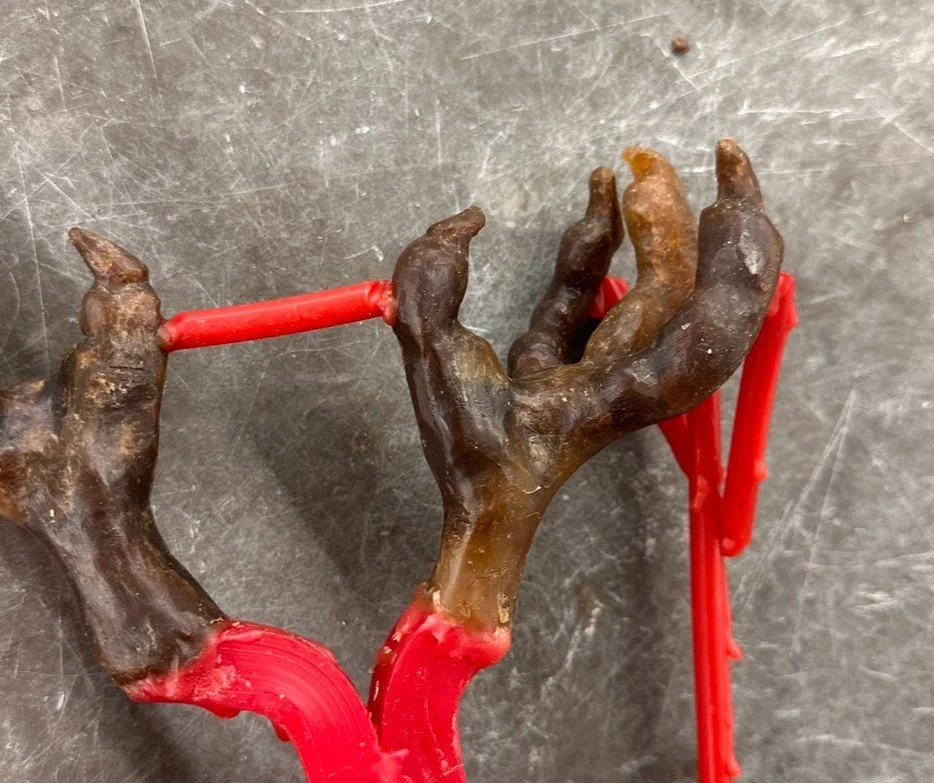
Detail of gated forms
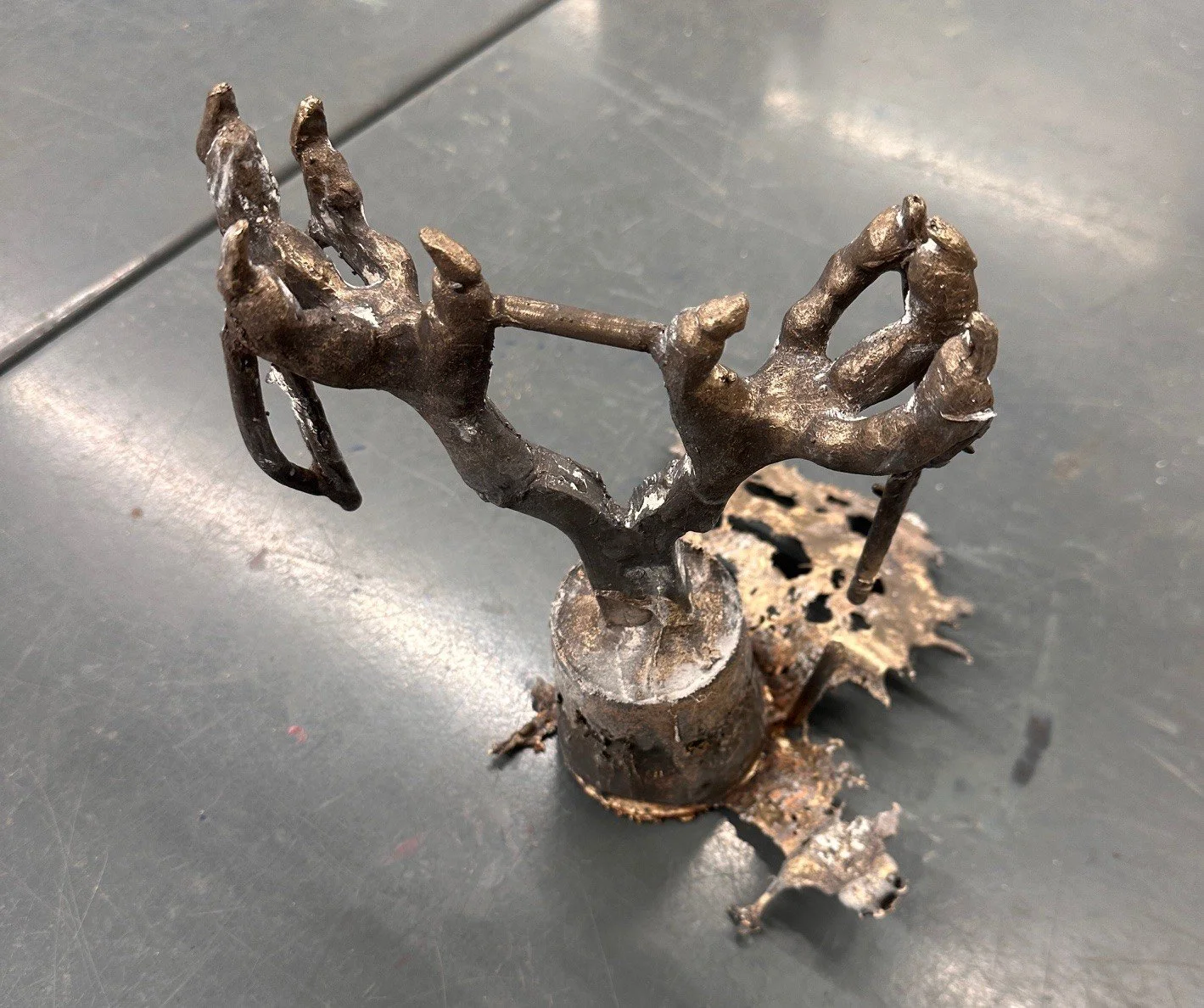
Casted form removed from mold
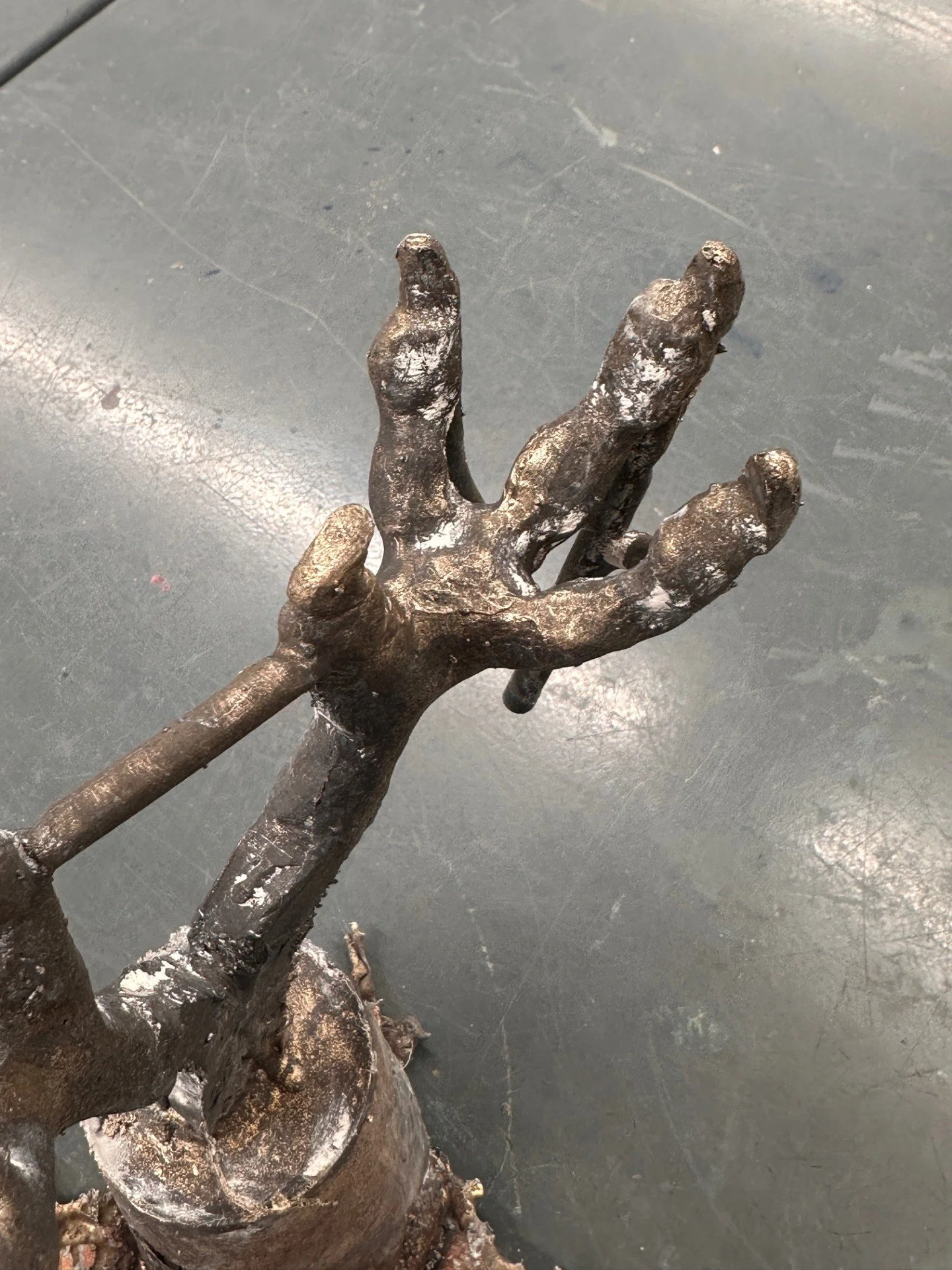
Plaster left on casted form
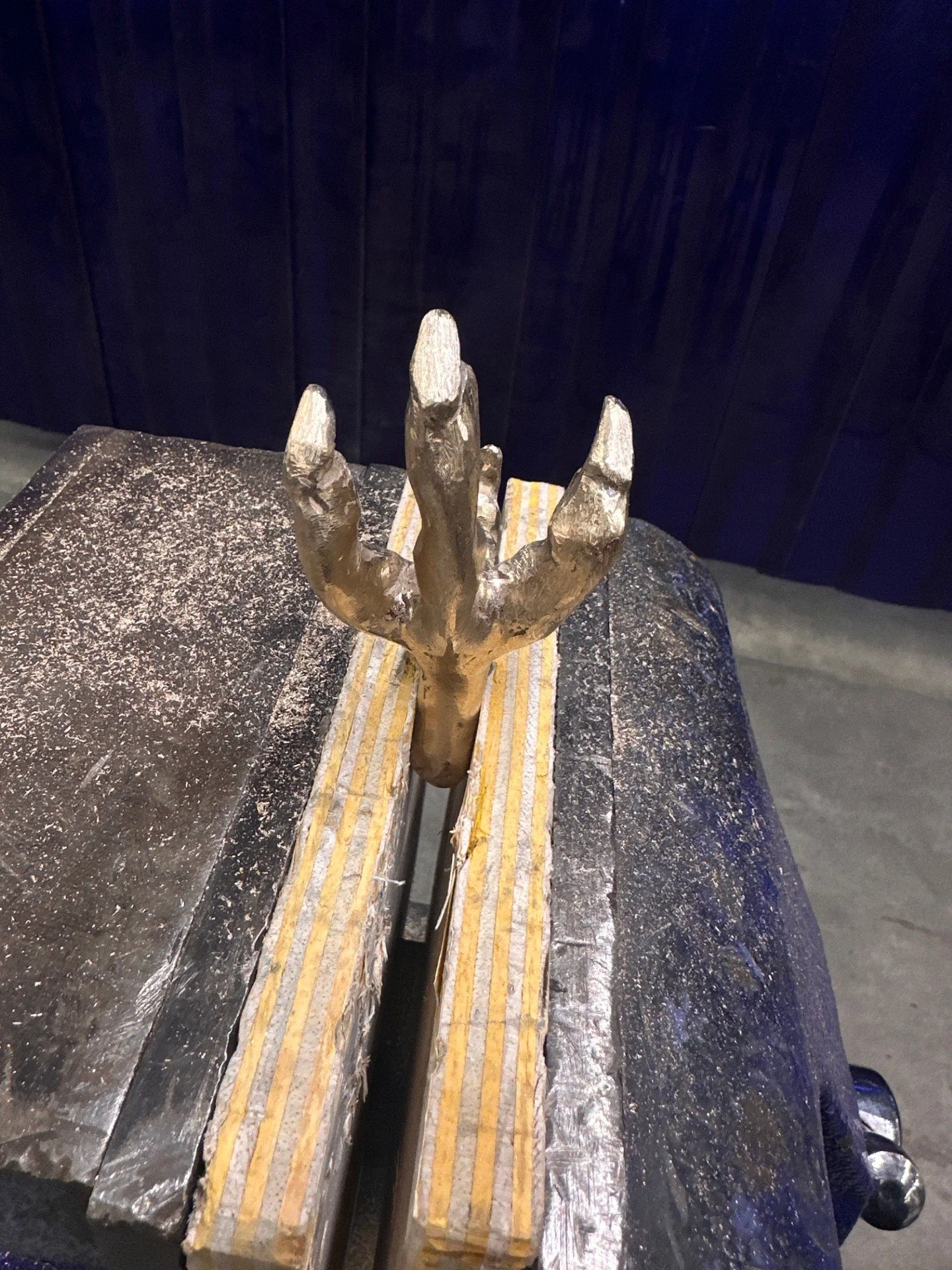
Cleaning and refining process pic 1
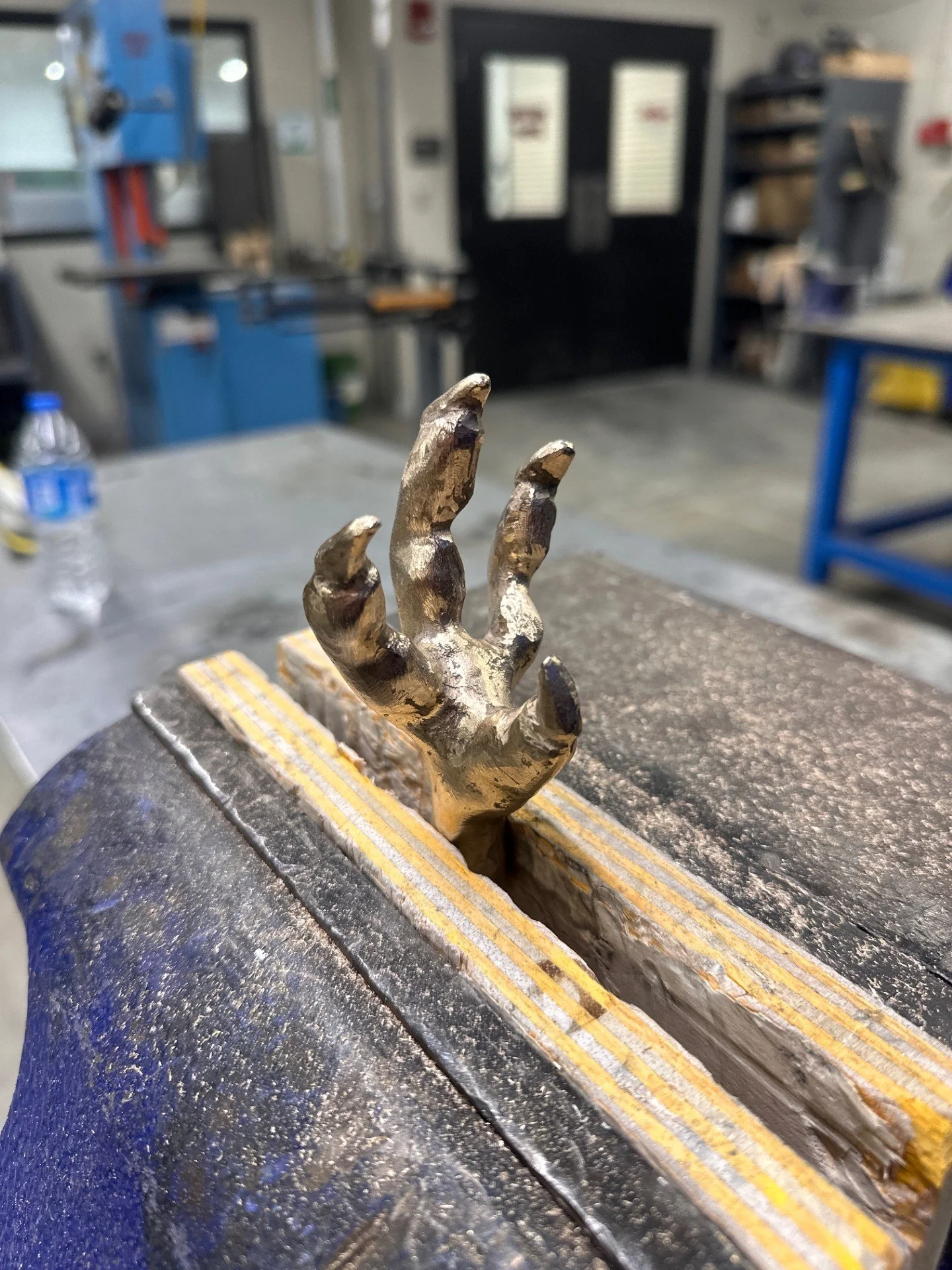
Cleaning and refining process pic 2
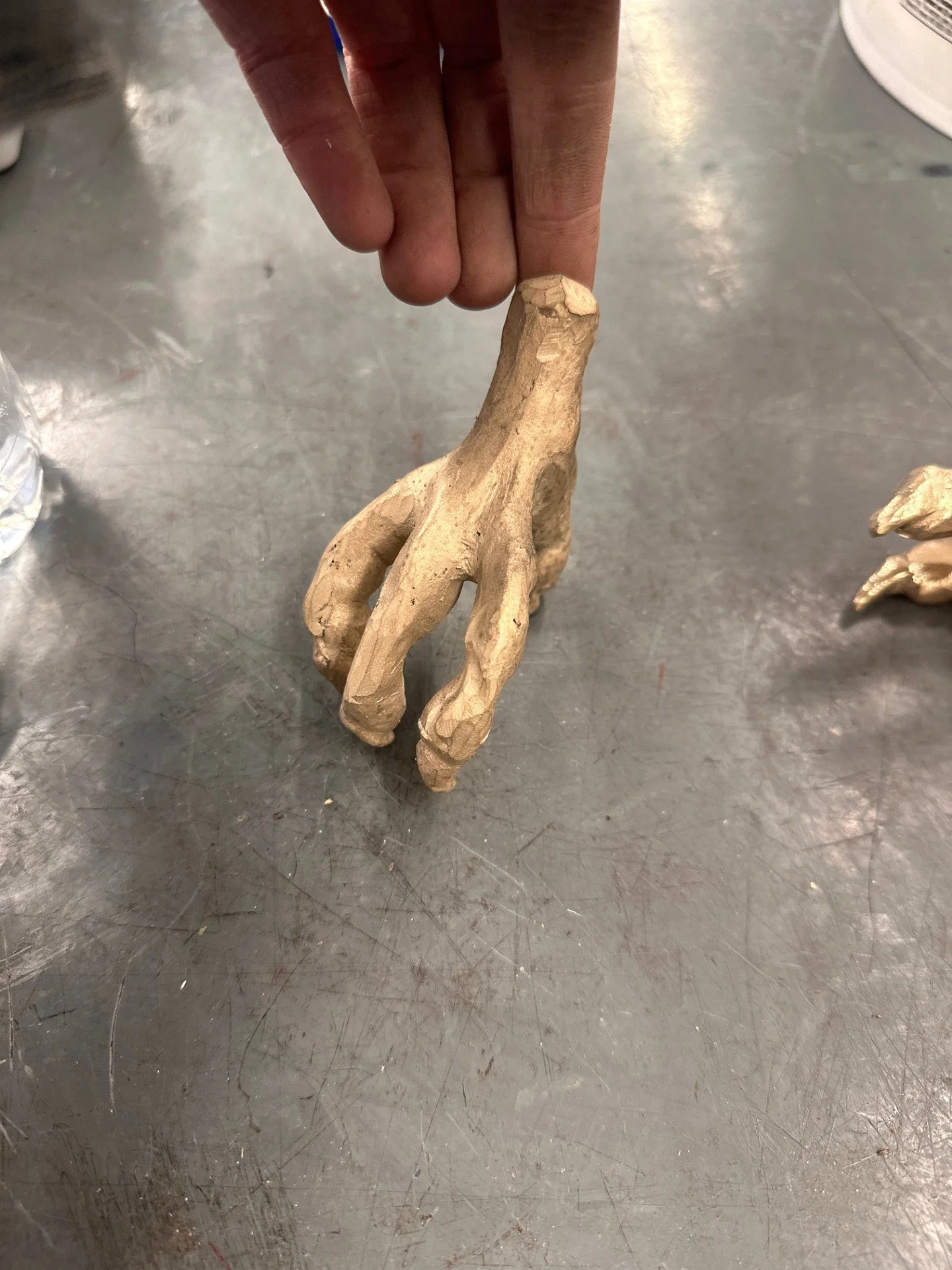
Sand blasted form
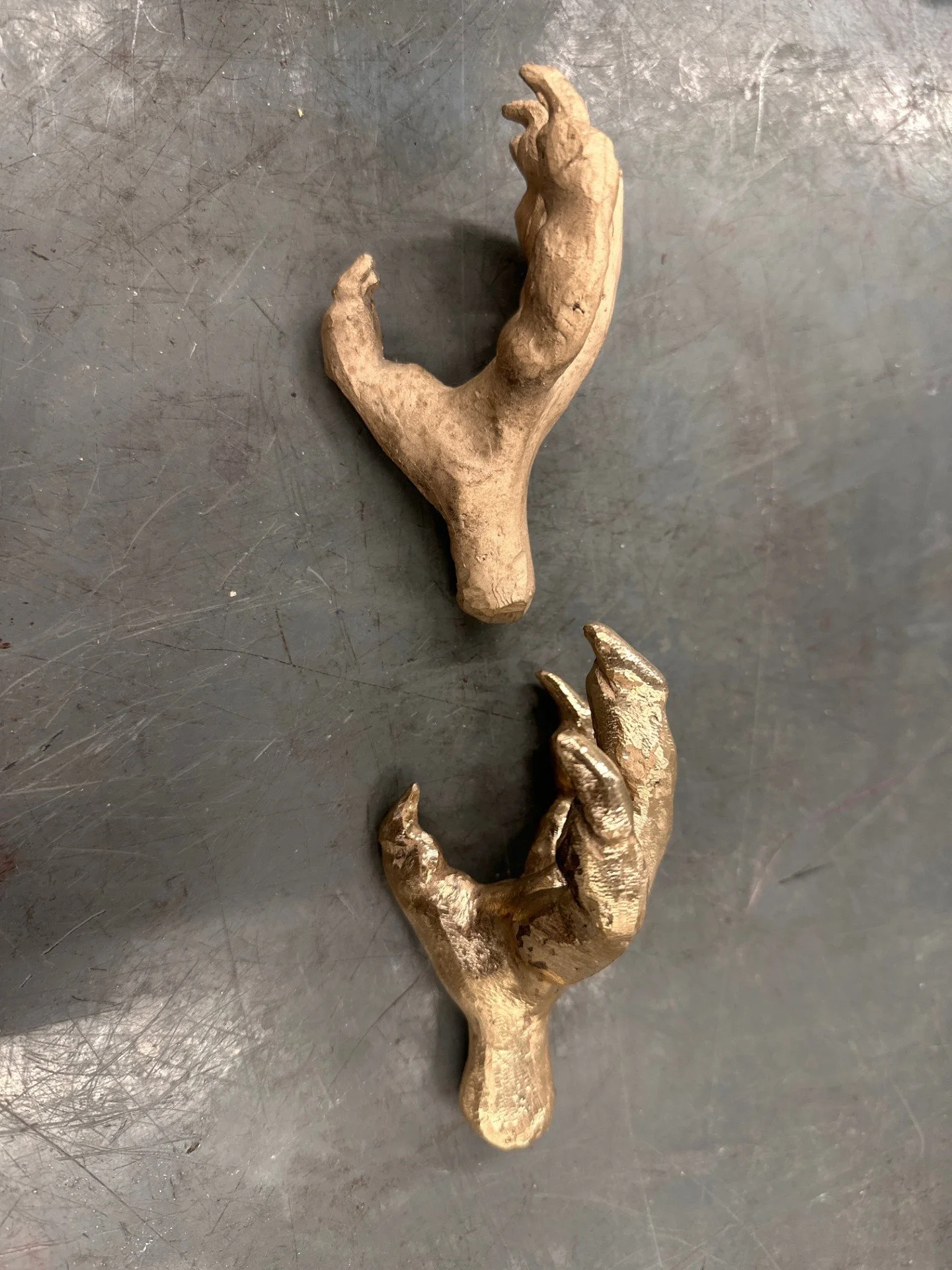
Comparison of sand blasted vs not
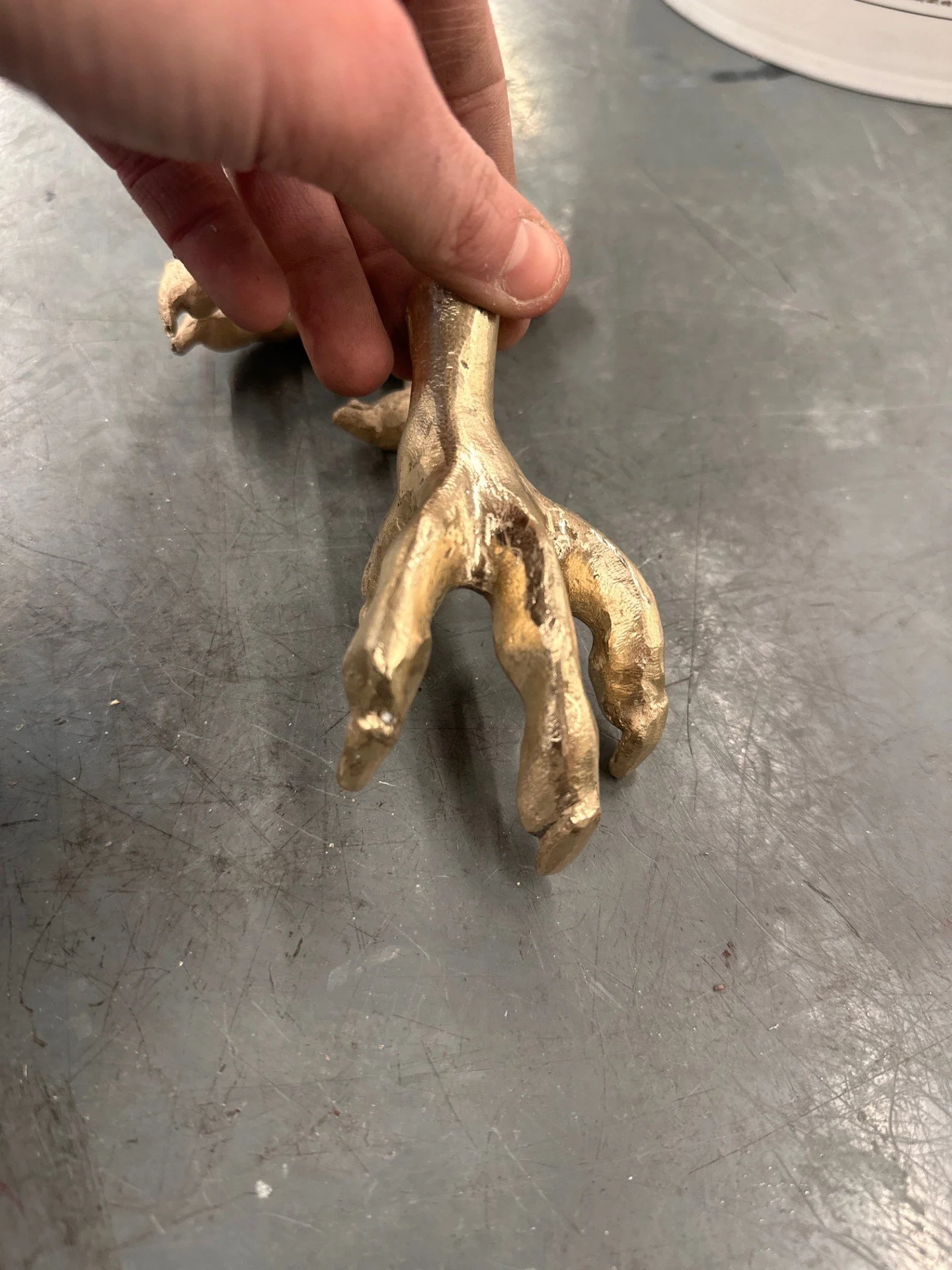
Refining process pic
MATERIALS: Bronze
YEAR: 2025
FOUNDRY PROCESS
For casting bronze and aluminum it is the same multi step process. First I started with Victory Brown microcrystalline wax to shape the form. To make the wax malleable torches and sauntering irons are used. Once the form is smoothed and shaped to ideal size and shape the process of gating starts, which these will then act as vents during the casting process. The gates or tube like wax shapes (red wax) are attached to the form and to a cup that will be burned out during the firing process. Once the form is gated, a separate cage is made with chicken wire and rubber tarp that is 2” of space on all sides away from where the form will be placed in the center. The plaster mix is made and poured into the cage with the form held above it and a base is poured. Then more plaster fills in the sides of the cage with the form in the center encapsulating it. It is left to dry, and after the plaster is harden the tarp is removed and the plaster mold with the wax inside is then fired in the kiln. Once fired it is removed and the wax is burned out creating a negative space in the plaster for the bronze to fill. For the pour, bronze ingots are placed in a crucible to be heated and melted to molten metal to then be poured into the plaster molds. The crucible is lifted with a crane and maneuvered with crucible tongs to be poured. After it is poured the crucible is scraped clean and put back. Once the bronze is cooled the mold is broken open to reveal the form originally made of wax. Then the refining process starts using different tools like angle grinder/cutter, sawzaws, dremels with different bits, air compressed grinders, sandblasting, etc. Using different bits and grids of sanding and grinding to refine it to smooth or textured surfaces. For sealing there are many options of patinas or polishing. Using a torch and a brush you can apply liver sulfur, ferric nitrate, etc. Then water and a coat of wax seals it and stops the reaction.
CONCRETE: BODY WEIGHT
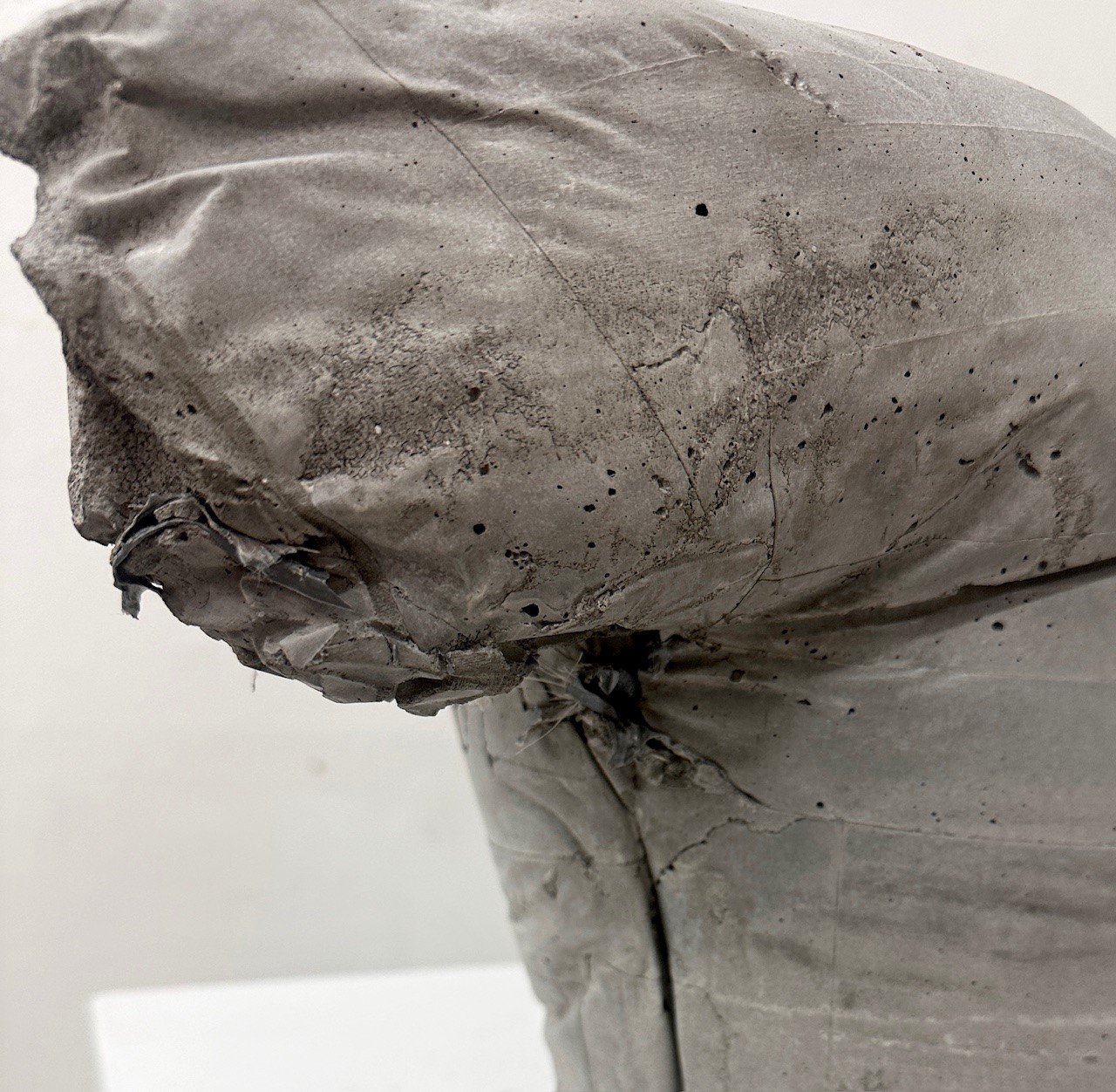
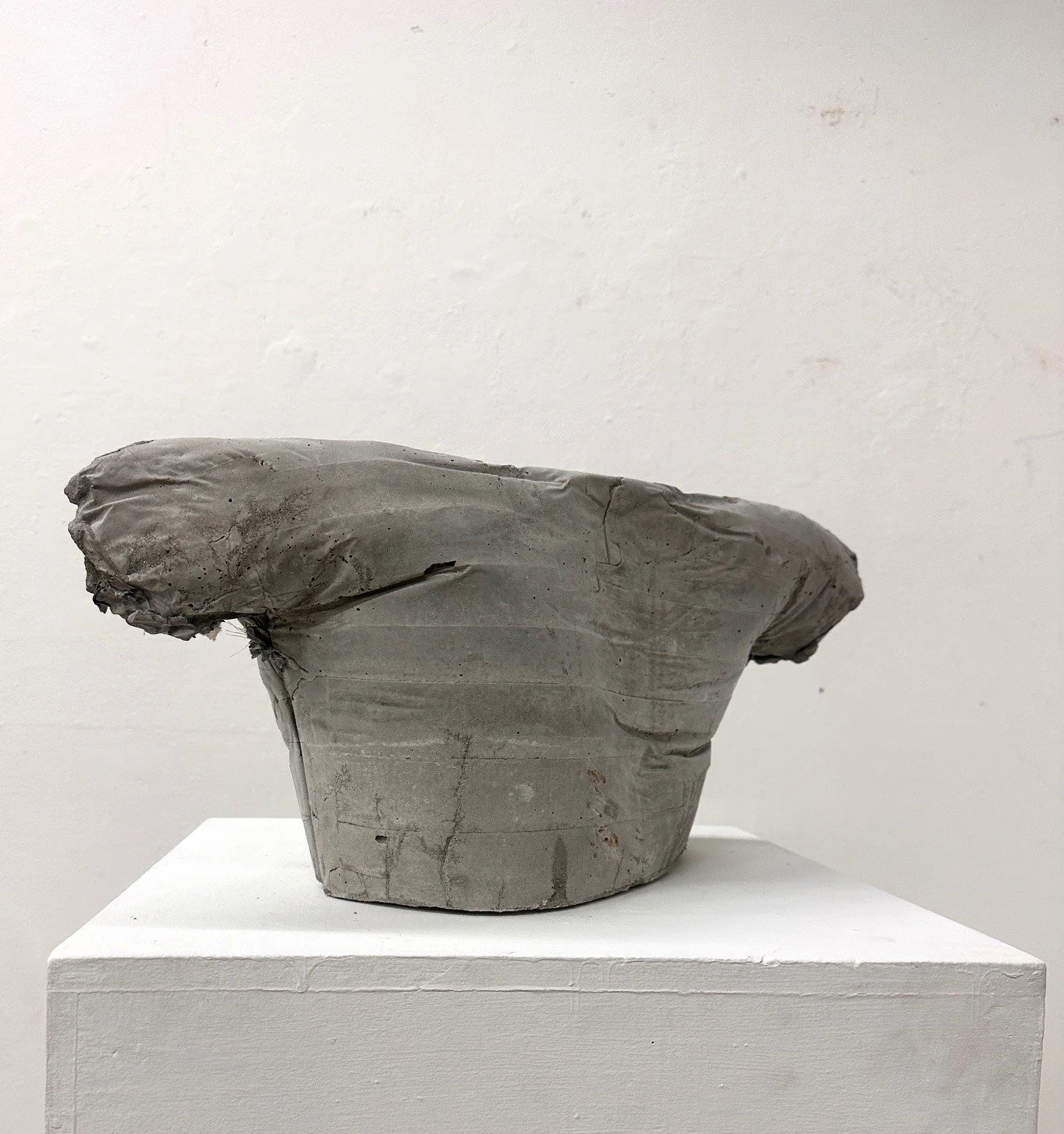
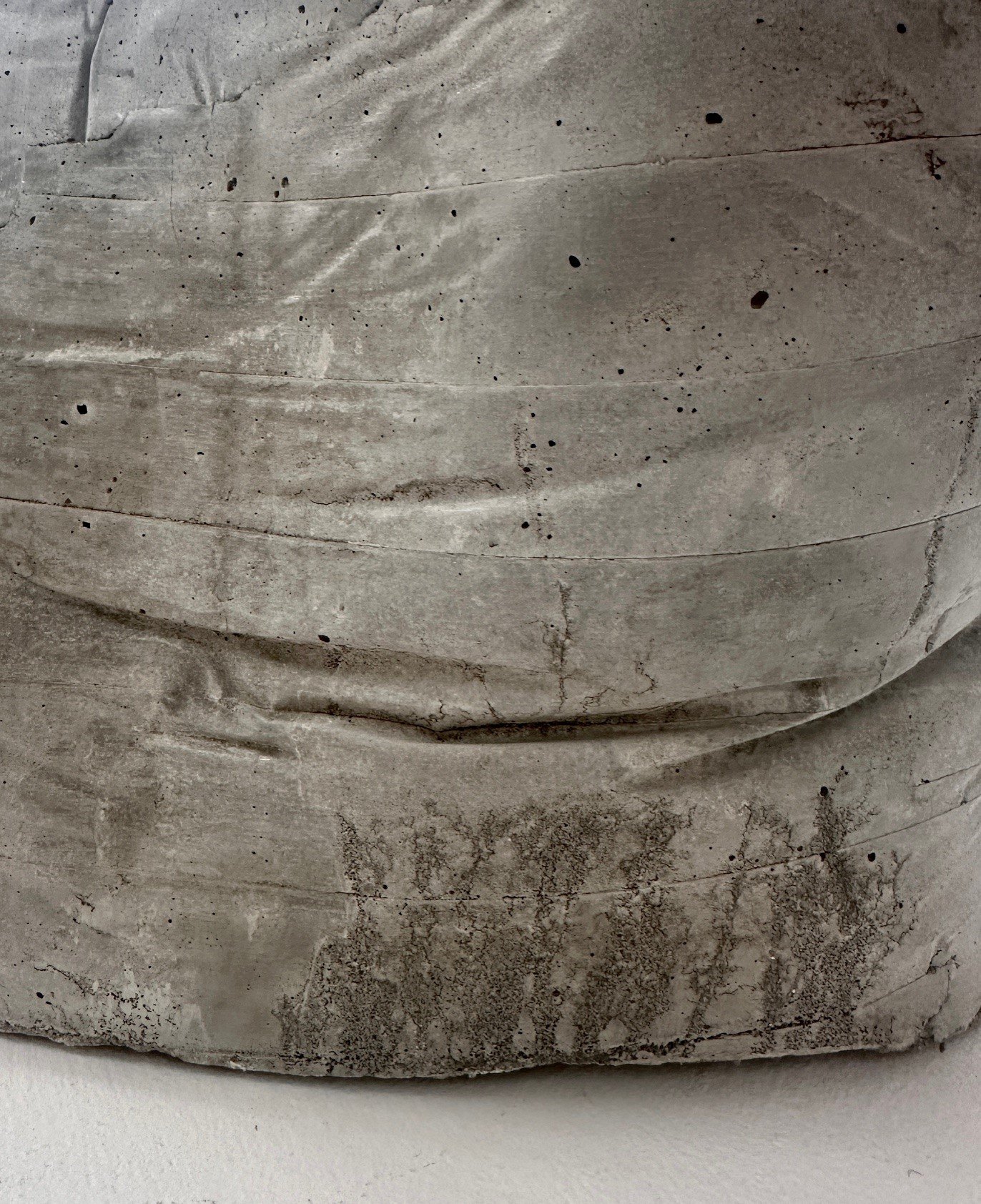
BODY WEIGHT: The concrete molded torso is a physical representation of how depression can cause immobilization of the body. The humanness of the form contrasting with the dense cold material expresses the emotions felt when in a depressive state. The form is shifted and wrinkled suggesting subtle movement, but it is strained from the weight it carries. The process of filling the shirt mold with concrete and gradual settling and solidifying of the material aligns with how depression is not instant or urgent state but slow and constraining. The releasing agent of the shirt from the concrete was duct tape and the application of the tape almost acted as an attempt to keep the feeling internalized only for it to be revealed and recognized to the viewer in the end. As recognition and confrontation of the feeling is one of the first steps in growth and healing. By allowing the observer to interact and see the depressive form it creates a vulnerable interaction and gives space for compassion and empathy.
MATERIALS: Concrete, duct tape.
YEAR: 2023
DIMENSIONS: (Approx.) Height: 2ft Length: 3ft Width: 1ft
PROCESS: Using a found shirt it was lined with duct tape on the inside as a releasing agent for the concrete. Once all the fabric inside the shirt was sealed the mold is formed. Concrete and sandbags were then mixed and poured into the mold and set to dry. Once dry, the shirt is then cutaway leaving the t-shirt like form.
CELLUCLAY: 86
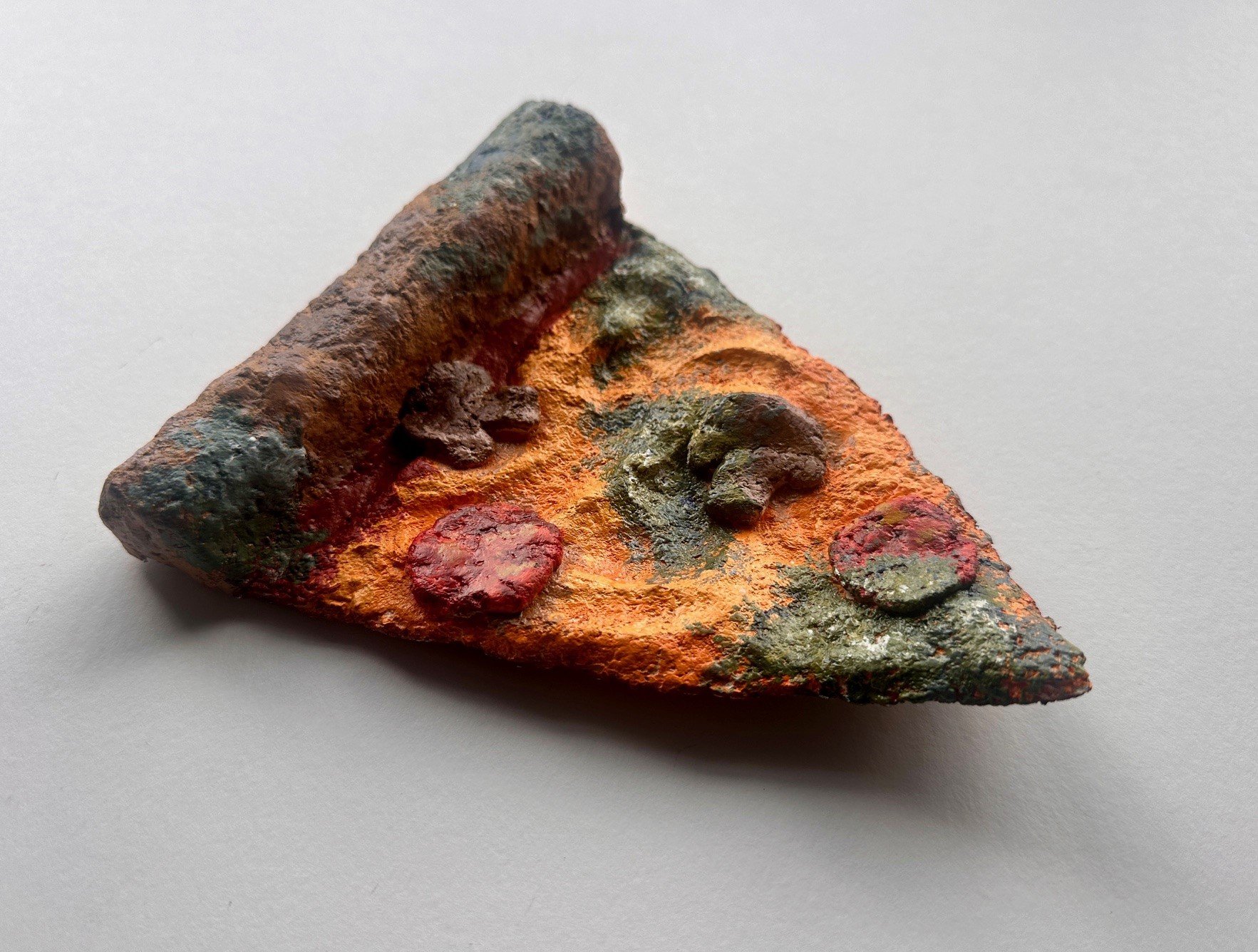
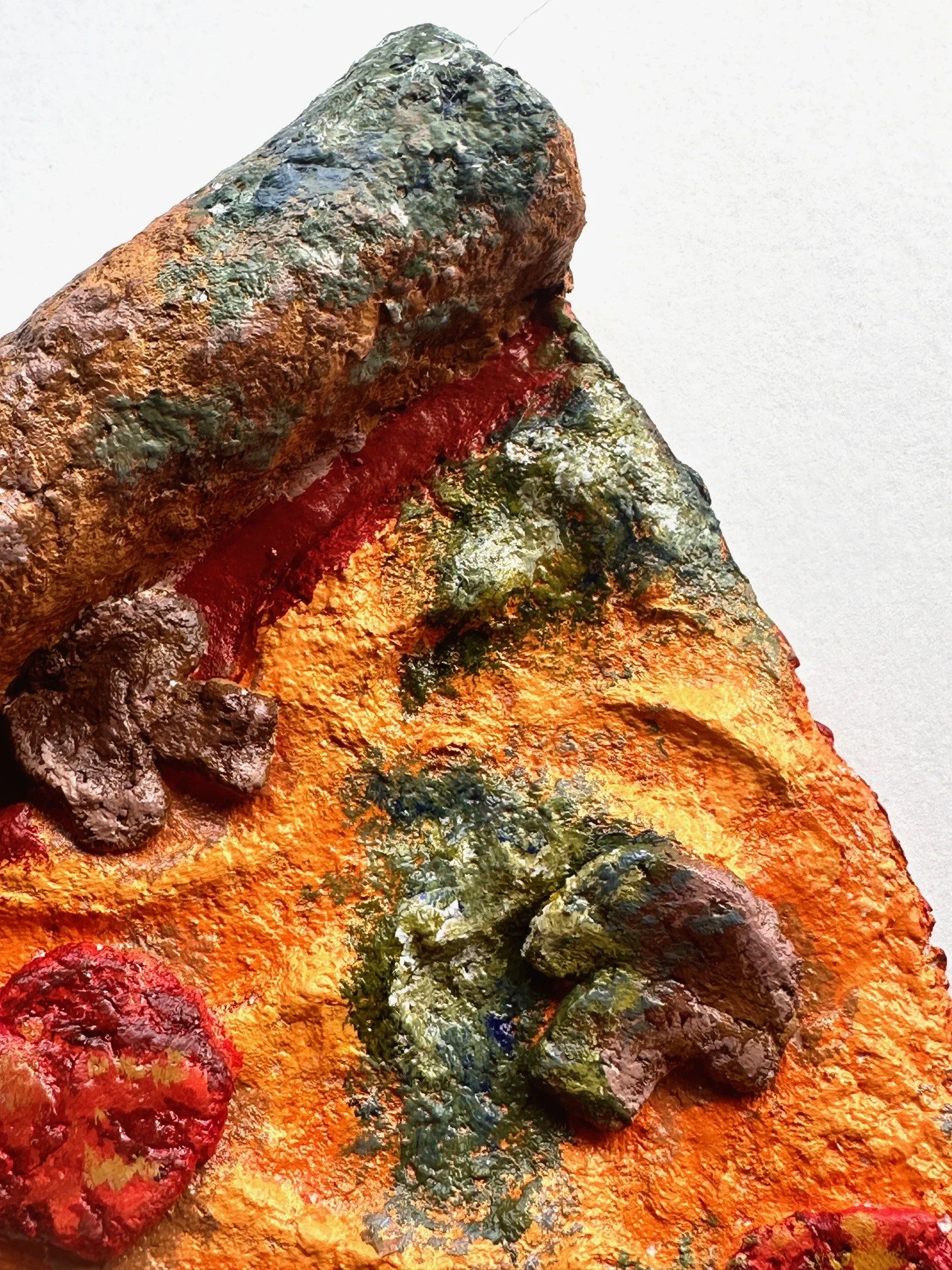
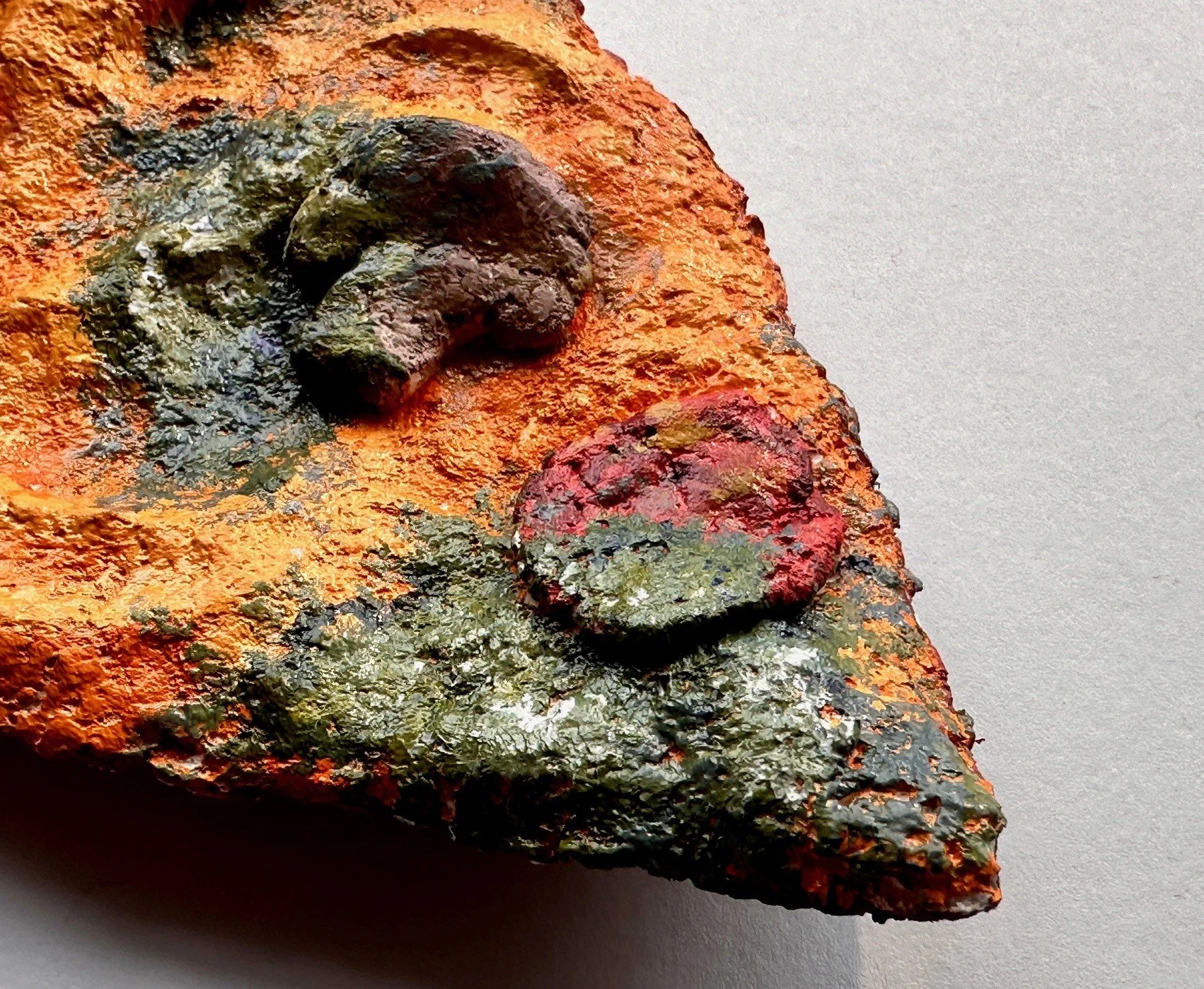
86: The saturated and moldy pizza slice has realistic features that are slightly off putting. It represents the relationship with food working in the service industry. My experience working in the service industry caused my appetite to constantly fluctuate while being constantly surrounded by food and messes to clean. 86 is a serving term meaning an item is "no longer available" which can correspond to how the appeal for food comes and goes.
MATERIALS: Cellucaly, cardboard, acrylic paint.
YEAR: 2024
DIMENSIONS: (Approx.) Height: 1in Length: 8in Width: 6in
PROCESS: To construct the form, an armature is made using duct tape and cardboard. Once the framework is set, celluclay is mixed with water to create a paper mache like paste that is then applied over the base. Once dry acrylic paint is applied to create details and textures.
PAPER MACHE: HOME
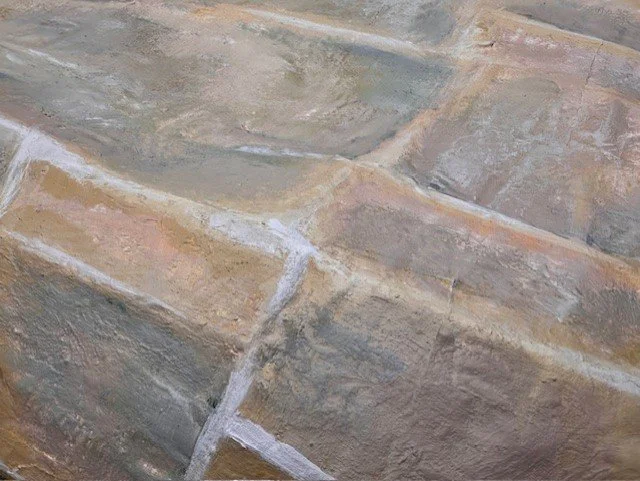
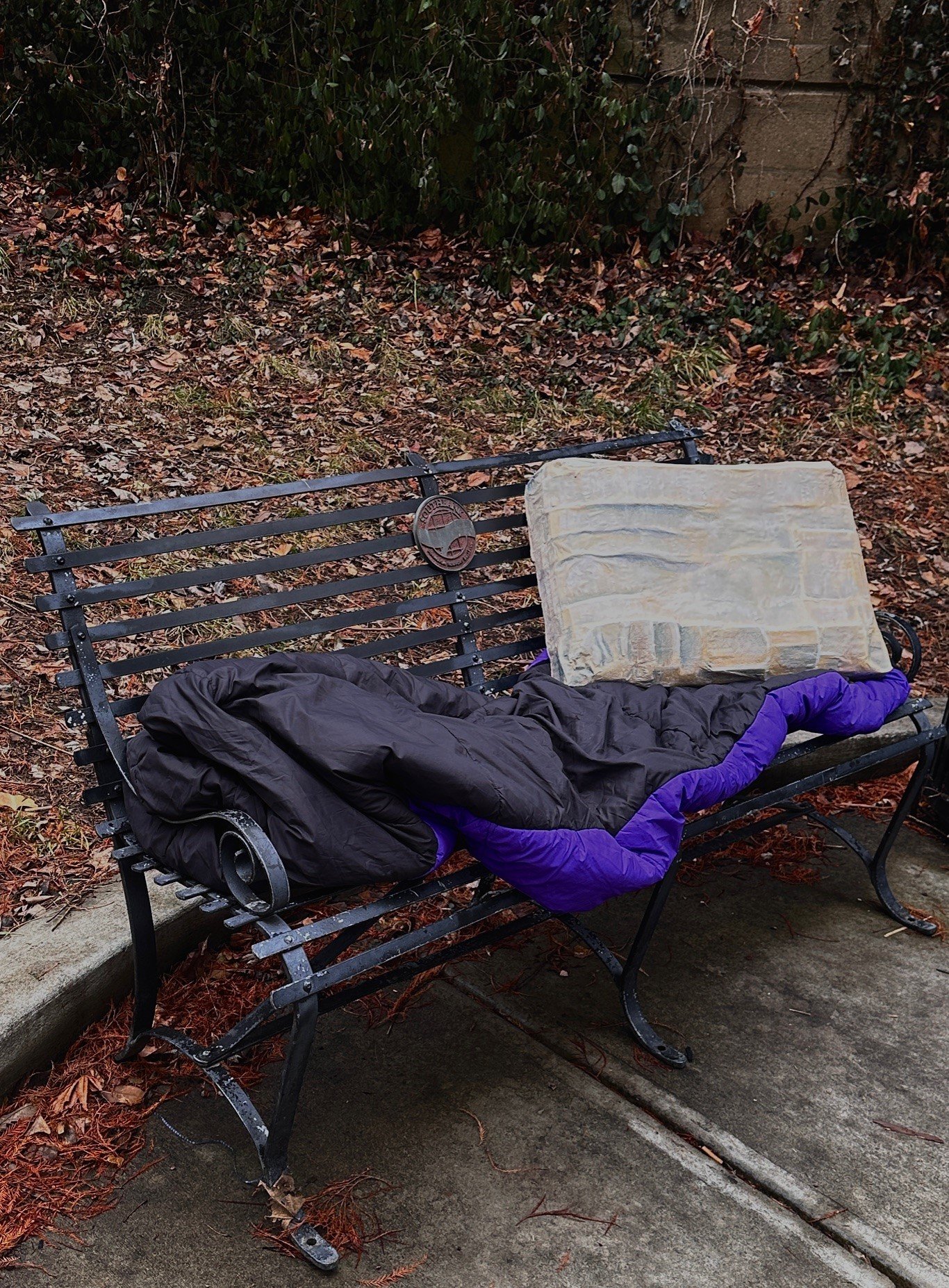
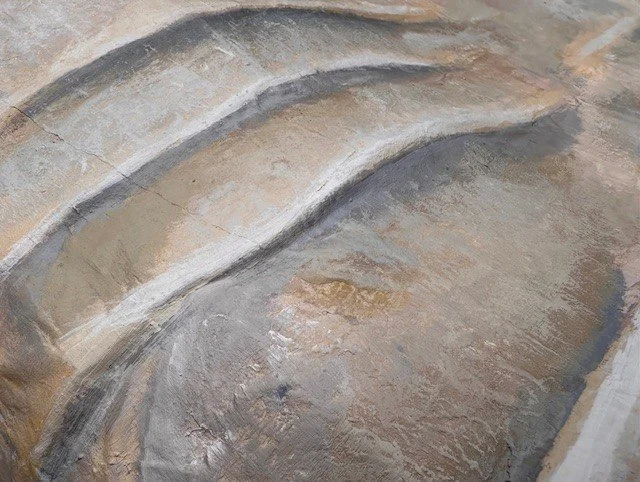
HOME: Home is a paper mache constructed pillow painted to look worn and used. It is used to communicate the complicated relationship of home with the homeless. A single pillow displays transportability and how the idea of home is constantly transitioning and moving place to place. The materials made to construct it communicate the fragility and instability of not having a consistent place to reside. It builds sympathy towards those who struggle and creates a visual metaphor of the relationship.
MATERIALS: Cardboard, tape, paper mache, acrylic paint.
YEAR: 2024
DIMENSIONS: (Approx.) Height: 0.5ft Length: 2.5ft Width: 1.5ft
PROCESS: Using cardboard and duct tape an armature is made to be a base of the form. Cardboard is cut into strips that stack and overlap to create dimension. Once the framework is set, flour mixed with water creates the paper mache. Newspaper strips are soaked in the mixture and are applied to the cardboard armature. As the newspaper dried it bonds and solidifies. Paint is then applied to create details, depth, and texture.
WOODWORKING: MONOLITH
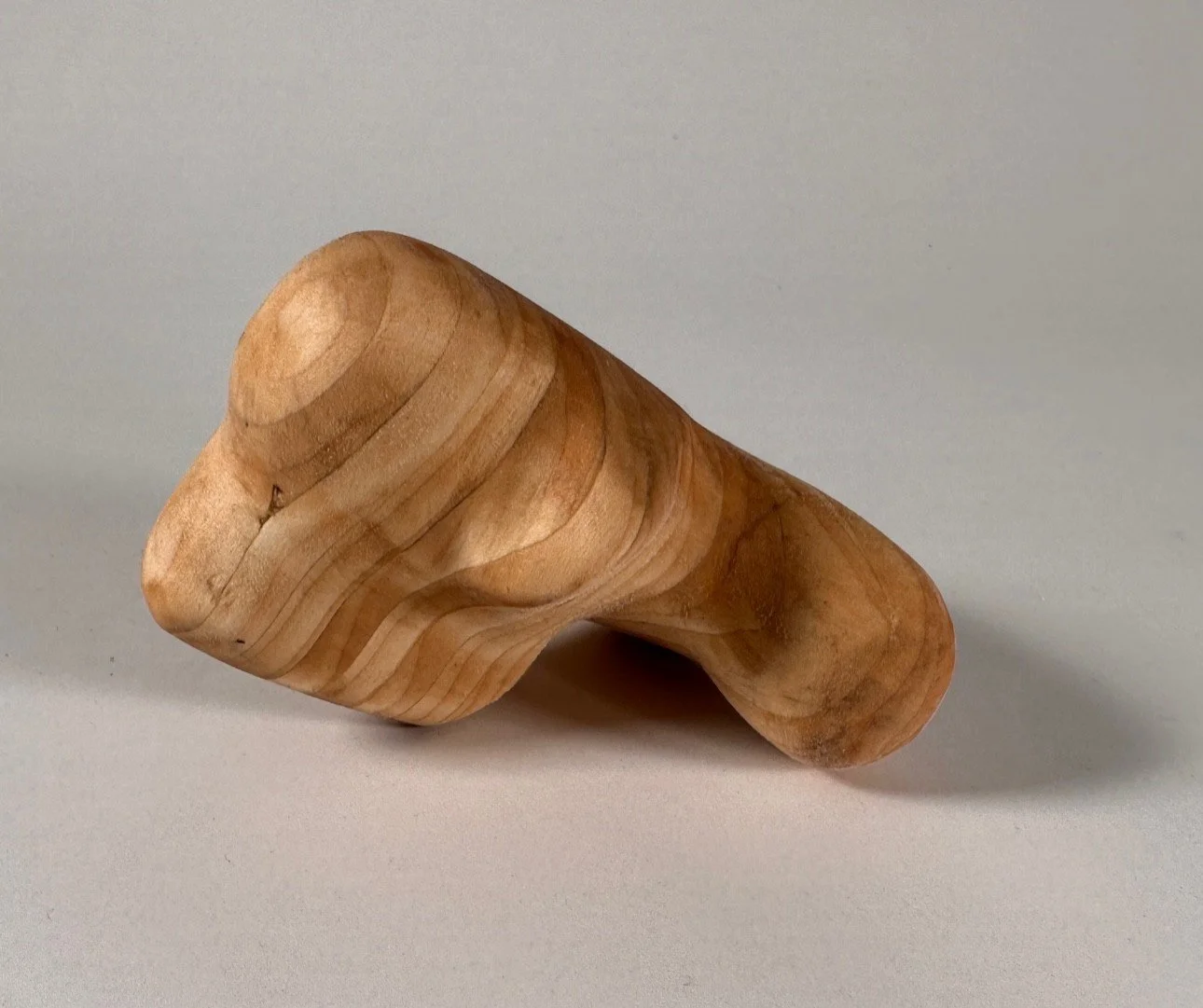
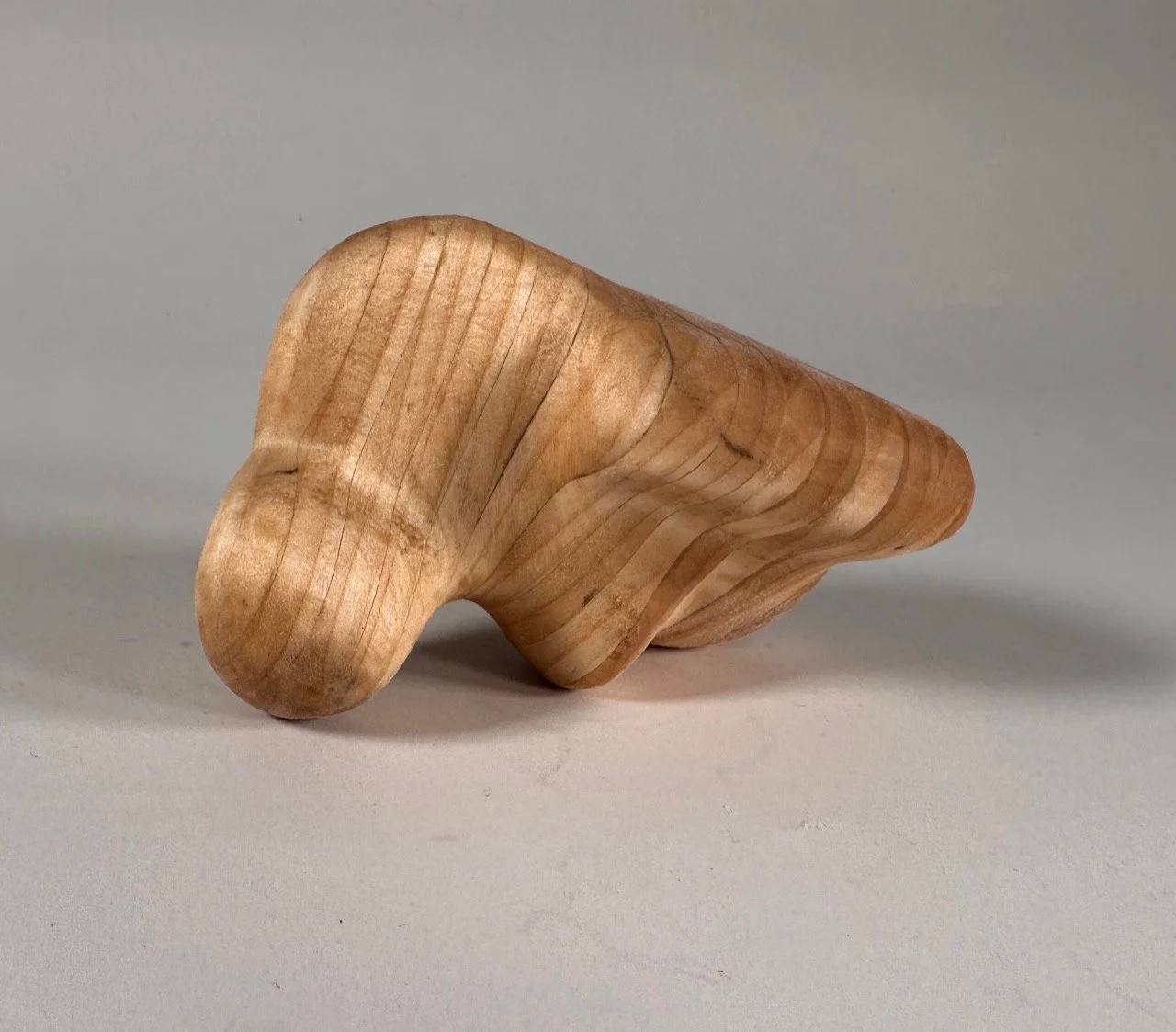
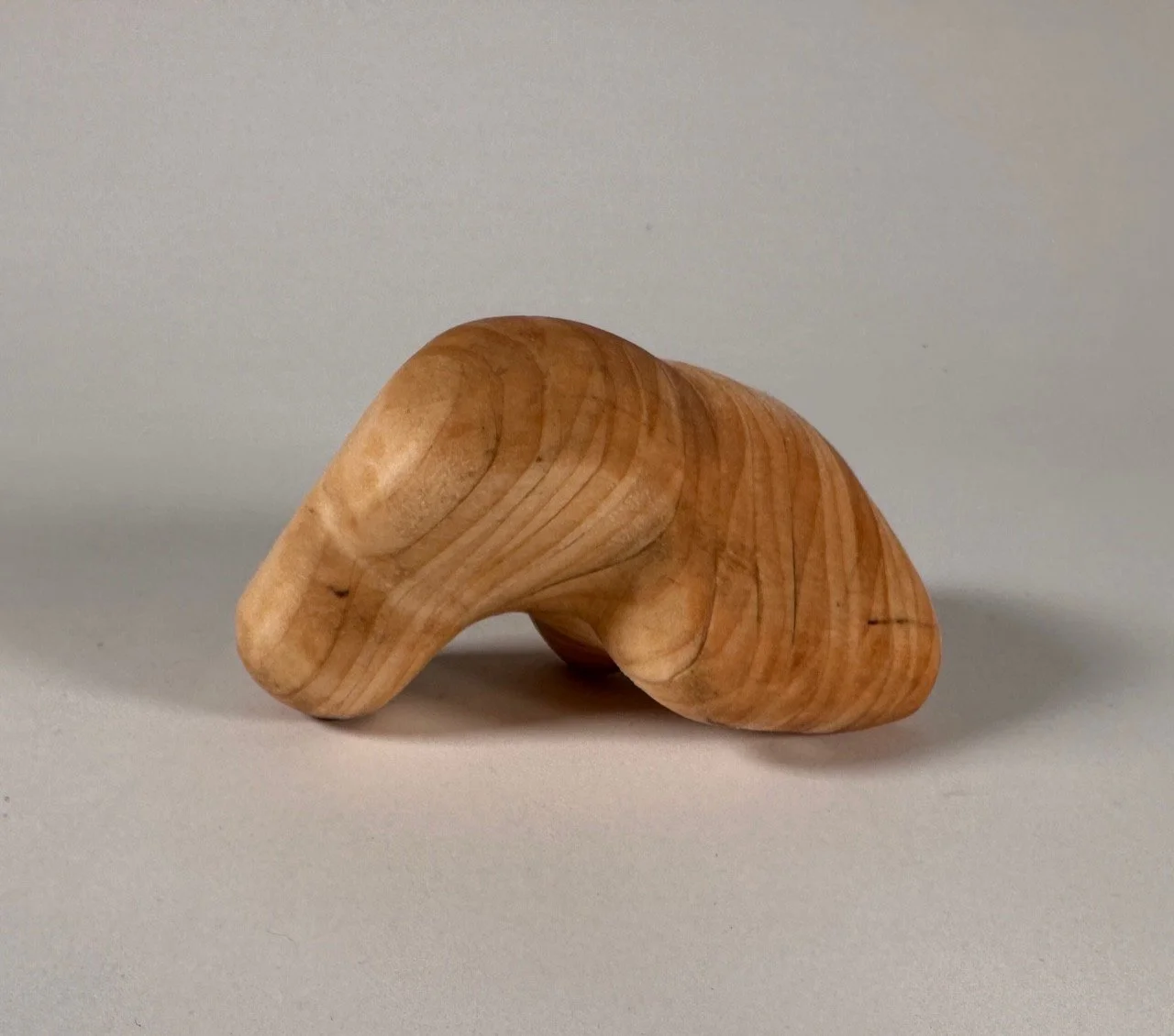
MONOLITH: The Monolith is a well-rounded form that can be presented on various sides. It is also tangible and interactive with an emphasis on ergonomics. The interactive element causes questioning of functionality.
MATERIALS: Wood, wood glue.
YEAR: 2023
DIMENSIONS: (Approx.) Height: 4in Length: 2in Width: 2.5in
PROCESS: Using oil-based sculpting clay, the ergonomic focused form is shaped. Then using metal wire, it is cut into layers and placed onto thin sheets of poplar wood and traced. Once the layers are traced the shapes are then cutout using bandsaws and sanded smooth. The layers are then glued and clamped together to recreate the form. It is then further refined with more sanding and oil to finish. This process can be applied to larger scale sculptural works made from wood or other materials.