SCULPTURE: MOLD MAKING
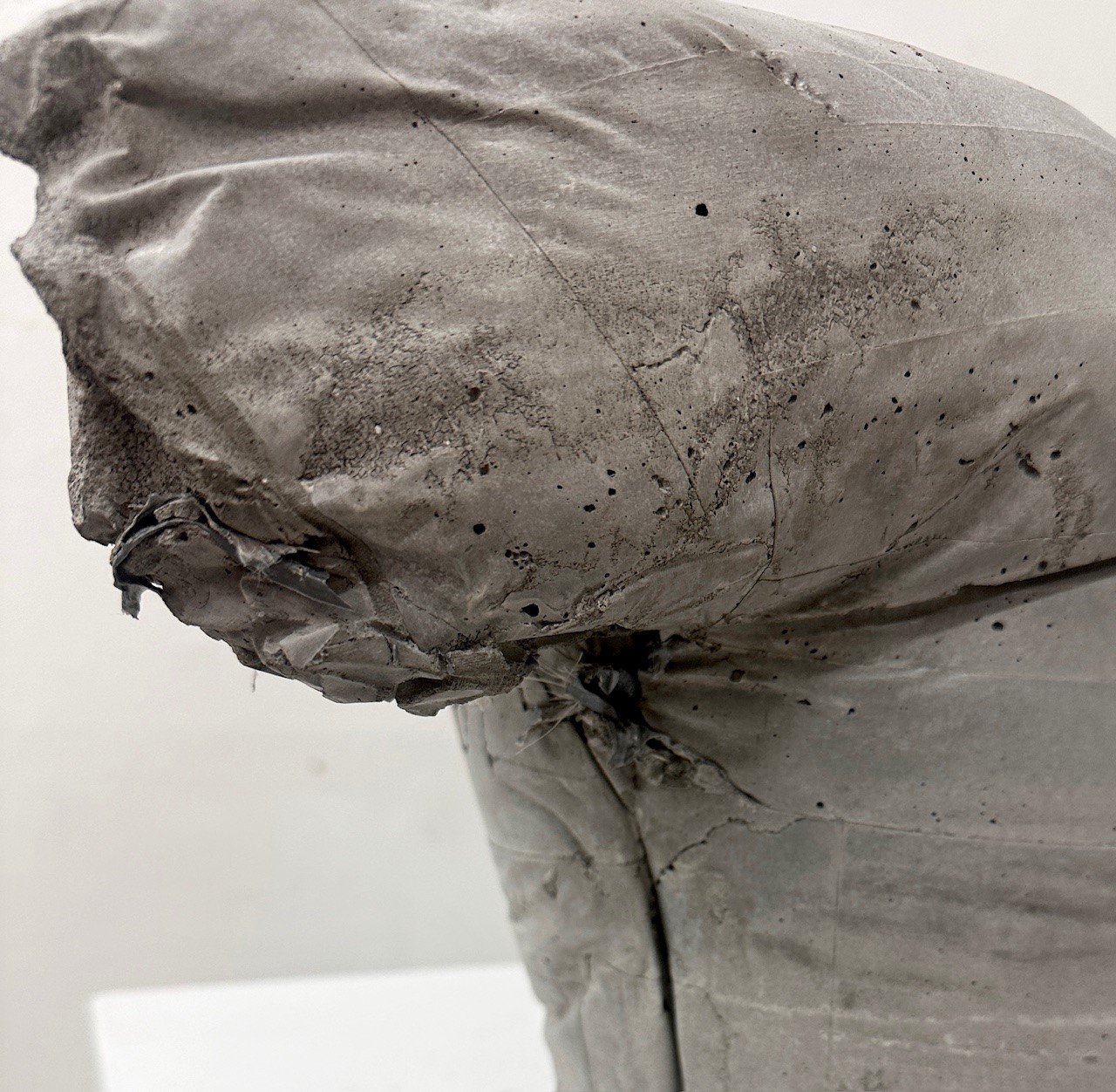
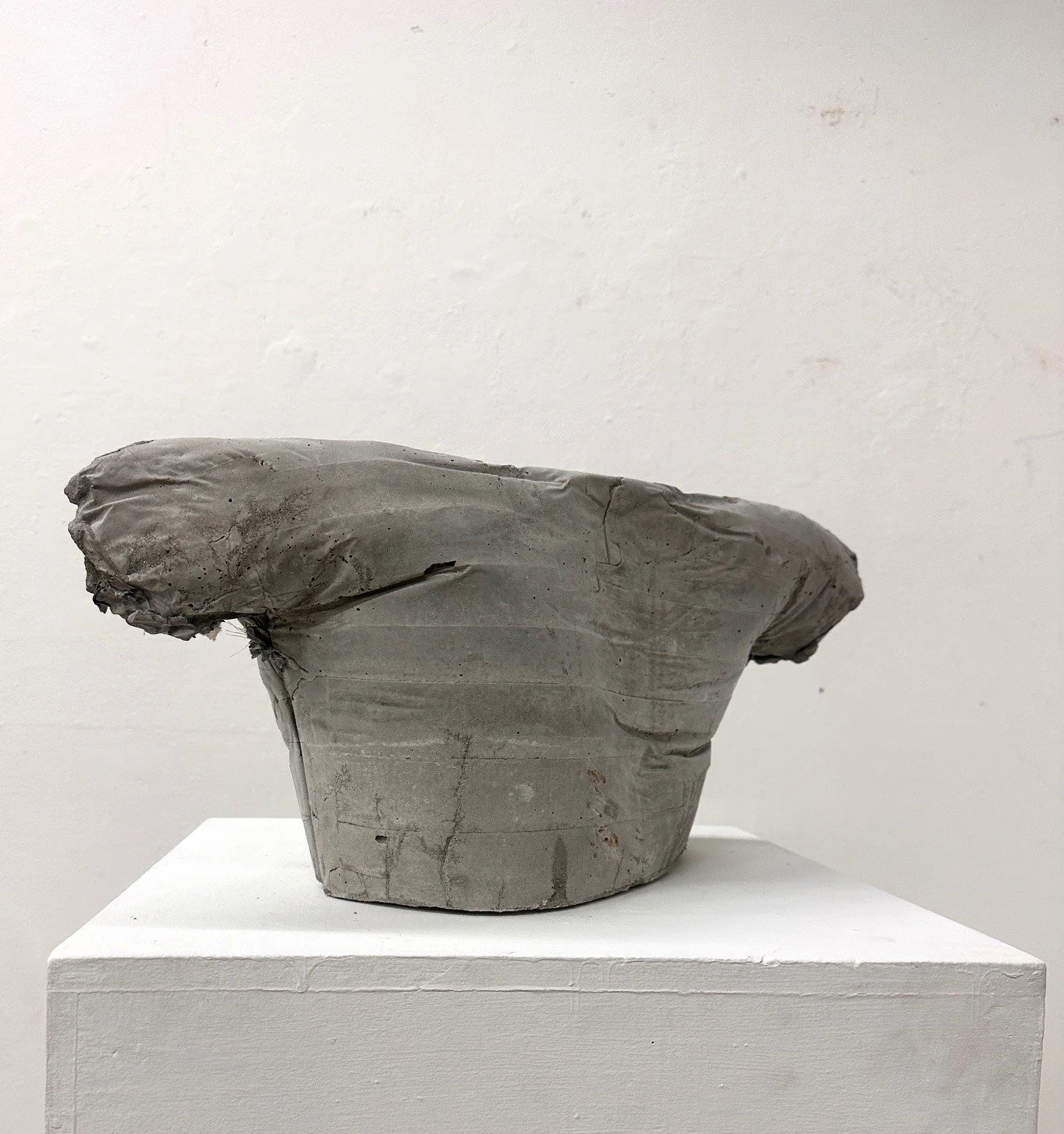
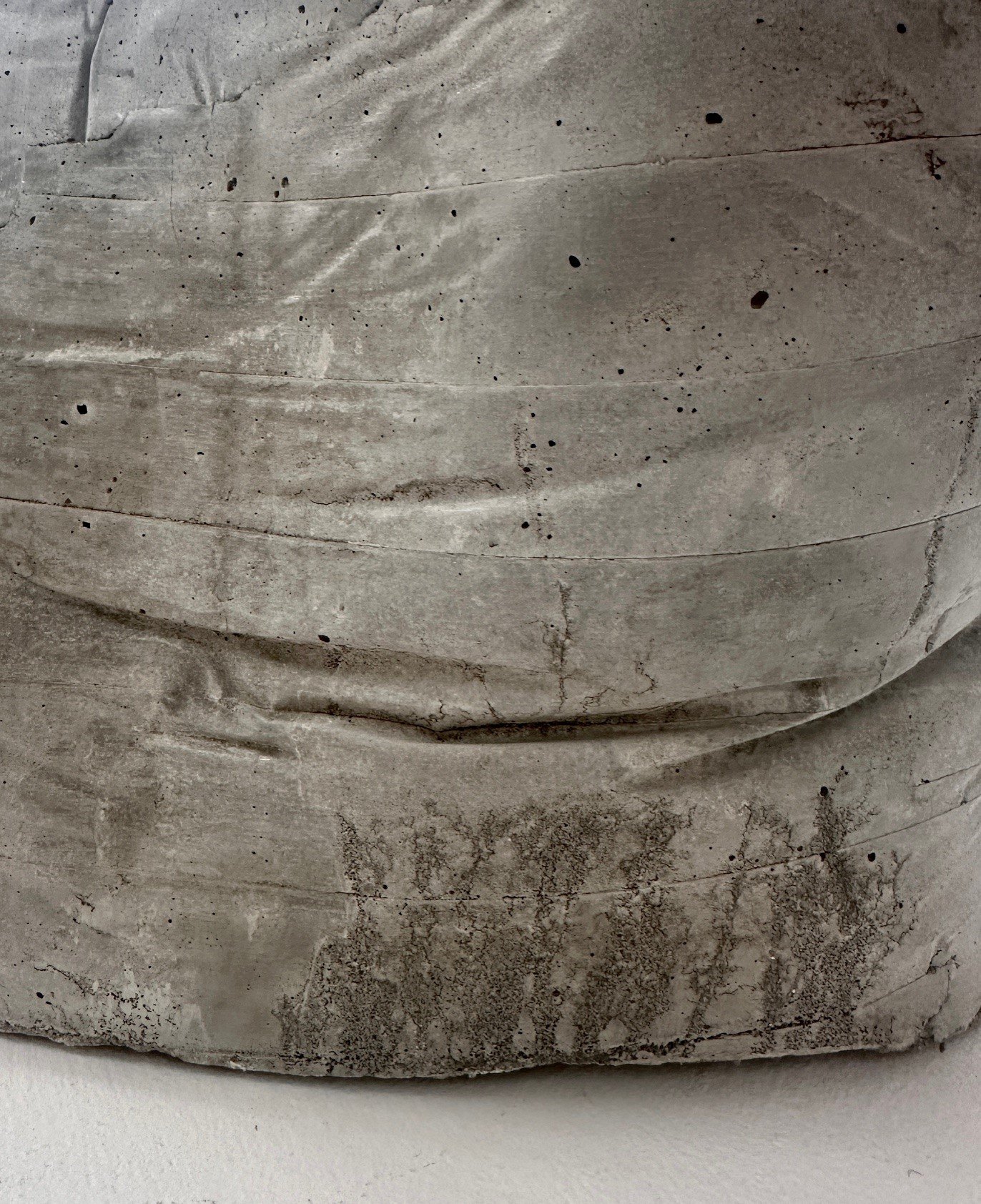
Body Weight: The concrete molded torso is a physical representation of how depression can cause immobilization of the body. The humanness of the form contrasting with the dense cold material expresses the emotions felt when in a depressive state. The form is shifted and wrinkled suggesting subtle movement, but it is strained from the weight it carries. The process of filling the shirt mold with concrete and gradual settling and solidifying of the material aligns with how depression is not instant or urgent state but slow and constraining. The releasing agent of the shirt from the concrete was duct tape and the application of the tape almost acted as an attempt to keep the feeling internalized only for it to be revealed and recognized to the viewer in the end. As recognition and confrontation of the feeling is one of the first steps in growth and healing. By allowing the observer to interact and see the depressive form it creates a vulnerable interaction and gives space for compassion and empathy.
Materials: Concrete, duct tape.
Year: 2023
Dimensions: (Approx.) Height: 2ft Length: 3ft Width: 1ft
Process: Using a found shirt it was lined with duct tape on the inside as a releasing agent for the concrete. Once all the fabric inside the shirt was sealed the mold is formed. Concrete and sandbags were then mixed and poured into the mold and set to dry. Once dry, the shirt is then cutaway leaving the t-shirt like form.
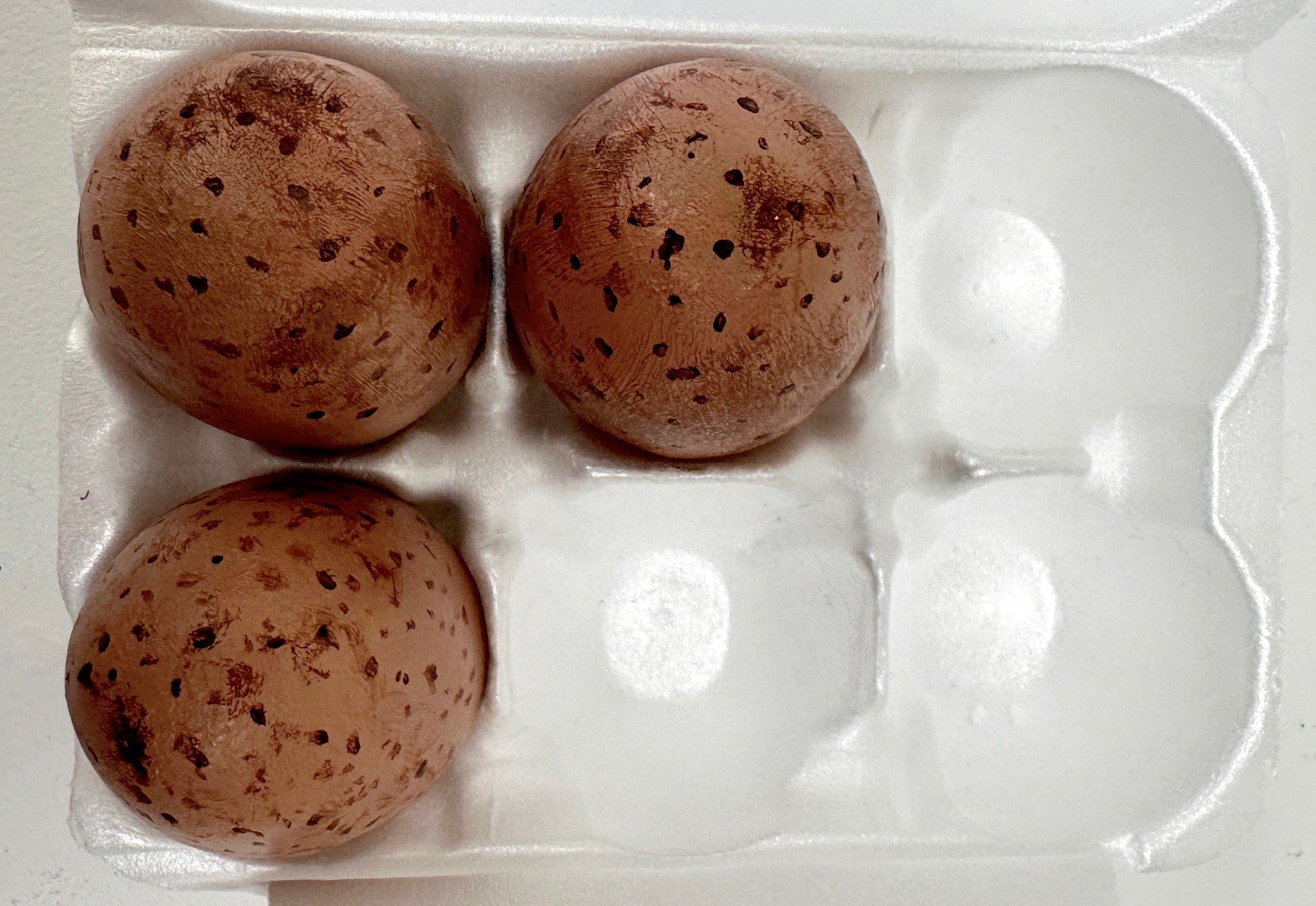
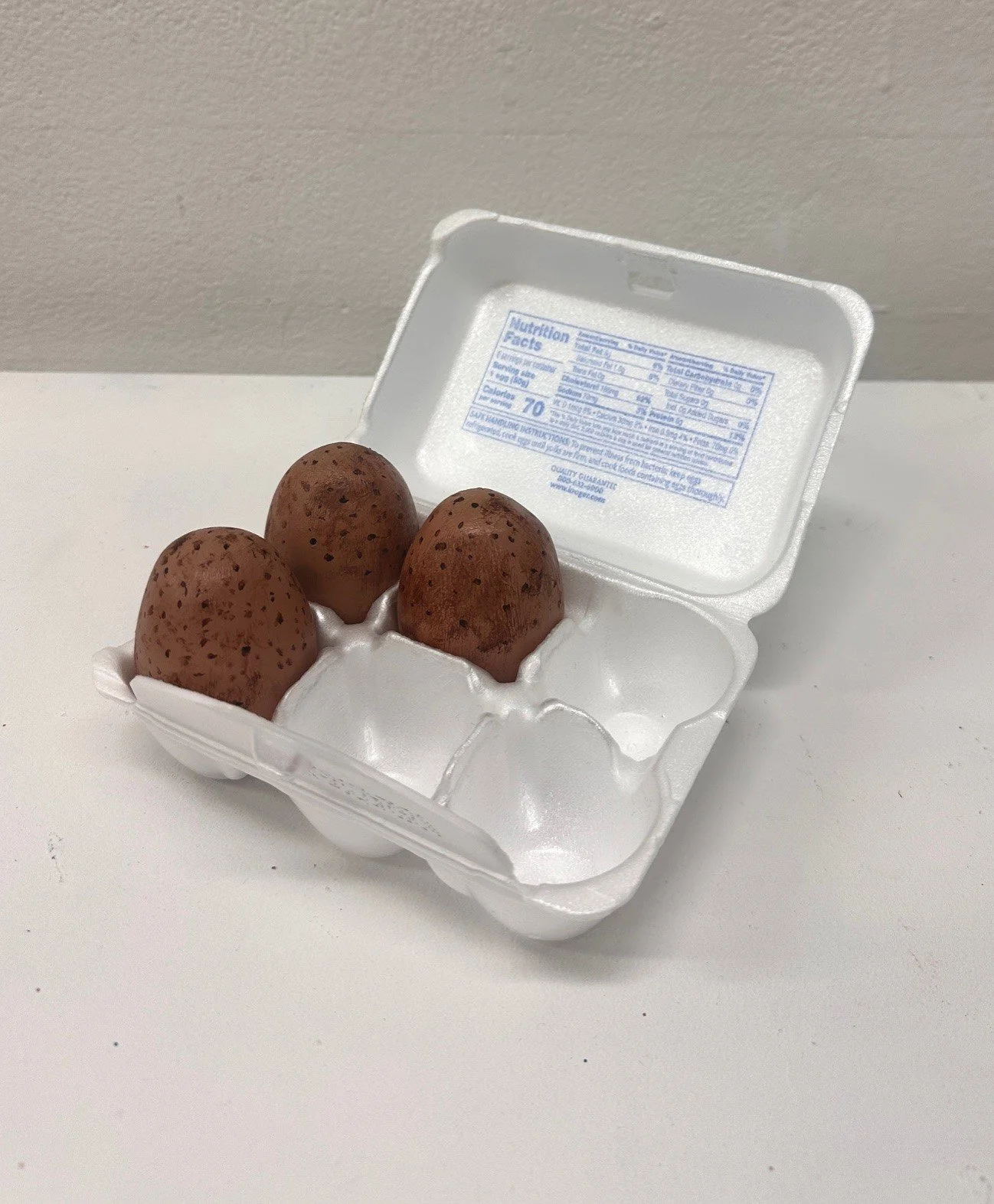
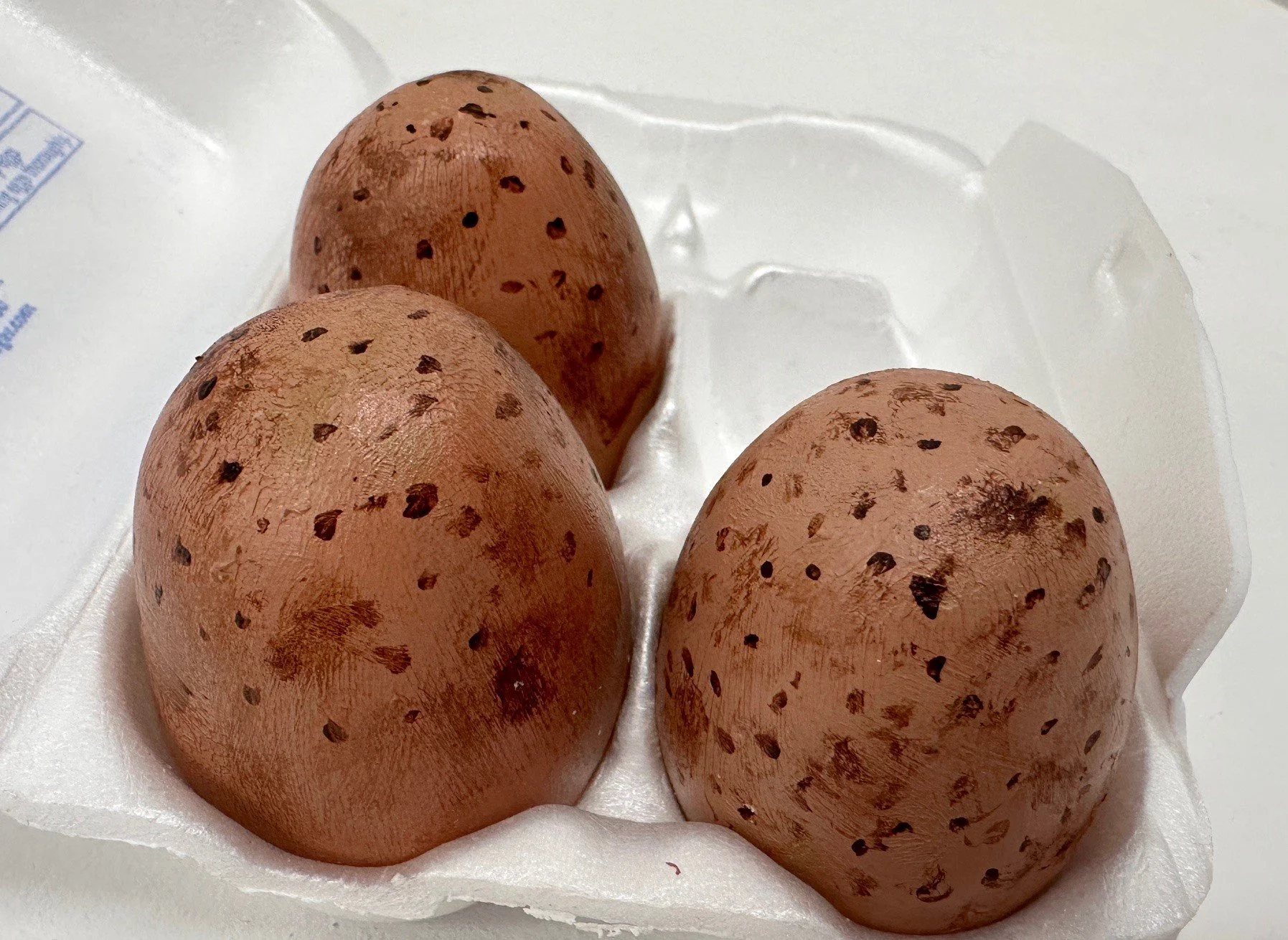
Eggs: These inedible eggs are supposed to cause questioning of what is truly in food. With a lot of food having additives and being processed it leaves wonder of how much of it is actually real and natural after being put on the market to sell to consumers. It causes reconsideration of where food comes from and the steps it takes to get to stores.
Materials: Plaster, acrylic paint, Styrofoam egg carton.
Year: 2023
Dimensions: (Approx.) Height: 3in Length: 6in Width: 4in
Process: Using oil-based sculpting clay, the egg form is made with an extended pouring spout for the plaster to get poured into. Then silicone Type A is pumped into a bucket of water with dawn soap (Releasing agent) added into it. Taking the silicone blob out of the bucket and shaping it over top of the clay sculpted form will create the mold. Once it is evenly placed and covering the form it is left to dry. Once dry the silicone covering is taken off and plaster is then mixed and poured into the mold. When the plaster is removed from the mold the pouring spout is cut off and the form is refined through cutting and sanding. Then acrylic paint is applied to finish. This process is repeated, and the silicone mold is reusable.